

Most outbound providers solve different problems. Some are built for SDR outsourcing, B2B lead generation and appointment setting, while others focus more on outbound infrastructure, enterprise prospecting, or email-heavy outreach.
Konsyg works closely with U.S. B2B teams that need more consistency in outbound execution. Their approach leans heavily on B2B lead generation, cold calling, SDR follow-up, appointment-setting support, and outbound campaigns built around real buyer targeting instead of high-volume outreach.
Callbox is usually a stronger fit for larger outbound programs that combine email, calls, LinkedIn, and webinar outreach. Their process tends to work best for companies prepared to support broader prospecting efforts over time.
Belkins is especially well known for outbound email campaigns and appointment-setting support. Companies leaning heavily on email outreach often see the strongest fit here, particularly in SaaS and mid-market sales environments.
CIENCE leans more heavily into outbound infrastructure, SDR support, and sales data operations. The model tends to suit larger outbound teams better than smaller companies still experimenting with positioning or messaging.
SalesRoads focuses more on phone-first outreach and SDR calling support. Businesses selling into industries where buyers still answer calls usually benefit most from this approach.
Martal Group works closely with SaaS and technology companies looking for outsourced SDR support. Their outbound model is usually better suited for teams already committed to consistent outbound activity.
Operatix tends to work well for enterprise SaaS companies with longer sales cycles and more complex buying processes. Their structure feels more enterprise-oriented than startup-focused.
If outbound consistency is becoming a bottleneck, it may be worth reviewing how your current prospecting process is actually performing.
Let’s be honest. Most B2B companies do not struggle because there are no outbound providers available.
They struggle because they choose partners built for the wrong type of sales motion.
Some outbound providers are built for enterprise-scale prospecting. Others focus heavily on cold email automation, SDR outsourcing, or appointment-setting support. A few lean more toward long-term demand generation.
The challenge is figuring out which approach actually fits the way your team sells.
After reviewing several outbound providers across the U.S. market, one pattern became obvious very quickly: the companies seeing the best results were usually not the ones sending the highest volume of outreach.
The teams that performed best were usually the ones that understood timing, follow-up discipline, and how outbound actually fit into the client’s sales process.
We also noticed that many outbound campaigns break down after the first few months because prospect pools become saturated, messaging becomes repetitive, or sales teams respond too slowly once prospects finally engage.
To make things easier, we reviewed 7 B2B lead generation providers based on how their process actually works in practice.
We looked at:
- how each provider handles outbound execution
- whether follow-up and SDR support were actually included
- how flexible their process felt across different company sizes
- where their outreach approach worked best
- how transparent they were about limitations, onboarding, and campaign structure
Some of these providers work better for enterprise outbound. Others are more practical for lean SaaS teams trying to book meetings without building a large SDR operation internally.
What B2B Lead Generation Actually Looks Like Today
At its simplest, B2B lead generation is about finding companies that are realistically likely to buy and getting conversations started with the right people inside those companies.
That sounds straightforward.
In reality, most outbound teams realise pretty quickly that getting meetings consistently is a lot messier than buying a prospect list and sending a few thousand emails.
Sometimes the targeting is wrong.
Sometimes the messaging sounds too generic.
Sometimes leads reply, and sales teams take four days to respond.
And sometimes the offer simply is not strong enough to justify a conversation in the first place.
Most modern outbound campaigns now combine several moving parts. SDR follow-up, email sequences, LinkedIn outreach, cold calls, retargeting ads, and prospect research often sit within the same workflow rather than operating separately.
For many U.S. companies, outbound has become more important again over the last few years, especially as paid acquisition costs keep climbing and inbound competition becomes harder to sustain consistently.
That is also why more businesses are working with SDR providers and outbound partners instead of trying to build every process internally from day one.
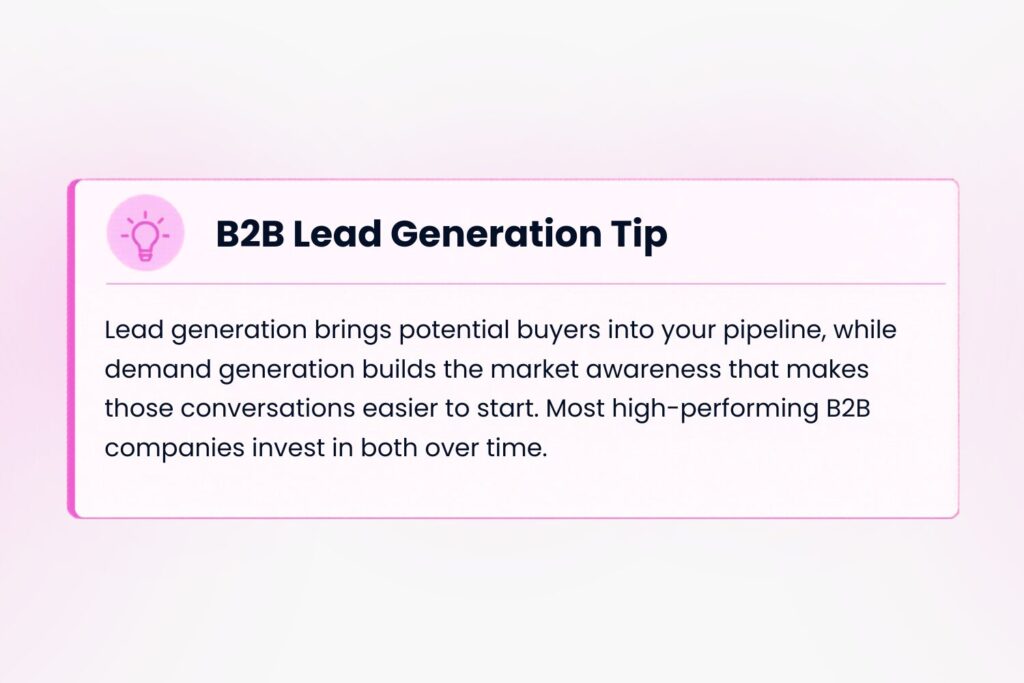
At the same time, lead generation and demand generation are constantly mixed, even though they solve very different problems.
Lead generation
This is the part focused on creating actual sales conversations. Booked meetings, outbound replies, demo requests, SDR follow-up, and account outreach usually fall into this category.
Demand generation
Demand generation works more slowly. SEO, webinars, paid campaigns, content, brand visibility, and educational marketing are usually designed to warm accounts over time before sales conversations happen.
The two work differently, but most experienced outbound teams eventually realise they support each other more than they compete.
A company running outbound into completely cold accounts will usually struggle more than one that is already building visibility through content, referrals, or market awareness.
What makes outbound especially different today compared to ten years ago is how much buyer behaviour has changed.
In the early 2010s, many outbound teams could rely on large email lists and repetitive cold calls for months before performance began to decline.
That does not last very long anymore.
Prospect pools saturate faster. Buyers ignore templated messaging almost immediately. Even good campaigns start to lose effectiveness if their positioning and follow-up are not adjusted regularly.
We also noticed, while reviewing different outbound providers, that tooling alone rarely fixes these problems.
A company can have access to millions of contacts, expensive sales software, and automated workflows, yet still struggle to book meetings consistently if its timing, messaging, or follow-up discipline is weak.
That part usually matters more than people expect.
Why Companies End Up With the Wrong Outbound Partner
Most outbound campaigns do not fail because outreach is not happening. They fail because the targeting, timing, or follow-up process breaks down somewhere along the way.
More often, the problem starts much earlier, when a company signs with a provider that does not align with its sales process.
That mismatch shows up constantly in outbound.
A startup needing fast feedback on messaging signs with a large enterprise-focused agency built around long onboarding cycles and layered approval processes.
Another company buys expensive prospect databases expecting meetings to materialise automatically, only to realise later that no one internally has time to handle follow-up properly.
Sometimes the issue is even simpler. The outreach technically runs, but the targeting is weak, the messaging sounds templated, or sales reps reply too slowly once prospects finally engage.
A lot of outbound problems look like execution issues from the outside when they are really alignment issues underneath.
The numbers reflect that disconnect.
According to Harvard Business Review, nearly 90% of sales and marketing teams report misalignment in goals and processes.
At the same time, many providers still optimise heavily around outreach volume even though most companies care far more about meeting quality and actual conversion potential.
We noticed a few recurring patterns while reviewing outbound providers across the U.S. market.
Unrealistic expectations
Some companies still get sold on aggressive promises without much discussion around sales cycles, market conditions, or how difficult the targeting actually is.
Outbound can create opportunities quickly, but very few campaigns become predictable in the first few weeks, no matter what the sales pitch says.
Weak visibility into the process
One of the fastest ways outbound relationships break down is when clients stop understanding what is happening behind the scenes.
If reporting stays vague or meetings are measured only by quantity, frustration usually builds quickly once results become inconsistent.
The wrong operational fit
Some providers are designed for enterprise outreach with larger SDR teams and slower processes. Others move much faster but may not support complex sales environments particularly well.
Neither approach is automatically wrong.
The issue is usually whether the provider matches the company’s actual stage, deal size, and internal sales structure.
That mismatch is a big reason many outbound partnerships do not last very long.
Several companies switch providers within the first year, especially when booked meetings fail to turn into real sales conversations.
Bradford Gray, Client Relations Director at Konsyg, explains this problem further in his breakdown of why so many outbound teams end up targeting the wrong decision-makers and damaging potential sales conversations before they even begin.
The Different Types of Outbound Partners (And Where Each One Fits)
Not every company helping with outbound sales works the same way.
Some teams focus heavily on appointment setting and SDR outreach. Others give companies the tools and data needed to run prospecting internally. Then there are agencies investing more heavily in long-term demand generation through SEO, content, and paid acquisition.
A lot of frustration starts when companies choose the wrong model for their stage.
We saw this repeatedly while reviewing outbound providers across the U.S. market.
Teams looking for faster sales conversations sometimes hire agencies built mostly around long-term inbound marketing. Meanwhile, companies with experienced sales reps occasionally overpaid for fully managed outreach support they did not really need.
The right fit usually depends more on internal sales maturity and follow-up capacity than on the provider itself.
Outbound prospecting and SDR providers
These companies operate more like outsourced sales development teams.
They usually handle:
- prospect research
- outbound messaging
- SDR follow-up
- appointment setting
- LinkedIn outreach
- cold calling
This setup tends to work best for companies that already know who they want to sell to and need more consistent outreach support.
Many businesses underestimate how quickly outbound performance drops once messaging starts sounding repetitive or follow-up becomes inconsistent.
Several providers we reviewed performed well initially, but became harder to optimise once prospect pools narrowed after a few months.
That usually matters more than simply sending a higher volume of emails.
Sales data and prospecting platforms
Some companies do not need outsourced SDR support at all.
Instead, they need cleaner prospect data, stronger targeting, or better visibility into buying signals.
These platforms usually support things like:
- contact databases
- enrichment
- intent tracking
- email verification
- outbound automation
The outreach still happens internally, but the tooling helps sales teams work faster and prioritise accounts more effectively.
This model generally works best for companies that already have SDRs or outbound reps internally and want more control over campaign execution.
Demand generation agencies
Demand generation firms focus less on immediate outbound conversations and more on long-term market visibility.
That usually includes SEO, webinars, paid campaigns, content marketing, and ongoing brand positioning designed to gradually warm accounts.
This approach tends to work better for companies with:
- longer sales cycles
- larger buying groups
- stronger inbound strategies already in place
At the same time, demand generation is rarely a quick fix.
Several outbound teams we reviewed still relied heavily on SDR outreach, even as they invested in inbound channels, because content alone was not consistently generating enough sales conversations.
In practice, most experienced B2B teams eventually combine outbound prospecting with demand generation rather than relying entirely on one approach.
Want to see how outbound teams are building more consistent sales conversations in 2026?
Konsyg’s B2B Lead Generation Strategies ebook breaks down:
- outbound messaging mistakes
- SDR follow-up gaps
- targeting issues
- appointment-setting workflows
- lessons from real U.S. outbound campaigns
How to Actually Choose the Right Outbound Partner
A company selling high-ticket enterprise software usually needs a very different outbound process compared to a startup testing messaging for the first time.
Some outbound providers work best when buying cycles are longer, and several stakeholders are involved. Others are built for faster outbound testing and leaner SDR execution.
Another factor companies underestimate is the speed of internal follow-up.
Several outbound campaigns fail even after generating replies simply because sales teams respond too slowly once conversations start.
We also noticed that some providers perform well during the early outbound phases but become harder to optimise once prospect pools narrow and messaging starts to feel repetitive.
Before choosing an outbound partner, companies should usually understand:
- how clearly their ICP is defined
- whether outbound messaging has already been tested
- how quickly their sales team can follow up
- whether they need outbound infrastructure or execution support
- how complex the buying process actually is
In many cases, the strongest outbound relationships occur when expectations, the sales process, and internal bandwidth are aligned early on, rather than being adjusted halfway through campaigns.
| Company | Works Best When | Outreach Style | Ideal Company Size | Potential Limitation |
|---|---|---|---|---|
| Belkins | Email outreach is the main focus | Email-first outbound | SMB to mid-market | Less diversified outreach |
| Konsyg | You need hands-on outbound support | SDR-led outbound | Startup to enterprise | Requires reasonably clear ICP |
| CIENCE | Larger outbound operations | Structured SDR systems | Mid-market to enterprise | Heavier operational setup |
| Callbox | Broad outreach coverage matters | Calls + email + webinars | Mid-market to enterprise | Better suited for larger campaigns |
| SalesRoads | Phone outreach still performs well | SDR calling support | SMB to mid-market | Less automation-focused |
| Martal Group | SaaS outbound support | Outsourced SDR prospecting | Growth-stage SaaS | Stronger fit once messaging is stable |
| Operatix | Enterprise SaaS prospecting | Outsourced SDR prospecting | Enterprise | Longer onboarding cycles |
The 7 Outbound Sales Partners U.S. B2B Teams Are Turning to in 2026
Not every outbound provider solves the same problem.
Some companies need help booking meetings quickly. Others already have internal SDRs and simply need better prospect data, stronger targeting, or more outbound consistency. A few are built for enterprise-scale outreach with a heavier operational structure behind the scenes.
That difference matters more than most companies expect.
While reviewing outbound providers across the U.S. market, we noticed that many disappointing engagements were not necessarily caused by poor outreach.
The bigger issue was usually fit. A startup needing fast outbound testing would hire an enterprise-focused provider with long onboarding cycles. Meanwhile, larger sales organisations sometimes chose lean outbound agencies that struggled once outreach volume increased.
The strongest providers were usually those whose processes matched the company’s sales motion, internal follow-up speed, and stage of growth.
Here are the teams that stood out most and where they tend to fit best. 👇
Belkins is one of the more recognisable outbound providers in the U.S. market, especially for companies relying heavily on cold email and appointment-setting support.
Their process leans heavily into outbound email strategy, prospect research, and SDR execution. That tends to work particularly well for SaaS companies and mid-market teams already comfortable with outbound prospecting but looking for more structure behind campaign execution.
Companies needing broader outbound support across calling, account research, or more layered SDR workflows may still need additional internal sales support alongside the engagement.
We placed Konsyg near the top of this list because many outbound teams do not actually struggle with outreach volume.
The bigger issue is usually consistency.
Many outbound campaigns generate activity without many meaningful sales conversations. Emails get sent, LinkedIn sequences run, and meetings get booked early on, but performance becomes difficult to sustain once prospect pools narrow or messaging starts sounding repetitive.
Konsyg’s approach leans more heavily into outbound execution with B2B lead generation and follow-up discipline than pure outreach scale.
Campaigns are usually built around clearer ICP targeting, tighter SDR follow-up, stronger appointment-setting support, and more personalised outreach across email, LinkedIn, and calls.
Some clients use Konsyg almost like an outsourced SDR team, while others mainly rely on them during periods when internal sales capacity becomes stretched.
That tends to work particularly well for SaaS, fintech, and cybersecurity companies already clear on who they want to target.
At the same time, businesses still figuring out positioning or product-market fit may need more internal sales discovery work before outbound campaigns become fully effective.
Another thing worth mentioning is that Konsyg’s model feels more hands-on than automation-heavy. That usually leads to better conversations over time, although companies expecting instant, high-volume outreach may initially find the process slower than with larger automation-focused providers.
💡 One operational issue many outbound teams underestimate is reply handling speed once prospects finally engage. Several outbound campaigns fail not because prospects are uninterested, but because internal teams respond too slowly to incoming replies.
CIENCE leans more heavily into outbound infrastructure, SDR operations, and sales data management.
The company generally fits better with larger outbound programs than with smaller startups still experimenting with messaging or market positioning. Their structure combines prospect research, SDR execution, and outbound tooling into a more operationally layered process.
That setup can work well for enterprise prospecting, although smaller companies may find the process heavier than expected during earlier growth stages.
Callbox has been around for a long time and tends to work best for companies running broader outreach programs across multiple channels.
Their campaigns often combine email outreach, calls, LinkedIn prospecting, webinar promotion, and appointment setting, rather than relying too heavily on a single outbound channel.
That tends to suit larger outreach efforts better, especially when companies already have sufficient internal sales bandwidth to handle a steady flow of conversations.
Smaller teams looking for leaner outbound testing may sometimes prefer providers with a narrower focus and faster campaign iteration.
SalesRoads focuses much more heavily on phone-based outreach and SDR calling support than many providers on this list.
That still works surprisingly well in industries where buyers answer calls and conversations happen earlier in the buying process.
Companies relying entirely on email automation sometimes overlook how effective direct conversations can still be in the right markets.
At the same time, businesses expecting heavily automated systems may find the model more people-intensive than software-driven.
Martal Group works closely with SaaS and technology companies looking for outsourced SDR support without building large outbound teams internally.
Their process tends to fit companies already committed to outbound prospecting rather than businesses still testing whether outbound works for their market in the first place.
Several teams we reviewed also mentioned that outsourced SDR engagements usually perform better once internal positioning and messaging are already reasonably stable.
That applies here too.
Operatix tends to fit more naturally with enterprise SaaS companies and longer sales cycles involving multiple stakeholders.
Their structure feels more enterprise-oriented overall, which can work well for larger organisations with established outbound processes.
For earlier-stage startups, onboarding and operational structures may feel heavier than those of smaller outbound providers, which focus on faster testing and shorter campaign cycles.
Frequently asked questions
What is the best outbound partner for U.S. B2B companies?
There is no single provider that fits every company.
Some outbound firms work better for enterprise prospecting and large SDR operations, while others are more practical for startups and mid-market teams looking to book meetings without immediately building a large internal sales team.
The better question is usually whether the provider matches your sales process, buying cycle, and internal follow-up capacity.
While reviewing outbound providers, we noticed that many disappointing engagements were caused less by poor outreach and more by a mismatch between the company’s expectations and the provider’s operating style.
How much do outbound and SDR services usually cost in the U.S.?
Pricing varies widely depending on how involved the provider is.
Some companies only need prospect data and outbound tooling. Others need full SDR support, appointment setting, outreach management, and ongoing campaign optimisation.
Most providers tend to use:
- monthly retainers
- SDR outsourcing models
- pay-per-meeting structures
- performance-based pricing
Companies sometimes underestimate is the internal cost of managing outbound themselves. Hiring SDRs, training them, handling turnover, maintaining tooling, and building outreach systems internally can become expensive fairly quickly.
How long does outbound usually take before meetings start happening?
That depends heavily on market conditions, targeting quality, and the maturity of the outbound process.
Some campaigns generate conversations fairly early. Others take longer, especially when messaging still needs refinement or positioning is unclear.
We also noticed that many outbound campaigns perform well during the first few weeks but become harder to sustain as prospect pools narrow and messaging fatigue sets in.
That is usually where follow-up discipline and campaign adjustments start mattering much more.
What is the difference between lead generation and demand generation?
Lead generation is usually focused on starting sales conversations directly through outreach, SDR follow-up, booked meetings, and outbound prospecting.
Demand generation works differently. It focuses more on long-term visibility through SEO, webinars, paid campaigns, content marketing, and brand positioning.
In practice, most experienced sales teams eventually use both.
Outbound tends to perform better when buyers already recognise the company in some way rather than hearing about it completely cold for the first time.
Should companies build outbound internally or work with an SDR provider?
There is no perfect answer here either.
Some companies benefit from building internal SDR teams early, especially when sales processes are already stable and internal management bandwidth exists.
Others move faster initially by working with outbound providers that already have prospecting systems, SDR workflows, and outreach infrastructure in place.
One thing we noticed repeatedly was that companies often blamed outbound providers for weak meetings when the real issue was slow internal follow-up after replies came in.
Several campaigns generated replies successfully, but still struggled because prospects waited too long for responses after engaging.
The Right Outbound Partner Depends on the Problem You Are Actually Solving
The strongest outbound provider is rarely the one with the biggest prospect database or the highest outreach volume.
More often, results depend on whether the provider actually fits the company’s sales process, buying cycle, and internal follow-up capacity.
Some teams need more outbound infrastructure.
Others need tighter messaging, stronger SDR follow-up, or simply more consistency once replies start coming in.
That difference matters far more than most companies expect.
We also noticed, while reviewing outbound providers, that companies often focus too heavily on outreach volume and underestimate factors like reply-handling speed, sales positioning, and how quickly messaging quality declines as campaigns mature.
Those operational details usually decide whether outbound becomes sustainable or starts losing effectiveness after the first few months.
At the end of the day, the best outbound partner is not necessarily the biggest or most visible one.
It is the one that fits how your sales team actually works.
If outbound consistency is becoming a bottleneck, it may be worth reviewing whether the issue is really lead volume or whether the process itself needs tightening first.
Share This Post
Recent Posts
What We Offer
Get Your Quote