

Learn how to generate more B2B leads with strategies that actually work in 2025. More leads, more prospects, more revenue in the Netherlands.

The sales industry cannot stop talking about B2B lead generation. Unfortunately, it is not because it is popular. It is challenging to master.
In the Netherlands, where digital-first businesses dominate sectors like tech, logistics, and SaaS, B2B lead generation has become both an art and a science. Companies invest heavily in data tools, AI-driven prospecting, and LinkedIn automation to stay ahead, yet many still struggle to build predictable pipelines.
There may never be a single foolproof formula to generate leads for your business, but there are proven strategies that consistently work in the 2025 market.
In this piece, we will explore 15 B2B lead generation strategies you can start implementing today to attract, nurture, and convert high-value prospects.
B2B lead generation in the Netherlands may not be simple, but it can certainly be more effective.
What is B2B Lead Generation?
B2B lead generation is the process of identifying potential buyers for your product or service and motivating them to take an interest in what you offer.
Sales and marketing teams employ a range of strategies to capture the attention of a specific audience and guide prospects through the sales funnel. Because long-term success depends on reaching the right audience, B2B lead generation is a crucial foundation for business growth.
Although lead generation has often been associated with advertising, it extends far beyond paid promotion. Modern companies in the Netherlands use a mix of digital and traditional approaches to attract qualified leads. A typical lead generation B2B strategy includes:
- Social media outreach
- Email marketing
- Content marketing
- Event marketing
- Pay-per-click advertising
- Cold calling
- Website optimization
In 2025, Dutch businesses are also focusing on AI tools for lead scoring, LinkedIn automation, and SEO-driven content to strengthen their pipelines. These trends reflect the ongoing evolution of B2B lead generation in the Netherlands, driven by new technologies and shifting buyer expectations.
Types of B2B Leads
B2B leads are people, organisations, or businesses that have the potential to become customers for business-to-business products or services.
Unlike business-to-consumer (B2C) sales, these leads are usually other companies rather than individuals. However, some small businesses and independent professionals can also qualify as B2B buyers.
B2B leads are not necessarily harder to find than B2C leads, but they are often more challenging to qualify and convert.
While B2C leads are individuals with clear buyer intent, B2B leads involve multiple stakeholders, longer decision-making cycles, and higher-value deals.
Many traditional lead generation methods still result in generic contact emails that lead nowhere. In the Netherlands, businesses are moving away from cold databases toward personalised outreach and data-driven lead qualification.
Tools like LinkedIn Sales Navigator, AI-based intent tracking, and CRM integrations are now key to identifying real decision-makers instead of faceless company addresses.
Your sales team can only close deals with qualified B2B leads — real people with the authority to make a purchase.
Generating leads is no longer enough; Dutch companies that prioritise quality over quantity are experiencing stronger conversion rates and sustainable growth.

Marketing Qualified Leads
Marketing qualified leads (MQLs) are potential customers identified by the marketing team as being likely to purchase a product or service based on specific target criteria.
These leads are not quite ready to buy yet, but have shown genuine interest in the company. They might have subscribed to your newsletter, downloaded gated content, or interacted with your website multiple times.
In the Netherlands, many companies use content marketing, webinars, and LinkedIn campaigns to generate MQLs. These leads are then nurtured through email automation, remarketing, and personalised follow-ups until they are ready to engage with sales.
MQLs represent the middle ground between awareness and intent, making them crucial for efficient B2B lead generation in the Netherlands.
Sales Qualified Leads
A sales qualified lead (SQL) is a more advanced prospect who has directly engaged with your company and expressed strong buying intent. These leads might request a demo, schedule a consultation, or contact your sales team about a specific service.
In Dutch B2B sales environments, where trust and relationship-building are critical, SQLs are highly valuable. They often emerge from consistent nurturing and targeted communication. Once a lead reaches this stage, it should be fast-tracked through the sales funnel and handled with priority.
Focusing on SQLs helps Dutch businesses shorten sales cycles, close deals more quickly, and achieve measurable growth in competitive markets such as tech, finance, and logistics.
Why B2B Lead Generation Is Important
B2B lead generation is crucial to both sales and marketing teams, as well as to the business itself, on a fundamental level. Without it, there are no leads to fill the sales pipeline, no conversions, no customers, and ultimately no growth.
Beyond being the foundation of a company’s revenue engine, B2B lead generation also provides valuable data and insights to marketing specialists, sales representatives, and sales development representatives (SDRs).
A strong lead generation strategy enables a business to identify its ideal customers, create relevant content, and establish brand visibility in competitive markets.
In the Netherlands, where digital adoption and competition are high, companies rely on precise lead generation to efficiently connect with decision-makers. Modern Dutch B2B teams use analytics, automation, and multi-channel outreach to reach new audiences and improve every stage of the sales process.
A well-executed B2B lead generation strategy enables businesses to increase conversion rates, optimise their sales cadence, and generate higher revenues. It transforms the sales pipeline into a continuous flow of qualified opportunities rather than one-time prospects.

B2B Lead Generation Strategies
MQLs and SQLs are valuable, but they do not stand alone. You can still generate B2B sales leads through traditional methods, such as cold calling; however, there are now far more strategic and data-driven ways to reach the same decision-makers efficiently. Below are 15 proven B2B lead generation strategies for 2025, including modern prospecting tools that help Dutch businesses build stronger pipelines.
- Use ongoing content campaigns that outperform competitors
Your content marketing efforts are only as strong as their search visibility. You might have the top position on Google for a niche keyword, but if your competitors are ranking for what your audience is actually searching for, you are not truly winning.
If your company offers a specific service, expand your content to include related topics that potential clients might also explore. Publish white papers, videos, and case studies that align with real buyer intent. Then track clicks, analyse performance, and continuously refine. In the Netherlands, where B2B buyers are research-driven, SEO-optimised content remains one of the most reliable long-term lead generation strategies.
- Run A/B tests to improve conversions
You do not need to get your marketing perfect on the first try. A/B testing enables you to experiment with various formats, visuals, and messages to determine which ones resonate most effectively with your audience. Even small design or text changes can increase engagement and conversions.
For example, modifying a simple CTA button can increase response rates significantly. Dutch marketing teams often test variations in language tone, as well as English versus Dutch phrasing, to determine which resonates best with local buyers. Follow the data closely; minor improvements can lead to significant gains in lead generation efficiency.
- Collect and promote buyer reviews
No matter how authentic your marketing is, prospects will always trust other customers first. Studies show that over 95% of buyers read reviews before making a purchase, and most avoid companies with negative or missing reviews.
Encourage clients to share feedback regularly. Highlight positive testimonials on your website and social channels to build credibility. In the Netherlands, review platforms such as Trustpilot and Google Business Profile play a significant role in B2B lead generation, influencing decisions across various sectors, including SaaS and logistics.
A consistent stream of honest client feedback builds trust, strengthens your brand image, and attracts new leads who see proof of your reliability.

- Use survey results to strengthen your lead generation
Many companies view surveys as tools for measuring customer satisfaction, but they are also powerful assets for generating B2B leads. When clients share feedback such as long response times or limited communication, it is not just a customer service issue. It is a signal to improve how you engage potential leads as well.
Consider how you can enhance accessibility throughout your organisation. Implement chatbots, expand email automation, or increase team availability to ensure leads never get stuck waiting. Dutch businesses are leading the way in using AI-powered chat tools and CRM-integrated surveys to understand buyer behaviour better and improve conversion rates.
By analysing survey data holistically, you can address existing pain points while creating a smoother experience for future leads.
- Use case studies as lead magnets
Case studies are becoming essential in B2B marketing and lead generation. Once hidden deep within websites, they now rank among the top three content types used in B2B sales, alongside email newsletters and blog posts.
In the Netherlands, where business decisions are often based on credibility and results, case studies carry real influence. They provide measurable proof of success and demonstrate value in a data-driven way that appeals to Dutch buyers.
Do not limit case studies to the middle or bottom of the funnel. Share them early to attract interest, build trust, and show that your company delivers tangible outcomes. Well-written case studies can turn curious visitors into serious leads.
- Keep leads on your landing page
Interactive content performs far better than static designs. Studies show that 81% of marketers believe interactive content captures more attention than static pages. Yet many landing pages still fail to use this advantage.
When visitors arrive at your page, you have only a few seconds to make a lasting impression. Use strong headlines, clear calls to action, and bold statistics to engage them immediately. Add pop-up forms or interactive subscription boxes to encourage participation. Even if users close the pop-up, they will still interact with your content, keeping them focused on your brand.
In the Dutch digital market, where attention spans are short and competition is high, interactive landing pages can significantly improve B2B lead generation results. A well-placed email capture form or downloadable offer can convert interest into an opportunity.
- Personalise your web content for B2B lead personas
Modern B2B sales and marketing can no longer rely on generic messaging; instead, they must tailor their approach to each customer. While automation and mass emails still have their place, personalisation has become the key to better engagement. In 2025, account-based marketing (ABM) continues to shape B2B lead generation by tailoring campaigns to specific industries, companies, and even individual decision-makers.
Through ABM tools, you can customise website content, email campaigns, and outreach based on user behaviour or company data. Dutch businesses are also utilising IP-based targeting to tailor content by location, displaying different offers or messages to visitors in Amsterdam, Rotterdam, or Eindhoven.
Personalisation takes more effort, but with more than 70% of B2B marketers adopting it, it is no longer optional. The more relevant your message feels, the higher your chances of converting Dutch prospects into qualified leads.

- Master social selling for modern buyers
Social selling is one of the most effective ways to generate leads in the Netherlands, where LinkedIn remains the most trusted platform for business relationships. Over 55% of decision-makers use LinkedIn to research potential vendors, which makes it a core part of modern B2B lead generation.
However, effective social selling extends beyond LinkedIn. Dutch businesses are increasingly using Twitter, Instagram, and even YouTube Shorts to connect with audiences and humanise their brand. Engaging posts, thought leadership content, and authentic storytelling all attract attention from other businesses that value transparency and digital fluency.
Building a strong presence on social media is no longer just brand awareness; it is a measurable lead generation channel.
- Leverage video content to build trust
Video content has become one of the most powerful tools in B2B marketing. You do not need to be a professional video producer to see results. Even simple videos that explain your services or share customer success stories can have a significant impact.
After Google, YouTube is the second-largest search engine, and for many professionals, it is the primary source they turn to for product research. If your brand lacks high-quality, informative videos, you are missing out on valuable visibility.
In the Netherlands, B2B companies are increasingly using video for product walkthroughs, tutorials, and case study presentations. This type of content builds credibility and keeps your brand at the top of search results across multiple platforms.
- Optimise your B2B lead generation with SEO
Every piece of your online content can be optimised for search, not just blogs. From web pages and press releases to video descriptions and case studies, SEO ensures your business ranks above competitors.
To strengthen your B2B SEO strategy, research what keywords your competitors target and analyse how they structure their content. Then, tailor your own SEO to match your buyer personas and local audience in the Netherlands.
For example, a SaaS company targeting small Dutch businesses could focus on keywords like “B2B lead generation Netherlands” or “B2B software providers Amsterdam.” Aligning SEO with buyer intent ensures that your content reaches real prospects actively searching for your solutions.
- Encourage B2B leads to subscribe with real incentives
Having a subscribe button on your website is a great start, but the real challenge is getting people to click it. Incentives are the key. While B2C companies often use discounts, B2B lead generation works better with offers like free consultations, extended demos, or downloadable whitepapers.
These lead magnets not only attract attention but also build trust early in the relationship.
Your subscription form is one of the most effective ways to gather qualified email leads. Offering value in exchange for a subscription helps identify serious prospects who are genuinely interested in your solution. Dutch companies are finding success with free trials and industry insight reports as lead magnets, both of which appeal to data-driven decision-makers.
If your incentive creates more engagement than expected, consider it a win. Interest in your offer means your inbound leads are already warming up for conversion.
- Optimise your content for mobile users
More than ever, mobile optimisation affects your ability to generate leads. Research shows that 40% of users switch to a competitor after a poor mobile experience, while 73% of mobile searches lead to direct engagement or follow-up actions. Yet only 35% of businesses have a fully optimised mobile site.
For Dutch B2B companies, mobile optimisation is essential since decision-makers often research vendors during commutes or while travelling. A mobile-friendly design with fast loading times, clear CTAs, and responsive layouts improves the experience and keeps users engaged longer.
Optimising for mobile viewing gives you an advantage in B2B lead generation in the Netherlands, helping you reach a larger share of your audience at the right moment.
- Ask for referrals and reward advocacy
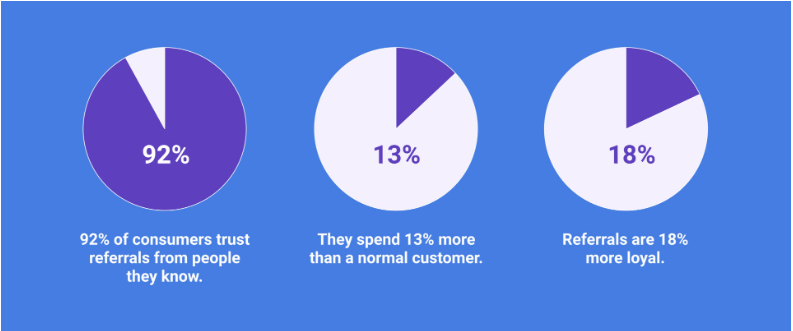
Referrals remain one of the most overlooked yet powerful B2B lead generation strategies. Studies show that 92% of consumers trust referrals from peers, and referred customers have a 16% higher lifetime value than non-referred ones. Despite this, only 11% of sales professionals actively ask for referrals.
In the Netherlands, where professional networks and reputation carry significant weight, referrals can open doors that traditional outreach cannot.
Build strong relationships with existing clients and ask for introductions to others in their network. Keep your request personal, clear, and supported with relevant material they can easily forward.
Businesses that consistently ask for referrals often enjoy a steady stream of qualified leads without incurring additional advertising expenses. If your clients value your service, they will be happy to recommend it to others.
- Invite guest experts to contribute to your marketing content
Few things strengthen your B2B lead generation strategy like credible expert voices. Inviting respected figures in your field or your target industry to participate in your marketing content builds instant trust. Their insights can be featured in blogs, webinars, or whitepapers, enhancing your brand’s authority and search visibility.
When your marketing content features an expert, it not only earns credibility but also improves discoverability. Anyone searching for that expert will likely find your company’s name alongside theirs.
In the Netherlands, where collaboration and expertise are valued, guest contributions have become a growing trend in B2B marketing. It is essentially the professional equivalent of influencer marketing, but with a stronger focus on trust and thought leadership.
Guest participation positions your business as a serious industry player while helping you reach broader, more qualified audiences.
- Schedule dedicated times for lead generation
Many businesses believe that B2B lead generation must happen continuously, but effective lead generation is about precision, not just volume. While your marketing should run year-round, setting aside dedicated times for lead gathering helps your team stay focused and efficient.
For instance, if your data shows that Dutch prospects are more responsive midweek, allocate Wednesdays and Thursdays to active outreach and use the remaining days for research, content creation, and strategy optimisation.
If you are unsure of your most productive windows, use CRM analytics or sales tracking software to identify engagement patterns and periods of low activity.
By structuring your lead generation schedule, you create consistency and prevent burnout while improving the overall quality of your outreach.
How to do B2B lead generation better than your competitors
The most successful companies in the Netherlands are combining automation, analytics, and human connection to outperform competitors. A strong CRM platform makes this possible by centralising everything from sales engagement and pipeline tracking to data-driven insights.
Modern CRM systems often include:
- Sales funnel management
- Power dialer tools
- Sales engagement tracking
- Sales force automation (SFA)
- Mobile-friendly dashboards
Generating leads is only half of the process. To outperform competitors, your sales and marketing teams must work together to segment leads, personalise follow-ups, and move prospects smoothly through the funnel.
Book a call with Konsyg for all your B2B lead generation needs in the Netherlands.
Share This Post
Recent Posts
What We Offer
Get Your Quote