

Key Takeaways
- Personalisation and relevance drive success. Generic cold email templates rarely work in competitive US B2B markets. Tailoring outreach to industry, role, and pain points is non-negotiable.
- Clarity, trust, and focus lead to more replies. A high-performing B2B cold email clearly states the value proposition, uses a single strong call-to-action, and leverages social proof to establish credibility.
- Testing and follow-ups boost ROI. Consistent A/B testing, optimised timing, and structured follow-up sequences significantly improve engagement and maximise return on B2B cold outreach.
Among the many outreach channels available, email remains the sweet spot for B2B marketers. It offers the personalised touch of a phone call without interrupting a prospect’s schedule, and it is just as instant as a social media message but far more professional. For sales prospecting, B2B cold email remains one of the most effective and scalable strategies to consider.
Yet even as a leading outreach channel, the reality is harsh: most email campaigns in the US average open rates under 50%, and response rates for cold emails hover around 5.5%. That means the majority of messages never convert into meaningful conversations.
While cold emailing is a numbers game, there are proven methods to improve the odds. With the correct personalisation, timing, and follow-up, B2B teams can turn more cold emails into warm leads.
In this guide, you will learn everything you need to know about B2B cold email in the USA, from writing high-converting messages to mastering best practices. We will also share a curated list of 16 expert-approved cold email templates designed to help you drive more replies and book more meetings.
Ready to transform your outreach and see more results from every send? Let’s get started.

What is a Cold Email?
A B2B cold email is a sales message sent to a potential buyer with whom the seller has no prior relationship. Sales representatives typically gather email addresses through research and target businesses and prospects that fit their ideal customer profile.
For many companies, especially in the US B2B market, cold emailing is one of the first lead generation strategies they use to reach decision-makers. When executed effectively, cold email marketing can open doors, build brand awareness, and foster long-term client relationships.
The challenge is that most cold emails fail. They are either too generic, filled with errors, or so obviously mass-distributed that they get ignored instantly. That is why open rates and response rates often remain discouragingly low.
The good news is this: even minor improvements in your cold email strategy, whether in personalisation, messaging, or follow-up, can put you ahead of the competition. The remainder of this guide will demonstrate how to structure effective B2B cold emails, adhere to best practices, and utilise proven templates that drive replies in the US market.
Related: Read Top 5 B2B Cold Email Strategies to Boost Reply Rates
The Importance of B2B Cold Emailing for Business Growth
When executed effectively, B2B cold email prospecting can become one of the most powerful tools in your sales and marketing arsenal. For companies in the US B2B market, cold email campaigns deliver measurable results by combining reach, personalisation, and cost efficiency. Here are some of the key benefits:
Cost-effective growth
Cold emailing is affordable for businesses of all sizes. Compared to advertising or events, it requires minimal upfront spend while still putting your brand directly in front of decision-makers.
Flexible communication
Unlike phone calls, which may be interrupted or ignored, cold emails let prospects respond at their convenience. A well-timed follow-up sequence ensures you stay top of mind even if the first message slips through.
Targeted messaging
Because outreach is built on your ideal client profile, every B2B cold email can be personalised to resonate with the right audience, improving relevance and reply rates.
High ROI potential
Among outreach strategies, cold emailing consistently delivers one of the best returns on investment. With the right subject lines, value propositions, and follow-up structure, each send contributes to pipeline growth.
Increased brand awareness
Even when recipients do not immediately reply, effective cold email campaigns build visibility. Over time, your brand becomes more recognisable, creating familiarity and trust in competitive US markets.

B2B Cold Calling vs B2B Cold Email Outreach
Cold calling and B2B cold email outreach are two of the most common methods for reaching new prospects in sales. Both can be effective, but they serve different purposes within a sales strategy.
Cold calling is personal and direct. It enables sales reps to connect with prospects in real-time, ask questions, and receive immediate feedback. This makes cold calling effective for high-value B2B deals or complex sales conversations. The downside is that cold calling takes more time, is harder to scale, and rejection over the phone can burn out a sales team.
B2B cold email outreach is scalable and trackable. It enables sales representatives to send hundreds or thousands of targeted emails to decision-makers across the US, all while measuring open rates, click-throughs, and responses. Cold email is less intrusive than a phone call, but it can also be ignored, end up in spam, or take longer to receive a response.
In the US B2B market, the most effective sales teams utilise both. Cold calling is effective for securing big-ticket accounts, while cold email campaigns consistently generate leads and drive pipeline growth at scale.
What Makes a Good B2B Cold Email?
A good B2B cold email is always targeted, personalised, and relevant. Sending a message to the wrong person or company is never effective, regardless of how polished the email appears.
Strong cold emails are built on research. Sales representatives should understand the prospect’s business model, be aware of industry challenges, and review profiles on LinkedIn or other relevant platforms. This level of personalisation proves that the email is more than a copy-paste template and that the sender is genuinely focused on solving the prospect’s problems.
Personalisation is at the core of cold email best practices. The goal is not just to send an email, but to make it clear why the prospect should pay attention. That means referencing relevant details, highlighting a clear value proposition, and aligning the message with the recipient’s business priorities.
Timing also plays a role. In the US B2B market, the best time to send cold emails is mid-morning on weekdays. Prospects are past the rush of early tasks and are more open to engaging with new messages. Well-timed outreach increases both open rates and reply rates.
In practice, the best cold emails do not feel “cold” at all; they feel like the natural start of a business conversation.
Related: Read B2B Cold Calling Tips: 10 Proven Strategies to Book More Calls
How to Write a B2B Email for Effective Cold Outreach
Writing a good B2B cold email requires more than targeting the right audience. That is only the first step. To see results, every part of your email, from research to subject line to call-to-action, must be optimised for engagement. In competitive US B2B markets, this level of precision is what separates ignored messages from high-reply campaigns.
While there are many ways to approach B2B cold outreach, these basic steps form the foundation of an intense campaign:
- Research Your Audience
Relevant outreach starts with research. A B2B cold email is the first step toward building a business relationship, but it only works if the recipient believes you understand their challenges. Before writing, answer the key questions:
- What does this company stand for?
- How does my offer align with their interests?
- Where is the common ground between our businesses?
- How can I tie my message to their business model?
Using a sales prospecting tool that integrates with your CRM makes this process scalable and efficient. By filtering leads by industry, company size, and job title, you ensure every cold email speaks directly to a qualified audience.
Good research sets up your cold email to achieve three objectives:
- The recipient opens it.
- They read it through to the end.
- They take action (reply, book a call, or click a link).

- Craft an Engaging Subject Line
Your subject line is the first impression of your B2B cold email. In the US, where decision-makers receive dozens of sales emails daily, a weak subject line means your message will never get opened.
A strong subject line should:
- Capture attention immediately.
- Make the recipient want to open the email.
- Stay concise (under 50 characters) so it is visible in any inbox.
The best subject lines strike a balance between intrigue and relevance. Avoid overused or spam-triggering phrases such as “Best,” “Click here,” “Pay,” or “Make money.” These words often cause emails to be sent directly to spam folders in Gmail, Yahoo, and Outlook.
Instead, focus on clarity, personalisation, and curiosity. For example, “Ideas to cut your onboarding costs by 20%” is specific, valuable, and relevant to the prospect’s pain points, the type of subject line that drives higher open rates in B2B cold email campaigns.
- Personalise Your Greeting
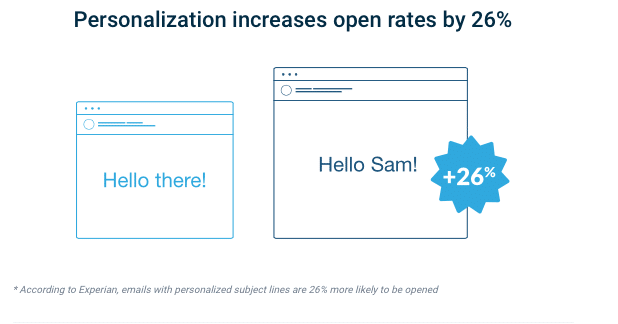
Personalisation is one of the most essential elements of a B2B cold email. Start your message with a greeting that uses the recipient’s first name. A generic “Hello” or “Dear Sir/Madam” signals a mass email and lowers the chances that your prospect will read further.
Addressing the recipient directly shows that your email is intentional, not automated spam. In the US B2B market, where decision-makers are flooded with outreach daily, small details like a personalised greeting can make the difference between being ignored and earning a reply.
Every touchpoint in cold outreach personalisation matters. Using the recipient’s name, referencing their company, or acknowledging recent activity (like a product launch or news feature) builds rapport from the very first line. This increases the likelihood that the prospect will read your full email and engage with your message.
- Write a Concise Opening
The first line of your B2B cold email sets the tone for the entire message. Your opening should be short, clear, and relevant. Introduce yourself, state your role, and explain why you are reaching out all within two to three sentences.
US decision-makers value efficiency. By getting to the point early, you show that you respect their time. A strong opening line increases the likelihood that your prospect will continue reading and consider your offer.
- Compliment Your Prospect
The next step in cold email personalisation is offering a genuine compliment or observation. Mention a specific aspect of the prospect’s company, such as a recent milestone, product launch, or market recognition.
This simple step builds rapport and demonstrates that your email is not just another mass message. In the US B2B market, where inboxes are crowded with sales outreach, showing that you have done your homework helps establish credibility and trust.
Keep the compliment tied to your end goal. For example:
- If you want to pitch a partnership, reference their community initiatives.
- If you are aiming to become a supplier, acknowledge the quality of their products.
Personal compliments make your cold email feel human, not automated.
- Present a Compelling Value Proposition
Once you have established a connection, the next step is to communicate your value proposition clearly. A good B2B cold email does not ask for a favour; it offers a benefit.
Explain how your solution solves a specific problem or improves the prospect’s business. Focus on outcomes, not features. For example:
- Reducing costs by a measurable percentage.
- Shortening turnaround times.
- Providing better service compared to competitors.
Tie your value proposition directly to the recipient’s needs. By positioning your outreach as mutually beneficial, you increase the likelihood of a positive reply and move the conversation toward a sales opportunity.
- Strengthen Your Case with Social Proof
Once you present your value proposition, back it up with social proof. In competitive US B2B sales, prospects want evidence that your solution has worked for others in their industry. Testimonials, case studies, or performance metrics can add weight to your B2B cold email outreach.
For example, mentioning “We helped a logistics company increase lead response rates by 32%” is far more persuasive than a vague promise. Social proof removes doubt, builds credibility, and shows that your company has a proven track record of delivering results.
- Include a Clear Call-to-Action (CTA)
Every effective B2B cold email ends with a single, simple call-to-action. Whether you want the recipient to schedule a meeting, reply to your message, or view a brief demo, the action should be clear and straightforward.
Best practices for cold email CTAs:
- Keep it singular: Ask for one thing only. Multiple requests lower response rates.
- Reduce friction: Suggest a quick, no-commitment action, such as reviewing a 5-minute video or selecting a time from a calendar link.
- Place it last: Build interest first, then ask for action at the end.
Without a CTA, your cold outreach email risks being ignored. The right CTA makes the next step obvious and effortless.
- Utilise Effective Closing Techniques
The closing is your final chance to secure engagement. Strong closings in B2B cold emails reinforce value and encourage the recipient to take action. Techniques that work well in the US market include:
- Restating your CTA clearly.
- Adding urgency with time-sensitive offers.
- Sparking curiosity by hinting at a benefit they will uncover in a follow-up.
- Summarising key takeaways so the reader remembers your main points.
A strong close leaves the prospect with confidence and clarity, increasing the likelihood of a reply.
- Craft a Professional Email Signature
Your email signature is more than just contact information; it is an integral part of your brand identity. A polished signature builds trust and reinforces professionalism, both of which are critical in B2B cold email best practices.
An effective signature should include:
- Full name
- Job title
- Company name
- Contact information (phone and email)
- Website link
- LinkedIn or other relevant social profiles
- Optional professional headshot
In the US B2B market, where buyers evaluate credibility quickly, a clean and professional signature can set you apart from competitors who overlook this detail.
Best Practices for Sending B2B Cold Emails
Beyond structure and content, successful B2B cold email outreach depends on following proven best practices. These principles apply to every campaign, especially in the US B2B market, where inbox competition is fierce.
Keep it short and clear
Busy decision-makers lack the time for lengthy paragraphs. The best cold email best practices recommend a maximum of 100–150 words. Use simple language, avoid jargon, and make your email easy to scan.
Personalise every message
Generic emails get ignored. Reference the recipient’s name, company, or recent activity to show relevance. In the US, personalisation signals that you understand the prospect’s business and makes replies far more likely.
Follow up consistently
Most replies happen after the second or third message, not the first. Create a follow-up sequence to remind prospects of your offer and increase response rates. Skipping this step is one of the biggest mistakes in B2B cold outreach.
A/B test your subject lines and content
Testing is critical for improving performance. Try different subject lines, CTAs, and value propositions to see what resonates with your US audience. Over time, testing boosts open rates, click-through rates (CTR), and ROI.
Common Mistakes to Avoid in B2B Cold Email Outreach
Even if you follow best practices, a few simple errors can ruin the impact of your campaign. These B2B cold email mistakes not only reduce reply rates but also hurt credibility in the US B2B market.
Using an unprofessional email address
Your sender address is the first trust signal a recipient sees. An address with random letters or numbers looks spammy and can get flagged by filters before your cold email is even opened. Always send from a professional, brand-affiliated domain. When possible, use the name of a real sales representative instead of a generic “info@” or “no-reply” email. This makes your outreach more personal and trustworthy.
Failing to include contact information
Many automated cold emails forget the basics: a straightforward way to respond. If you do not include a phone number, email address, or website, you are creating friction and losing opportunities. Busy US professionals will not chase down your details. Make it easy for them to reply or connect through multiple channels.
Overlooking personalization
A common mistake in cold email outreach is sending generic templates to hundreds of prospects. Without personalisation using the recipient’s name, company, or relevant detail, your email will be ignored. In the competitive US market, relevance is everything.
Skipping follow-ups
Another costly mistake is sending one email and stopping there. Research shows most replies happen after the second or third attempt. Without a follow-up sequence, you leave revenue on the table.
Not Testing Emails Before Sending
One of the most common B2B cold email mistakes is failing to test your messages before sending them. Even the best-written cold email can fall short due to formatting errors, broken links, or poor mobile display. In the US B2B market, where most decision-makers read emails on mobile, a formatting issue can ruin your chances of engagement.
Always send test emails to yourself or your team first to ensure they are accurate and effective. Check how the message looks on laptops, tablets, and smartphones. Testing ensures that your email is readable, professional, and optimised for every device.
Overlooking Personalization
Generic outreach is one of the fastest ways to lose credibility in cold email outreach. Many sales teams send mass, copy-paste emails to hundreds of leads to save time. In reality, this approach often results in low reply rates.
In the US B2B space, personalisation is essential. Use the recipient’s name, reference their company, or mention a recent achievement to prove your email was written for them. Even small personal touches can significantly increase open and reply rates.
If time is a concern, adopt a structured approach to personalisation in B2B emails:
- Time-limit research: Give yourself 5–10 minutes to scan a company’s website, LinkedIn, or recent news.
- Batch personalisation: Block out time to gather details for multiple prospects at once. This makes writing targeted emails faster.
Personalisation takes more effort, but it is one of the most essential cold email best practices if you want to stand out in crowded US inboxes.
Ignoring Follow-Up Sequences
One of the most costly B2B cold email mistakes is sending a single email and stopping there. In reality, most US decision-makers are buried in meetings and tasks. Even if they saw and liked your first email, chances are they will forget it within hours.
The lead is often won in the follow-up. A structured sequence of follow-up emails keeps your offer visible and significantly increases reply rates. Consistent follow-ups demonstrate persistence without being pushy, ensuring your outreach stands out in crowded inboxes.
Neglecting to Analyse Metrics and Results
Another critical error in cold email outreach is failing to track performance. Without reviewing open rates, click-through rates, and response rates, you have no way of knowing what works and what needs improvement.
In the US B2B market, analysing metrics is not optional; it is essential. Tracking data helps refine subject lines, test CTAs, and adjust targeting. Over time, this optimisation leads to stronger engagement and higher ROI from your campaigns.
Bonus B2B Cold Email Tips to Boost Opens and Click-Throughs
Before diving into the expert-approved templates, here are some extra B2B cold email tips to maximise your outreach results. These reminders may sound familiar, but that’s because they are essential for success in the US B2B market:
Send from a real salesperson, not a generic address
Prospects connect with people, not faceless brands. Always use a real name in the “from” line to make your cold outreach email feel personal and trustworthy.
Leverage social proof to build trust
Mention recognisable clients or share impressive numbers of companies you’ve worked with. Keep it professional; the goal is credibility, not bragging. In the US, this kind of proof reassures prospects that your company is established and reliable.
Include a single, clear CTA
Every effective B2B cold email has one call-to-action. Whether it is replying to the email, filling out a short form, or checking out a quick demo, keep the action specific and straightforward. Multiple CTAs confuse prospects and lower response rates.
Keep it short and focused
Limiting your cold email to one CTA also keeps it concise and clear. Short, clear emails are easier to read, less likely to be flagged as spam, and more effective at driving opens and clicks.
3 of the Best B2B Cold Email Templates Sales Experts Swear By
When refining your B2B cold email outreach strategy, one of the fastest ways to improve results is by studying proven examples. The best cold email templates provide structure, personalisation cues, and wording that consistently earn replies.
To help you learn how to write a B2B cold email that works in the US market, we reached out to 16 sales and marketing experts and asked:
“What’s the best cold email you’ve ever sent or received and why did it work?”
Here are 5 expert-approved cold outreach templates that you can adapt for your own campaigns. Each example highlights why it works, how to personalise it, and how it improves reply rates in real-world B2B sales.
- The Compliment / Benefit / Time / Help Email
Hi [First Name],
You’re leading a fast-growing company, so I’ll keep this brief.
At [Your Company], we have developers who can quickly deploy to move your product roadmap forward or help you test new ideas. Our team covers everything from the backend to the frontend and can execute tasks rapidly without slowing down your workflow.
Would you be available for a brief 15-minute call later this week to discuss how we can support your goals?
Thanks, [Your Name]
The email starts with a quick COMPLIMENT, and who doesn’t want to hear that? A short, indirect compliment goes a long way.
In just two sentences, the sender summed up their entire operation and made it simple to understand the BENEFIT of working with them.
They set the expectation of how much TIME would be needed to take the next step, showing respect for the prospect’s schedule.
The offer of HELP makes the email feel collaborative rather than pushy. People respond well when the focus is on support instead of pressure.
To summarise: COMPLIMENT, BENEFIT, TIME, and HELP are what make this type of cold email effective. It is direct, clear, and easy to respond to.
- The “Two Things You Should Fix” Email
Hi [First Name],
It appears that you last checked out [Company] a few months ago.
I apologise for not reaching out earlier.I was tied up, but I wanted to follow up now.
Our growth team reviewed your site and loved what you’re doing. However, we also noticed two areas that you could improve to achieve even better results.
We can show you exactly how to fix it on a quick screen share next [Day] at [Time] (your time).
Would you be available for a brief call to review it?
Best,
[Your Name]
Writing sales emails is what we do every day, so it takes a lot for an email to stand out. But this one was a masterpiece of targeting and scalability. Because that’s what a good cold sales email template is all about: scaling a tedious process while getting it just right.
Why is this email awesome?
- The subject line is personalised and establishes a link between people from both companies.
- The first sentence establishes a clear link between the sender and the company.
- There’s a humorous line, short and in good taste, which makes the email feel human.
- It gets to the point and singles out the company while teasing the why.
- It offers value and personalisation by pointing out areas for improvement.
- The call to action is clear and easy to respond to.
Note: A big brand like Sumo doesn’t need social proof in the first email. Smaller companies should include it earlier.
To summarise: personalisation, relevance, humour, value, and a clear CTA made this email effective.
- The Bear GIF Email
Subject: Free Trial
Hi [First Name],
Did you have a chance to check out [Company]’s free trial last week? I know you may be thinking:
[Insert GIF: “I have no idea who you are”]
But we can change that! I’d love to chat to learn more about your pain points. If now isn’t the right time, please let me know when would be a better time to check in.
Best,
[Your Name]
This B2B cold email template has approximately a 16% reply rate as the last message in a sequence. Very often, these sales emails result in a meeting or are forwarded to the decision-maker.
It’s essential to show some personality in your emails to remind prospects there’s a human on the other end of the thread, but make sure to avoid clichés that cause the humour to fall flat.
Before you send your own cold sales email, ask yourself…
You have nailed the basic components of your B2B cold email. You took inspiration from expert-approved outreach examples and templates. You wrote a version designed to engage your ideal prospect.
Before you send your email (to increase opens and CTRs exponentially), take a beat and review it. Ask yourself:
“Is it obvious that I researched my prospect and their company?”
Make it clear you know who they are and why you are reaching out. Add relevant details so it feels written for them, not a solicitation. Show you did thorough research and believe your offer is a strong fit.
Pro tip: Prospect research also confirms you are targeting the best possible person.
“Is my message concise, and is it easy for my prospect to respond?”
Skip long product explanations. Keep the value clear and end with a simple CTA.
“How do you currently solve problem X?” is stronger than “Looking forward to hearing from you.”
“Can I actually help them?”
If the offer will not meaningfully improve their work, do not send the email. You will create unnecessary work by pushing leads that will later disqualify. Save the time.
“Do I have any social proof?”
Include a short testimonial, metric, or recognisable customer logo. This helps the prospect see you are the real deal.
Pro tip: Pair the proof with a simple “real deal” GIF for a quick credibility boost.
Take Your B2B Cold Email Outreach to the Next Level
The truth is that there is still plenty of room to improve cold emails in general, but there are definitely a few stand-outs worth learning from. With numerous sales tools available today, there is no reason for reps to continue sending plain, ineffective cold emails.
Add some impact with personalisation, clear value propositions, and even creative touches like video or bright visuals, and you will have a much better chance of catching a prospect’s attention.
From building targeted lists to structuring campaigns and refining messaging, Konsyg helps companies streamline their B2B cold outreach and achieve higher reply rates. Our SDR model is designed to scale personalised outreach while keeping every touch relevant to the US market.
Interested in learning more? Contact Konsyg today to see how we can help your sales team close more deals.
Share This Post
Recent Posts
What We Offer
Get Your Quote