

B2B lead generation has always been difficult, but for SMBs with limited resources and little brand recognition, it can feel almost impossible.
In 2025, small businesses are competing against enterprises with bigger budgets, more established sales processes, and more substantial brand presence. To win opportunities, SMB sales teams need a straightforward approach to B2B lead generation that prioritises efficiency, consistency, and conversion.
This guide explores:
- The state of SMB B2B lead generation in 2025.
- Where small businesses should focus their sales efforts to see results.
Three proven B2B lead generation strategies designed to help SMBs build pipelines and close deals.
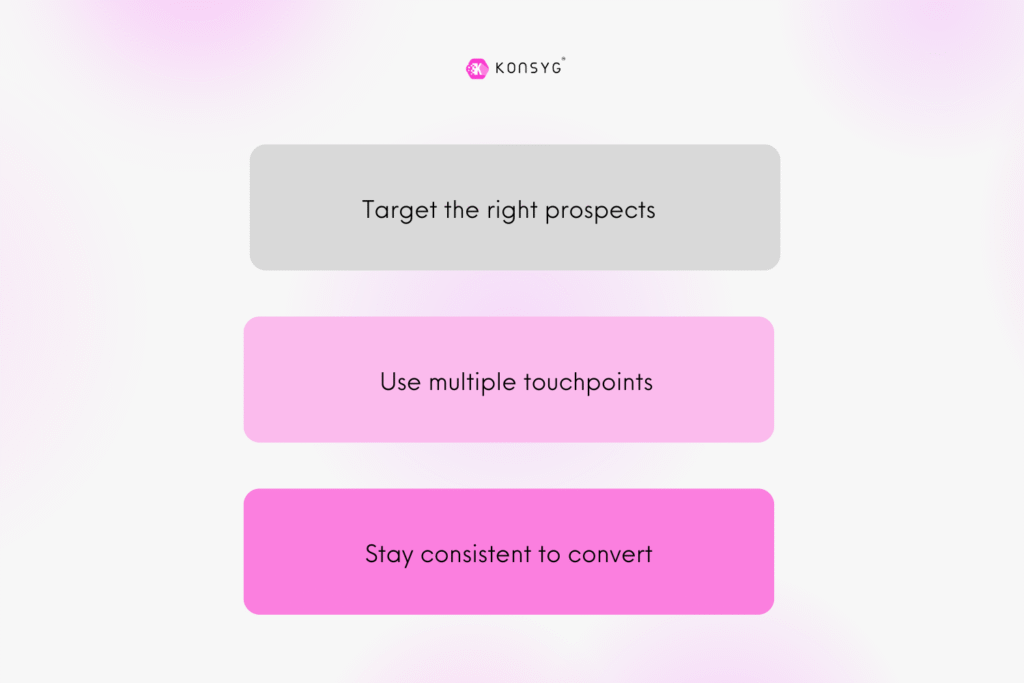
B2B lead generation still matters for SMB sales teams, maybe now more than ever.
With rising costs across digital advertising and declining returns from traditional inbound channels, small businesses need smarter, more targeted ways to fill their pipeline.
Unlike enterprise sellers, SMB sales teams face greater challenges: fewer qualified leads, limited access to accurate data, and the constant hurdle of building credibility without established brand recognition.
Add to that the pressure of stricter data protection laws and increasing buyer scepticism, and the path to new business becomes even more complex.
B2B lead generation for SMBs is a demanding process that requires persistence, focus, and the right tools.
The companies that succeed are the ones that combine consistency with a proven outbound strategy, turning limited resources into repeatable results.
Now, let’s look at the real state of SMB B2B lead generation in 2025.
Key Data Insights
Let’s start with the headline: UK SMB B2B lead generation numbers.
A recent industry survey shows that 91% of B2B marketers rank lead generation as their top priority. Yet, more than half (58%) admit that creating high-quality leads remains their most significant challenge (Reach Marketing, 2025).
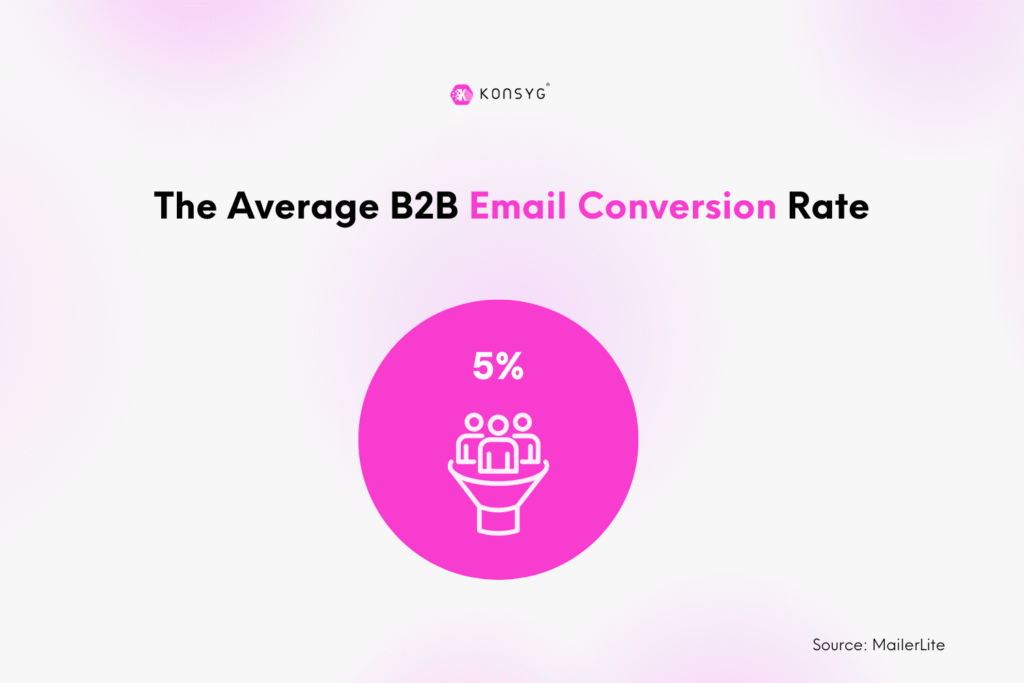
When it comes to conversion, the numbers are even tighter. On average, B2B email campaigns deliver around a 5% conversion rate, while LinkedIn ads convert at roughly 3.2%, but at a higher cost per lead (Sci-Tech Today, 2025).
Outbound calling remains the toughest channel: Cognism’s 2025 report found that just 2.3% of cold calls convert into booked meetings (Cognism, 2025).
It’s fair to say those are long odds. But a closer look at multi-channel data reveals plenty of insights SMB teams can use to turn the odds in their favour.
How many touchpoints should you plan for?
When it comes to B2B lead generation outreach, it’s a trade-off:
👉 Maximise coverage by reaching out to more leads,
or
👉 Maximise conversion by increasing the number of touchpoints with fewer, high-value prospects.
Public benchmarks show you don’t need endless follow-ups to get results:
- 3–4 touchpoints are typically enough to generate an initial response (Klenty, 2025).
- 6–8 touchpoints are usually required to turn a qualified lead into an opportunity (Salesforce data cited by multiple reports).
- Beyond 8 attempts, the gains diminish rapidly, with most SMBs seeing little ROI from additional outreach (Cognism, 2025).
Three Data-Backed B2B Lead Generation Strategies
Here are three proven approaches to help SMB sales teams balance pipeline velocity with lead quality in their B2B lead generation campaigns:
- The Aggressive Strategy
One touchpoint per prospect. Maximise pipeline velocity by engaging once and then moving on.
This approach works best when your SMB has access to a large B2B lead pool and wants to test markets quickly. It prioritises speed, volume, and top-of-funnel coverage, making it effective for campaigns where B2B appointment setting and rapid market feedback are the main goals.
- The Balanced Strategy
Two to four touchpoints per prospect. Capture nearly 80–90% of possible responses without sacrificing too much time or resources.
This is the smart middle ground for SMB teams looking to balance efficiency with conversion rates. By combining outbound email, LinkedIn outreach, and a follow-up call, you can increase your chances of turning initial connections into qualified B2B leads without slowing down pipeline movement.
- The Conservative Strategy
Five to eight touchpoints per prospect. Extend your outreach to multiple channels and nurture each lead thoroughly.
If every prospect counts, this approach maximises contact rates per lead, though list turnover will be slower. It is especially effective for SMBs targeting niche markets where B2B lead generation depends on persistence, personalised outreach, and longer nurturing cycles.

What is the best time to generate B2B leads?
Now you know how many touchpoints you need, the rest of this report highlights granular insights to help you optimise your B2B lead generation outreach.
So, what are the best days of the week and the best times of day to connect with prospects?
The answer is clear: mid-week is where SMB sales teams perform best.
Tuesday delivers the strongest results for response rates and meetings booked, with both Wednesday and Thursday showing similar strength.
That is not to say Monday and Friday are wasted. Friday, often seen as the weakest day for outbound sales, is only around 20% lower than Tuesday, the best day overall.
The reasons are simple. Monday is a planning and catch-up day, while Friday tends to slow down as prospects prepare to close out their week. Mid-week remains the prime “doing business” window.
When viewed from a conversion perspective, Tuesday still leads, but Friday comes surprisingly close. Lower competition from other sellers and fewer meetings may give prospects more time to engage in meaningful conversations.
To maximise the number of leads converted per connect, SMB teams need to sharpen their objection-handling skills. A well-timed response can turn a “No” into a follow-up meeting or keep the door open for future discussions, an essential part of sustainable B2B lead generation.
What are the best hours of the day for B2B lead generation?
There are four clear takeaways from the data:
Regular working hours are all roughly equal, so there is no need to build your entire outreach plan around a single “golden hour.”
8 am is the weakest time to connect, which is no surprise given that most prospects are starting their day.
5 pm is one of the strongest times to reach decision-makers.
6 pm also delivers strong results, with higher-than-average response rates.
Actionable insights
For SMB sales teams running B2B lead generation campaigns, this means you can structure your day to take advantage of late afternoon performance. A 10 am–6 pm workday instead of 9 am–5 pm allows you to capture the two most productive hours.
When combined with the two-touch or three-touch strategies, the exact time of day matters less than consistency. The key is not to neglect the final hours, when prospects are more likely to be free from meetings and open to conversation.
Post-5 pm outreach is especially valuable. Prospects are still at work but under less time pressure, giving SMB sellers a better chance to start meaningful conversations and move leads forward.
If you follow a one-touch approach, it makes sense to focus efforts between Tuesday and Friday, when mid-to-late day performance is strongest. Friday in particular has a high conversation-to-meeting conversion rate, making it more effective than many teams assume.
Overall, the differences between hours are not statistically significant. B2B lead generation success can happen at any time. The most crucial factor is to maximise the hours available and maintain consistent outreach.
Selling in the UK vs Europe
Now that we’ve seen UK SMB data, here’s what public benchmarks suggest for B2B lead generation performance in the UK vs Europe or globally, and how SMBs might adjust their strategy accordingly.
Europe vs UK
- In a recent report, the average B2B conversion rate globally (including UK / EU companies) is about 3.2%, with high-performing firms reaching up to 6%. Reach Marketing
- Benchmark data from “Lead Conversion Rate Statistics: Benchmarks & Industry Averages” shows B2B lead conversion rates usually fall in the 2-5% range, depending on industry and channel. Thunderbit
- Public sources indicate that many B2B companies in the UK/EU are challenged by lead quality, complexity of buyers, and longer decision cycles. For example, in 2025, 62% of marketers say using intent data significantly improves lead quality and conversion rates. Reach Marketing
- Another benchmark: some industries (especially SaaS/tech) tend to sit on the lower end of conversion due to high competition and long approval cycles. Some sources list ~1-3% for tech / SaaS conversion for specific channels. UpLead
What this suggests for SMBs:
- UK SMBs are likely to outperform some EU peers and global averages in specific channels due to market maturity and access to superior sales support/data tools. But the gap might not be huge.
- Multi-touch, high-quality lead nurturing, and utilising intent data / good targeting are more crucial in Europe/for firms with lower conversion benchmarks.
European B2B lead generation data: Key takeaways
The numbers show that for EU SMBs, B2B lead generation performance is broadly similar to what we see in the UK.
So, if you are running SMB sales campaigns in Europe, the data suggests you should:
- Plan for at least two to three touchpoints per prospect to increase conversion likelihood.
- Focus activity mid-week, with Tuesday and Thursday showing the highest engagement rates.
- Prioritise prospecting during late mornings (9 am–10 am) and early afternoons (1 pm–3 pm), when response rates are strongest.
For SMB sales teams, this means that even without the brand recognition of larger enterprises, timing and persistence can shift the odds in your favour when generating B2B leads.
Final summary
With the right tools, tactics, and consistency, B2B lead generation is absolutely viable for SMB sales teams in 2025.
Accurate and reliable data gives sellers a better chance of reaching the right prospects, building trust faster, and converting more leads into meetings. For small businesses competing against bigger brands, more innovative B2B lead generation strategies can make the difference between an empty pipeline and predictable growth.
For more information on outbound sales and B2B lead generation, book a strategy call today with Konsyg.
Demand and Lead Generation Services
Attract the Right Prospects and Fill Your Funnel with Precision
Launch Multichannel Campaigns That Build Awareness, Generate Demand, and Drive Qualified Leads
Konsyg’s demand and lead generation service equips B2B companies with the strategy, content, and outreach expertise to attract, engage, and convert high-intent buyers.

Share This Post
Recent Posts
What We Offer
Get Your Quote