

B2B lead generation remains the most significant marketing challenge for business owners in the United States. This is not a recent issue. It is a long-standing problem that has become more complex as buyer behaviour shifts, competition increases, and traditional acquisition channels lose effectiveness.
Based on years of direct work with founders, sales leaders, and go-to-market teams across the US, one theme appears consistently. When growth stalls, the root cause is usually the same. Companies struggle to build a predictable, scalable B2B lead-generation engine.
Closely following this challenge are two related issues. The absence of a straightforward lead generation strategy and the lack of internal time to execute consistently. Many teams understand that lead generation is critical, but they rely on fragmented tactics rather than a structured system.
The US market is crowded, mature, and highly competitive. Decision-makers are more informed, more cautious, and exposed to constant outreach. As a result, businesses that depend on outdated methods or inconsistent execution find it increasingly difficult to generate qualified demand.
In 2026, successful B2B lead generation in the USA is no longer about volume alone. It is about targeting the proper accounts, delivering relevant messaging, and maintaining a repeatable process that supports long-term pipeline growth.

What Is B2B Lead Generation and What Counts as a Lead?
B2B lead generation refers to marketing and sales activities that identify potential business buyers and capture their interest. While the term is widely used, definitions vary significantly between organisations.
At its core, a lead is any contact who has shown a measurable level of interest and can be reached. This may include someone who downloads gated content, subscribes to a newsletter, fills out a form, engages through live chat, or responds to outbound communication.
A lead is not the same as a sales-qualified opportunity. It does not indicate immediate purchase intent. Instead, it represents early or mid-stage interest that can be developed through structured follow-up.
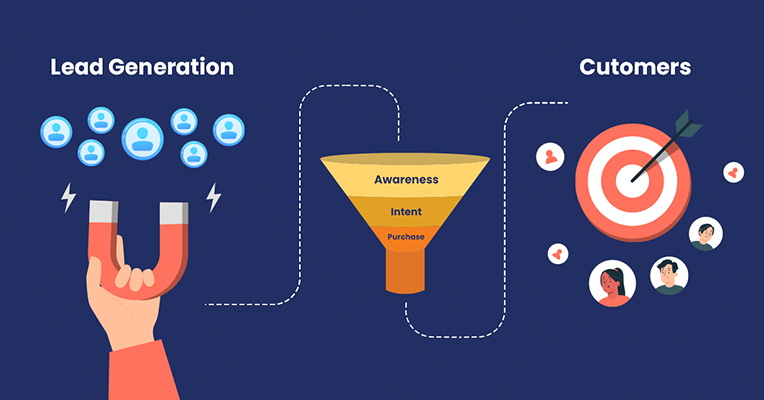
From a practical perspective, lead generation is the process of building a contactable audience of businesses that match your ideal customer profile and have demonstrated some level of intent. The objective is to move these leads through a defined journey, from awareness to consideration and eventually to a sales conversation.
In the US market, effective B2B lead generation strategies typically involve multiple channels, consistent messaging, and alignment between marketing and sales teams. The focus is not on quick wins, but on creating a sustainable pipeline that can be nurtured over time.
Read Konsyg’s guide on B2B Lead Generation here!
Why SMEs Need a Multi-Channel B2B Lead Generation Strategy
For small and mid-sized businesses in the United States, relying on a single B2B lead-generation tactic poses unnecessary risk. Markets shift, channels fluctuate, and buyer behaviour changes quickly. A sustainable pipeline depends on a multi-channel approach rather than on a single isolated activity.
Effective B2B lead generation combines several channels. This often includes content marketing, search engine optimisation, email campaigns, paid acquisition, and a website designed to convert interest into action.
Just as a business would not rely on a single salesperson to drive all revenue, lead generation should not rely on a single channel to deliver consistent results.
In the US market, competition for attention is high, and buyers interact with brands across multiple touchpoints before engaging with sales. A multi-channel B2B lead generation strategy ensures visibility throughout the buying journey and increases the likelihood that prospects engage when the timing is right.
The objective is not only to generate leads, but to support them through a structured process that improves conversion quality and pipeline predictability over time.

Inbound vs Outbound B2B Lead Generation
Most B2B lead generation strategies fall into two broad categories. Inbound and outbound.
Inbound B2B lead generation focuses on attracting prospects who are already searching for information, solutions, or providers.
The goal is to be discoverable when potential buyers are actively researching problems your business solves. This is typically achieved through SEO-driven content, educational resources, webinars, and organic visibility across digital channels.
Inbound approaches tend to build credibility gradually and support longer-term pipeline growth. Leads are generated as prospects voluntarily engage after finding value in the information provided.
Outbound B2B lead generation, by contrast, involves proactive outreach to targeted companies and decision-makers.
This includes cold emailing, cold calling, paid media, and account-based outreach. Rather than waiting for interest to surface, outbound efforts initiate conversations with prospects that fit a defined ideal customer profile.
Inbound often delivers stronger trust over time, while outbound can create faster traction when executed with precision.
In the US, high-performing teams typically combine both approaches. A balanced B2B lead generation strategy enables businesses to capture existing demand while also creating new demand through targeted outreach.
The Dynamics of B2B Lead Generation in the US Market
The dynamics of B2B lead generation are shaped by how businesses make purchasing decisions. Unlike consumer transactions, B2B buying is rarely impulsive. Decisions often involve extended research, internal evaluation, and multiple stakeholders across departments.
This complexity requires B2B lead generation strategies that account for longer sales cycles and layered decision-making. Messaging must resonate with different roles, including economic buyers, technical evaluators, and operational stakeholders.
Targeting in B2B lead generation is also more nuanced. Factors such as job title, seniority, company size, industry, and growth stage all influence whether a lead is relevant. Demographics alone are not enough. Effective targeting depends on understanding organisational context and business priorities.
In the US, successful B2B lead generation relies on relevance, timing, and consistency. Companies that align targeting, messaging, and channel execution are better positioned to build a pipeline that converts rather than simply generating volume.
The Role of B2B Lead Generation Companies
As B2B lead generation becomes more complex and competitive, many US businesses choose to work with specialised B2B lead generation companies to support their growth objectives. These companies focus exclusively on designing, executing, and optimising lead acquisition programs across multiple channels.
A strong B2B lead generation agency brings structured processes, market expertise, and tested methodologies that are difficult to replicate internally.
Instead of experimenting with disconnected tactics, businesses gain access to proven frameworks that prioritise lead quality over volume.
By working with a B2B lead generation company, internal teams can focus on sales conversations and deal progression while ensuring a consistent flow of qualified prospects entering the pipeline. The best agencies rely on data, targeting precision, and performance tracking to refine campaigns and improve conversion rates continuously.
In the US market, where buyer attention is fragmented and competition is high, this level of focus and optimisation often makes the difference between unpredictable results and sustained pipeline growth.

The Benefits of Outsourcing B2B Lead Generation
Outsourcing B2B lead generation offers several advantages for small and mid-sized businesses looking to scale efficiently.
One of the primary benefits is access to specialised expertise. Dedicated B2B lead generation agencies stay current with evolving buyer behaviour, outreach regulations, channel performance trends, and sales technology.
This allows businesses to benefit from up-to-date strategies without having to build that capability internally.
Outsourcing also reduces the pressure on in-house teams. Instead of managing tools, data, and daily execution, internal resources can focus on core activities such as sales, customer relationships, and strategic planning.
Another key advantage is flexibility. Outsourced B2B lead generation services can scale up or down based on business priorities, seasonality, or market conditions. This adaptability is particularly valuable in the US, where demand patterns can shift quickly across industries.
Ultimately, outsourcing allows companies to move from inconsistent lead flow to a structured system that produces measurable results.
When executed correctly, outsourced B2B lead generation is not just a support function. It becomes a predictable driver of revenue growth.
The Konsyg Approach to B2B Lead Generation
At Konsyg, we help small and mid-sized businesses build predictable, scalable B2B lead-generation systems that drive real revenue growth. The focus is not on surface-level metrics such as clicks, impressions, or engagement alone. The focus is on creating a pipeline that sales teams can consistently convert.
Rather than relying on isolated tactics, Konsyg applies a structured, process-driven approach to B2B lead generation in the USA.
This approach is designed to work across industries and buying cycles, especially in competitive US markets where decision-makers are harder to reach, and sales cycles are longer.
Konsyg’s methodology integrates multiple channels into a single, cohesive system. Each activity supports a specific stage of the buyer journey, from initial targeting and awareness through qualification and sales handoff.
This ensures that lead generation efforts contribute directly to pipeline quality and revenue outcomes, not just activity volume.
A key differentiator in Konsyg’s B2B lead generation strategy is its emphasis on consistency and sustainability. Campaigns are designed to be repeatable, measurable, and adaptable as market conditions change. This allows businesses to move away from unpredictable bursts of leads and toward a steady flow of qualified opportunities.
By combining data-driven targeting, disciplined execution, and ongoing optimisation, Konsyg helps US businesses turn B2B lead generation into a reliable growth engine rather than a recurring challenge.

8 Key B2B Lead Generation Strategies
- Content Marketing: Educating and Nurturing Prospects
Content marketing remains one of the most reliable ways to attract and develop potential buyers over time. By publishing valuable and relevant material, businesses can position themselves as knowledgeable and credible long before a sales conversation begins.
This content can take many forms, including blog articles, reports, guides, webinars, and case studies. Each format serves a different purpose, whether it is explaining a problem, outlining solutions, or demonstrating real-world results. What matters most is relevance. Content must address the actual challenges prospects face, not generic talking points.
Distribution plays a critical role. Even high-quality content will underperform without visibility. Sharing through email, search, industry publications, and professional networks increases reach and engagement. When content is aligned with search intent and promoted consistently, it becomes a steady source of inbound opportunities rather than a one-off activity.
- Search Engine Optimisation: Capturing High-Intent Demand
Search engine optimisation is essential for attracting prospects who are already researching solutions. When someone actively searches for a service or capability, appearing prominently in results creates a strong opportunity to engage.
Effective SEO starts with understanding what potential buyers are searching for and why. Keyword research helps identify topics with clear intent, while well-structured content improves visibility and relevance. Over time, consistent optimisation compounds results rather than delivering short-term spikes.
Technical factors also matter. Site speed, mobile usability, straightforward navigation, and clean structure all influence how search engines rank pages and how users experience them. A site that is easy to use and crawlable is more likely to convert visitors into leads.
SEO works best as a long-term investment, supporting sustainable growth rather than immediate wins.
- Paid Advertising: Accelerating Visibility
While organic channels take time to mature, paid advertising offers immediate exposure. Platforms such as Google Ads and LinkedIn allow businesses to reach specific industries, job roles, and company sizes with precision.
Paid campaigns work best when they are tightly targeted and continuously optimised. Messaging, creative, and landing pages must align with buyer intent. Retargeting also plays a vital role by keeping a brand visible to prospects who have already shown interest.
When appropriately managed, paid acquisition can complement organic strategies and help fill short-term pipeline gaps without replacing longer-term efforts.
- Email Marketing and Automation
Email remains one of the most effective channels for nurturing interest and maintaining relationships. It allows direct communication with prospects at different stages of the buying journey.
Segmentation is critical. Messages perform better when they are tailored to specific audiences rather than sent broadly. Automation tools support this by delivering timely follow-ups based on behaviour, engagement, or stage in the funnel.
When executed well, email supports ongoing education and trust-building, ensuring that leads remain engaged until they are ready for a sales conversation.
- Social Media for Relationship Building
Social platforms offer valuable opportunities to stay visible and engaged with potential buyers. LinkedIn is essential in B2B contexts, where professional networking, thought leadership, and direct outreach intersect.
Other platforms also play supporting roles. Facebook and Instagram can extend reach and support paid distribution, while X remains helpful in participating in industry conversations, even as its influence has declined.
Emerging platforms such as TikTok and visual discovery tools like Pinterest can also contribute when content is adapted appropriately. The key is not to be everywhere, but to be active where your audience already spends time.
Social media works best when treated as a long-term engagement channel rather than a direct conversion tool.
- Telemarketing and Direct Outreach
Direct outreach remains effective when executed with discipline and structure. Speaking to prospects in real time allows objections to be addressed immediately and interest to be qualified more accurately.
However, this approach requires strong systems. Recruiting, training, management, and consistency all affect outcomes. Without these foundations, results are unpredictable and challenging to scale.
For businesses that can support it properly, direct outreach adds a human layer that digital channels cannot fully replace.
- Exhibitions and Trade Shows
In-person events offer a different kind of engagement. Trade shows and exhibitions allow businesses to demonstrate expertise, build trust, and have meaningful conversations in a short period of time.
These events tend to attract motivated audiences, making them valuable for networking and relationship building. However, they also require careful cost-benefit analysis. Expenses include booth space, staffing, travel, and time away from day-to-day operations.
Success depends heavily on preparation and follow-up. Without a clear plan to capture and nurture contacts after the event, opportunities are often lost.
- Buying Leads and Using Lead Generation Platforms
Some businesses choose to buy leads to generate immediate activity. Marketplaces and comparison platforms connect buyers with multiple providers, creating opportunities for fast engagement.
This approach is highly competitive. Leads are often sold to several vendors, which means speed of response and sales effectiveness are critical. Without a strong follow-up process, conversion rates tend to be low.
Purchased leads can work in specific situations, but they are rarely a replacement for a broader strategy. They perform best when used selectively and supported by strong sales execution.
Converting Leads into Sales: Why a Strong Sales Process Matters
Generating leads is only part of the equation. Many small and mid-sized businesses struggle not because leads are poor quality, but because there is no straightforward process to convert interest into revenue. Without structure, follow-ups become inconsistent, ownership is unclear, and opportunities quietly drop out of the pipeline.
A strong sales process ensures that every lead is handled deliberately. This means clear handoffs between marketing and sales, defined follow-up timelines, and a shared understanding of what qualifies as a genuine opportunity. When these elements are missing, even high-intent leads can be wasted.
Konsyg focuses on helping businesses close the gap between demand generation and sales execution. This includes aligning outreach and messaging with how sales teams actually operate, improving follow-up discipline, and ensuring that leads are prioritised based on intent rather than guesswork.
Technology also plays a role. When lead activity is adequately tracked, teams gain visibility into what works, where prospects stall, and how conversations progress. This clarity makes it easier to improve conversion rates without increasing lead volume.
Ultimately, lead generation delivers value only when supported by a repeatable, measurable, and consistently applied sales process.
How Much Does Lead Generation Cost?
Cost is one of the biggest concerns for growing businesses. Many founders weigh the option of building an in-house team against outsourcing and struggle to assess the actual financial impact of each approach.
Hiring internally often appears straightforward, but the real cost goes well beyond salary. Once benefits, tools, training, ramp-up time, and management overhead are factored in, a single hire represents a significant long-term commitment.
For most SMEs, one person cannot effectively cover strategy, execution, optimisation, and reporting.
Outsourcing provides a different model. Instead of relying on a single generalist, businesses gain access to a team with specialised skills in targeting, outreach, messaging, and performance analysis. This allows lead generation efforts to scale more quickly and adapt as priorities change.
The right approach depends on goals, timelines, and internal capacity. What matters most is understanding that lead generation is not a fixed expense.
It is an investment that should be measured against pipeline quality, conversion rates, and revenue impact rather than activity alone.
Final Thoughts: The Future of B2B Lead Generation
Lead generation continues to evolve, but the fundamentals remain consistent. Businesses that succeed focus on clarity, execution, and alignment rather than chasing every new tactic. A strong approach is built on understanding buyers, choosing the proper channels, and supporting demand with a process that converts interest into revenue.
Whether lead generation is managed internally or supported by an external partner, the priority should be sustainability. Short-term wins may create activity, but long-term growth depends on systems that can adapt as markets, buyers, and technology change.
In the US market, especially, where competition is intense and buyers are selective, results come from discipline rather than volume.
Adaptability Is No Longer Optional
Buyer expectations, regulations, and communication channels continue to shift. What worked two years ago may not deliver the same results today. Businesses that remain effective are those that monitor performance closely and adjust based on evidence rather than habit.
Adaptability means refining targeting, adjusting messaging, testing new approaches, and letting data guide decisions. It does not mean constantly reinventing everything. It means knowing what to change and what to keep stable.
Building a Culture That Supports Better Outcomes
Strong lead generation is rarely the result of a single campaign or individual. It is usually supported by teams that collaborate, share feedback, and improve execution over time.
Encouraging structured experimentation and honest evaluation helps organisations identify what resonates with buyers and what does not. When teams are empowered to refine their approach rather than repeat the same activities, results tend to improve steadily rather than unpredictably.
Consistent Improvement Drives Long-Term Results
Effective lead generation is not static. Performance should be reviewed regularly, not only when results decline. Analysing conversion data, response quality, and pipeline outcomes provides insight into where adjustments are needed.
Small improvements compound. Clearer handoffs, better follow-ups, and more focused targeting often deliver more impact than increasing activity volume. Businesses that commit to ongoing refinement are better positioned to maintain momentum as conditions change.
How Konsyg Supports Sustainable Growth
Konsyg works with businesses that want more than short-term lead spikes. The focus is on building repeatable systems that support pipeline development and sales execution over time.
Rather than treating lead generation as a standalone function, Konsyg aligns targeting, outreach, and follow-up with how sales teams actually operate. This ensures that demand generation supports honest conversations, not just activity metrics.
If you are looking to improve consistency, conversion, and visibility into what drives results, a structured approach makes the difference between guesswork and predictable growth.
Schedule a call with Konsyg today to get the best B2B Lead Generation services for your business.
Share This Post
Recent Posts
What We Offer
Get Your Quote