

Not long ago, we spoke with the founder of an early-stage SaaS company based in Australia that had recently started gaining traction.
The product had strong feedback from early users, and the company had already secured several well-known clients in its niche. Even more encouraging was their conversion rate. When the sales team managed to get decision-makers on a call, more than 50% of those conversations resulted in paying customers.
However, the founder kept running into the same obstacle.
“Whenever we get in front of the right people, the conversation goes well,” they explained. “But reaching those decision makers consistently is the difficult part.”
Despite investing time in outreach, the company was able to schedule only 5 to 6 qualified meetings per month, limiting its growth potential.
The issue was not the product or the sales pitch. The challenge was building a reliable system for reaching the right buyers and booking consistent meetings.
Hiring and managing a full internal SDR team felt like a large commitment for a growing company. Recruitment, training, and ongoing management required time and resources that the leadership team preferred to focus on product development and customer success.
Eventually, the founder began exploring outsourcing appointment setting to increase meeting volume without building a large in-house sales development team.
This situation is common across many B2B SaaS companies in Australia. Strong products and high close rates often exist alongside one persistent challenge: consistently getting qualified prospects into the sales pipeline.
This guide explains how SaaS companies can build effective B2B appointment-setting strategies to reach the right decision-makers and generate a predictable flow of sales meetings.

Why Appointment Setting Matters More Than Ever in SaaS
For many SaaS companies, a high meeting conversion rate can be misleading. If only a small number of meetings are booked each month, even strong conversion percentages will not produce the growth a company expects. The real issue is often not closing deals but generating a consistent pipeline of qualified conversations.
This is why B2B appointment setting has become a critical component of modern SaaS sales strategies.
Today’s SaaS buyers are more informed, more selective, and significantly harder to reach than they were a decade ago. Decision makers spend less time speaking directly with vendors and more time researching solutions independently.
Research from Gartner highlights how dramatically the buying process has changed.
Only 17% of the total buying journey is spent interacting with vendors, which means sales teams have a very limited window to influence decisions.
At the same time, the typical B2B buying group now includes between 6 and 10 stakeholders, and each stakeholder consumes 4 to 6 pieces of content before agreeing to a meeting. In addition, 83% of buyers prefer conducting independent research before engaging with a sales representative.
For SaaS companies, these trends create a new challenge. Buyers are harder to reach, decisions involve more people, and attention is limited. Simply sending more outreach messages does not solve the problem.
Instead, successful appointment setting strategies focus on two priorities. The first is reaching potential buyers early in their research process, often before competitors enter the conversation. The second is demonstrating immediate relevance so prospects understand why a conversation is worth their time.
Achieving this requires a thoughtful approach to outreach. Personalisation, industry insight, and precise timing must be built into every interaction.
When done correctly, appointment setting becomes more than just scheduling meetings. It becomes a structured system for connecting SaaS companies with the right buyers at the right moment.
The Real Problem: SaaS Buyers Are Not Hard to Sell. They Are Hard to Access
If you ask a SaaS founder about the biggest challenge in turning meetings into sales, the answer is often surprisingly positive.
Many founders will say something similar:
“Our product is strong, and when we speak with the right prospects, the conversion rate is high. The real difficulty is getting their attention in the first place.”
In other words, the issue is rarely the sales conversation itself. The real bottleneck lies earlier in the process, at the stage when companies try to reach the right decision-makers and secure a meeting.
This challenge has become increasingly common in the SaaS industry because of several structural changes in how B2B buyers evaluate software.
Competitive Saturation Across SaaS Categories
The first factor is competitive saturation. In almost every SaaS category, dozens of companies compete for the same buyers.
Markets such as RevOps platforms, marketing technology, product analytics, cybersecurity, and DevOps tools often include 20 to 50 competing vendors. When buyers receive a large number of similar messages, high-volume outreach tends to become noise rather than a differentiator. Standing out requires precision in both targeting and messaging.
Buyer Caution Delays Vendor Engagement
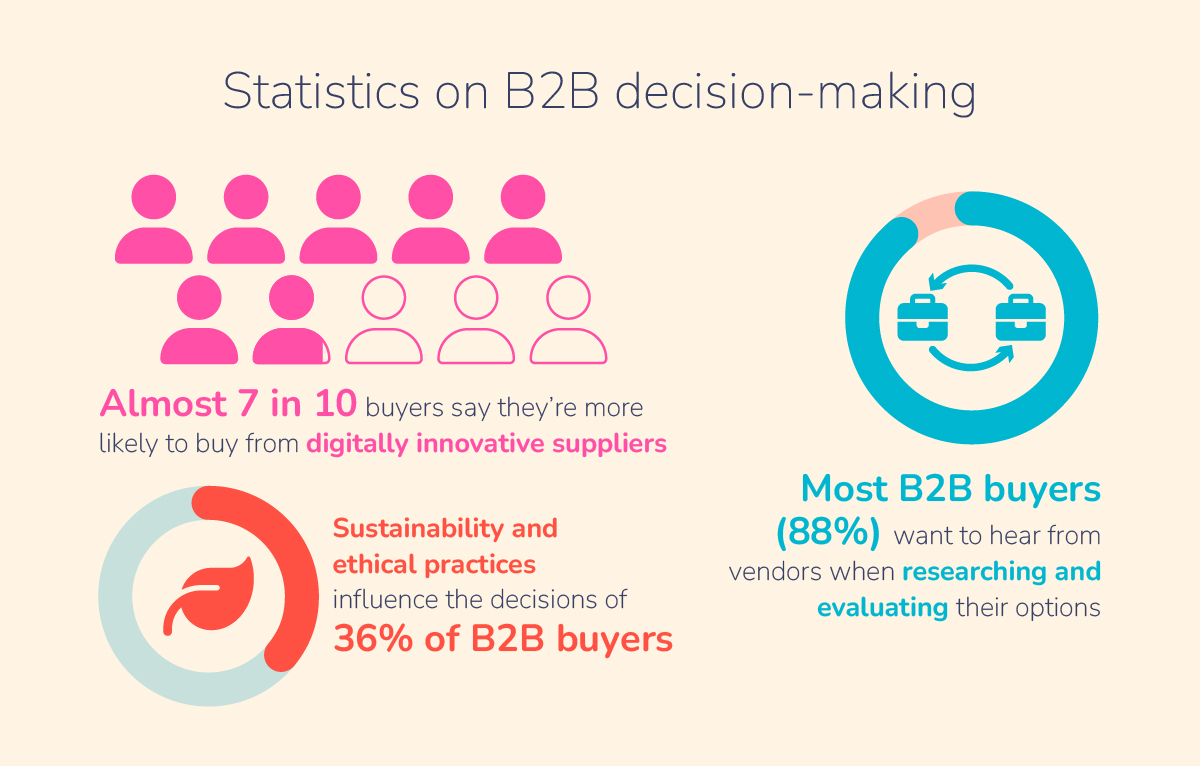
Another major factor is buyer caution. According to Forrester, 68% of B2B buyers delay engaging with vendors until they have completed a significant portion of their independent research.
Buyers prefer to understand the market, compare options, and gather internal input before entering a sales conversation. This behaviour reduces the number of early-stage meetings that sales teams can easily secure.
Multi-Stakeholder Buying Slows Sales Cycles
The third challenge is internal consensus within buying groups. Software purchases now involve multiple stakeholders who evaluate risk, cost, integration requirements, and long-term impact. Research from McKinsey indicates that B2B buying cycles have increased by approximately 60% due to the growing number of decision makers involved in each purchase.
These changes have fundamentally altered the SaaS sales environment. Buyers are not necessarily harder to convince once a conversation begins. Instead, they are harder to reach, slower to respond, and far more selective about which vendors they agree to meet.
This leads to the most important question for SaaS companies today.
How do you earn a meeting in an environment where attention is limited, and buyers have dozens of alternatives to consider?
What Actually Works in SaaS Appointment Setting
Buyer behaviour is shifting fast, yet many sales processes remain outdated.
So what is the ideal approach?
It should be quietly helpful, not aggressively sales-focused.
Effective appointment setting today relies on using intent signals to identify in-market accounts, personalising outreach around real business problems, leading with insights instead of immediate demo requests, sharing proof early, and making it easy for prospects to schedule a short, low-pressure meeting.
When done correctly, top-of-funnel issues begin to disappear, and your pipeline becomes strong enough to support predictable growth.
Below is a step-by-step playbook to improve B2B appointment setting for SaaS companies.
- Start With a Hyper Specific Ideal Customer Profile
Many SaaS companies define their ICP too broadly.
For example, an ICP like this is common:
“Mid-market companies with 50 to 200 employees.”
However, this level of targeting still casts a wide net and produces inconsistent results.
High-performing SaaS companies define ICPs with much greater precision. They look for signals such as company maturity stage, technology stack, hiring patterns, operational pain points, and recent trigger events.
Examples include organisations using platforms like Salesforce, HubSpot, Snowflake, or AWS, companies hiring for RevOps or DevOps roles, or businesses that recently raised funding or launched a new product.
The more specific your ICP becomes, the easier it is to reach prospects who recognise the value of a conversation.
- Use Intent Data to Prioritise In-Market Buyers
There is a clear difference between prospects who are simply a good fit and those actively searching for solutions.
The second group is far more likely to respond.
Intent signals help identify companies that are already researching problems related to your product. Common signals include visits to G2 product categories, searches related to your solution, competitor comparison activity, and content downloads.
Some platforms also detect spikes in topic research using keyword consumption data.
When these signals are layered into your outreach strategy, appointment setting becomes far more focused and effective.
- Build Multi-Channel Outreach Sequences
Relying only on email is rarely enough to capture attention.
Successful SaaS appointment-setting strategies use multiple outreach channels. These typically include email, LinkedIn engagement, light-touch phone calls, short video messages, and sharing valuable content.
High-performing teams combine these channels into structured sequences that run across 14 to 21 days with 8 to 12 total touchpoints.
The effectiveness comes from consistency and coordinated communication rather than individual messages.
- Personalise Every Message Beyond the First Line
Personalisation has become an expectation rather than a differentiator.
Research shows that 71% of B2B buyers expect personalised communication during the first interaction.
However, many teams still rely on superficial personalisation such as referencing a company name or job title.
True personalisation includes referencing the buyer’s technology stack, highlighting a specific operational challenge, mentioning a recent company announcement, or sharing relevant examples from similar organisations.
This deeper level of context signals that the outreach is relevant and worth considering.
- Use Value First Messaging Instead of Feature Pitches
SaaS buyers are rarely motivated solely by product features.
What they care about is how a solution improves business outcomes.
Buyers typically prioritise outcomes such as efficiency improvements, reduced operational workload, revenue growth, automation of manual processes, cost savings, risk reduction, and stronger customer experience.
Every outreach message should answer a simple question from the buyer’s perspective.
Why is this meeting worth my time?
For example, instead of introducing a product demo, the outreach could highlight how similar SaaS companies reduced onboarding time by 40% after adopting workflow automation.
- Introduce Social Proof Early
Buyers place strong trust in results achieved by companies similar to their own.
Gartner reports that 77% of buyers trust peer recommendations more than vendor messaging.
Because of this, early proof often performs better than creative copywriting.
Examples of effective proof include recognisable customer logos, ROI outcomes, third-party review badges, short case-study videos, and measurable results, such as churn reduction or operational efficiency improvements.
When prospects see evidence of success, they are more comfortable agreeing to a meeting.
- Create a Frictionless Booking Experience
Scheduling should be effortless for prospects.
Even small barriers can reduce the acceptance rate of meetings.
Companies should offer clear calendar links, one-click scheduling options, transparent agendas, and short 15 to 20-minute introductory conversations.
Some companies also offer zero-pitch discovery calls that focus purely on learning about the prospect’s challenges.
Reducing friction significantly increases booked meetings.
- Align Messaging Across Founder, SDR, and Marketing Teams
Consistency across communication channels builds credibility.
When messaging changes across emails, website content, and sales conversations, prospects become uncertain about the value proposition.
According to Demand Gen Report, companies with aligned marketing and sales teams generate 208% more revenue than those operating in silos.
Alignment across product positioning, outreach messaging, website content, and social communication ensures buyers receive a clear and consistent narrative.
- Track the Metrics That Matter
Improving appointment setting requires a data-driven approach.
Key metrics help identify where prospects move forward and where friction appears.
Important indicators include contact-to-meeting rate, conversation rate, meeting acceptance rate, no-show rate, pipeline generated per meeting, time to demo, and outbound win rate.
Tracking these metrics regularly allows teams to refine targeting, messaging, and outreach sequences.
- Combine Automation With Human Insight
Automation helps scale outreach while maintaining consistency.
It is particularly useful for tasks such as list building, data enrichment, sequence execution, and intent monitoring.
However, automation alone cannot create meaningful conversations.
Human input is essential for deep personalisation, authentic communication, handling objections, and building trust with prospects.
The most effective appointment setting strategies combine automation efficiency with thoughtful human interaction.

Predictable SaaS Growth Starts at the Top of the Funnel
SaaS companies rarely fail because their product cannot close deals. In many cases, the real challenge is starting enough meaningful conversations with the right buyers.
When qualified prospects enter the pipeline, strong products and effective sales teams usually perform well. The difficulty is creating a consistent flow of those opportunities.
Modern B2B appointment setting is no longer about sending large volumes of outreach messages. Success depends on precision and relevance.
Effective strategies focus on several key elements. These include precise targeting, recognising buyer intent, thoughtful personalisation, and reaching prospects at the right moment in their decision process.
Messaging must clearly address real problems, outreach should appear across multiple channels, and proof of results should appear early in the conversation. Finally, scheduling a meeting must be simple and frictionless.
When these elements work together, appointment setting becomes predictable. Instead of relying on occasional wins, SaaS companies build a steady pipeline of qualified meetings.
With a strong top-of-funnel system in place, reaching $2M, $5M, or even $10M in ARR becomes the result of a repeatable process rather than chance.
Frequently Asked Questions
What is B2B appointment setting in SaaS?
B2B appointment setting in SaaS is the process of scheduling qualified meetings between sales teams and potential business customers.
The goal is to connect decision-makers with sales representatives to explore how a SaaS solution addresses specific business problems. Instead of focusing on immediate sales, appointment setting prioritises securing discovery calls, product demonstrations, or consultation meetings with relevant buyers.
Why is appointment setting important for SaaS companies?
Appointment setting is important because it creates a predictable flow of sales conversations. Many SaaS companies struggle not with closing deals but with reaching decision makers in the first place. A strong appointment-setting strategy ensures sales teams spend more time speaking with qualified prospects and less time searching for leads.
What is a good appointment-setting conversion rate for SaaS?
Conversion rates vary by industry and targeting quality. However, many SaaS companies aim for a 5% to 15% meeting booking rate from outbound outreach. High-performing teams often improve these numbers by using precise targeting, personalised messaging, and multi-channel outreach.
What channels work best for SaaS appointment setting?
The most effective SaaS appointment setting strategies combine multiple outreach channels. These typically include email, LinkedIn engagement, phone calls, video messages, and the sharing of value-driven content.
Using several channels together increases the likelihood of reaching busy decision-makers and building trust before requesting a meeting.
What role does intent data play in appointment setting?
Intent data helps sales teams identify companies that are actively researching solutions related to their product. Signals such as G2 category visits, competitor comparisons, and keyword research activity indicate that a prospect may already be in the buying process. Prioritising these signals enables appointment-setting teams to focus on buyers more likely to respond.
Why do many SaaS companies outsource appointment setting?
Many SaaS companies outsource appointment setting because building an internal SDR team can require significant time, training, and management resources. Outsourced teams already have experience in outreach, prospect research, and scheduling meetings with decision makers. This allows SaaS founders and sales leaders to focus on closing deals while a specialised team builds the pipeline.
How long does it take to see results from appointment-setting campaigns?
Most appointment setting campaigns begin producing measurable results within 4 to 8 weeks, depending on the quality of targeting, outreach strategy, and market demand. Consistent optimisation of messaging, targeting, and outreach sequences typically improves performance over time.
The Future of B2B Appointment Setting for SaaS Companies
The future of B2B appointment setting for SaaS companies will not be defined by volume. It will be defined by relevance.
As SaaS markets become more competitive, buyers will continue to expect outreach that understands their context, their priorities, and the challenges they are trying to solve. Generic sales messages and high-volume outreach will become even less effective as buyers rely more on research, peer insights, and trusted recommendations before agreeing to a conversation.
This means appointment-setting strategies must evolve. Successful teams will focus on precise targeting, stronger use of intent data, deeper personalisation, and consistent engagement across multiple channels. Instead of pushing meetings aggressively, outreach will need to demonstrate clear value from the very first interaction.
Technology will also play an increasing role. Data enrichment tools, intent platforms, and automation systems will help sales teams identify the right accounts and scale their outreach efforts. At the same time, human insight will remain essential for crafting relevant messages and building trust with prospects.
For SaaS companies aiming to scale, the ability to consistently connect with the right decision makers will become a critical competitive advantage. Businesses that build structured appointment-setting systems will create stronger pipelines, shorter sales cycles, and more predictable growth.
In the years ahead, the companies that succeed will not simply reach more prospects. They will reach the right prospects at the right moment, turning appointment setting into a reliable engine for SaaS revenue growth.
Share This Post
Recent Posts
What We Offer
Get Your Quote