

Sales reps keeping up with buyer behaviour are using new strategies to generate leads. 💡
LinkedIn is one way reps can create unique value and offer clients something they cannot get anywhere else. It has become an essential platform for professionals who want to connect, build trust, and share insights that attract the right audience.
This is all part of a value-based sales approach, which is crucial for selling in today’s B2B market.
So, let’s explore how to generate leads on LinkedIn in the US.

1. Leverage LinkedIn Automation
Sales reps in the US can save hours each week by using LinkedIn automation tools to generate and qualify leads faster.
At Konsyg, automation is built into our LinkedIn lead generation services. Instead of spending time manually sourcing contacts, our team uses integrated workflows that identify and enrich potential leads directly within LinkedIn or Sales Navigator.
Once contact data is verified, outreach continues through personalised cold emails or strategic follow-ups, ensuring every connection has context and intent behind it.
The goal is not just volume, but precision. Konsyg’s automation process helps sales teams focus on conversations that convert rather than repetitive admin tasks.
2. Optimise Your LinkedIn Profile
If you want to generate leads on LinkedIn, start with your profile. It is the first impression buyers get of you and your brand. 😎
Think of it as your digital storefront. Every detail should communicate credibility and value. Here are six key areas to keep updated:
Profile picture: Use a clear, professional photo that reflects your personal brand.
Header image: Align your banner with your company branding or a consistent visual theme.
Headline: Keep it concise and relevant to what you do. Use keywords that describe your role in B2B sales or lead generation.
Summary: Write a short bio in the first person. Focus on how you help clients solve problems, not just what you sell.
Featured section: Showcase top-performing posts, client success stories, or insights.
Experience: Highlight measurable results, achievements, and projects that demonstrate impact.
A well-optimised profile not only builds trust but also strengthens your LinkedIn Social Selling Index (SSI), improving visibility in U.S. markets and making it easier for decision-makers to find you.

3. Engage With Your Target Audience
Once your LinkedIn profile is optimised, focus on engaging with the right audience, your ideal customer profile (ICP).
On LinkedIn, you can find and connect with prospects through:
- Curated lists
- LinkedIn posts
- Events
- Industry groups
If you use LinkedIn Sales Navigator, you can filter by job title, location, or company size to reach the most relevant U.S. decision-makers.
When you send a connection request, always include a personalised note. Mention a shared connection, a recent post, or a key signal such as a new role. This approach helps start honest conversations instead of transactional outreach.
For example: Hello [First Name], I noticed we share a few mutual connections in [industry]. I would love to connect and exchange insights.
Once connected, focus on authentic engagement. Like and comment on their posts, ask thoughtful questions, and share perspectives that show you understand their challenges.
Here are a few ways to do this naturally:
💡 Give a genuine compliment:
“Great insights! I like how you explained [topic] clearly.”
💡 Ask a question:
“I found your point on [topic] interesting. How do you see [trend] changing the market in the next year?”
💡 Share relevant experiences:
“I faced a similar challenge before and found that [strategy] made a difference. Have you tried something similar?”
💡 Offer helpful resources:
“Thanks for sharing this. I recently read a piece that builds on your idea, thought you might find it useful: [link].”
The key is consistency. Konsyg, believe successful LinkedIn lead generation in the US starts with meaningful, consistent engagement that builds trust before the pitch ever begins.
4. Create Your Own Content
Once you have built a strong profile and started engaging with your network, it is time to create your own content. Posting consistently helps you make a personal brand on LinkedIn and stand out from a sea of connection requests.
So, what kind of content should you share? Here are a few ideas. 👇
Talk about your expertise:
Focus on topics that reflect your skills, experience, and industry knowledge. When your posts speak to your ideal customer profile (ICP), you are not just sharing content, you are delivering insight.
Address common challenges:
As a sales professional, you speak to potential customers daily. Turn their recurring pain points into content. Posts that solve real problems attract genuine attention.
Position yourself as a thought leader:
Share your opinions on industry trends or discuss insights from events, podcasts, or webinars you have attended. Authentic expertise builds credibility.
Starting can feel intimidating, but consistency matters most. Experiment with post formats and timing to see when your audience engages the most.
Here are some simple post ideas to get started:
- A short introduction post about who you are.
- A transparent “this is my first post” moment.
- Asking a thoughtful, relevant question.
- Sharing a sales method you tried and the results you saw.
- Posting an “unpopular opinion” backed by real experience.
At Konsyg, we have seen that U.S. sales reps who publish consistently on LinkedIn tend to attract higher-quality leads and close deals faster. Thoughtful content builds recognition, and recognition builds trust, the foundation of every strong sales relationship.

5. Set KPIs and a Daily Game Plan
Finally, set specific KPIs and build a daily routine to keep your activity consistent.
For example, you can aim to send a few connection requests every day or leave five meaningful comments on your prospects’ posts. You might also set engagement goals, like how many comments or reactions you want to see on your next post.
Here’s what your daily game plan could look like. 👇
Morning Routine:
- Review notifications. Start your day by checking messages, connection requests, and comments.
- Engage with connections. Spend a few minutes liking or commenting on relevant posts.
- Explore new content. Read industry news or updates to inspire your next post.
Midday Routine:
- Share valuable content. Post at different times to find when your audience is most active.
- Respond to comments. Keep conversations going under your posts.
- Connect with new people. Personalise each request to make it meaningful.
Afternoon Routine:
- Follow up with prospects already in your network.
- Review and respond to messages. Keep your inbox organised.
- Reflect on your LinkedIn activity. Note what worked and what you can improve next time.
A routine like this helps you stay visible, build relationships, and grow your reach steadily over time.
6. Join LinkedIn Groups Your Clients Are In
LinkedIn Groups are one of the most underrated tools for networking and learning. They bring together professionals who share similar interests or face the same challenges.
Join groups where your ideal clients are active and contribute to the discussion. Keep your posts value-driven rather than promotional. This helps you build trust and be seen as someone who understands their challenges.
Being part of LinkedIn Groups also helps you discover new pain points your audience is discussing. It gives sales reps and SDRs more context when reaching out, making your outreach feel relevant and personal.
7. Use Your Connections with Current Customers
Social proof is one of the most potent drivers of trust in sales. If you already have strong relationships with existing customers, use them to your advantage.
Ask for referrals, testimonials, or even re-shares of success stories on their personal LinkedIn profiles. These authentic endorsements reach audiences that already trust your client, which means they are more likely to trust you, too.
You can also use current relationships to reach new prospects through warm introductions. This kind of outreach feels genuine, not pushy, and gives you instant credibility through a shared connection. It is one of the most effective ways to generate B2B leads on LinkedIn in the US.
8. Generate Leads from Posts and Events
Another smart way to generate leads on LinkedIn is by engaging with the posts and events your ideal customers are active in.
Monitor discussions happening under posts shared by your ICP. Add thoughtful comments or insights that show your understanding of the topic. This keeps you visible to potential leads without forcing a pitch.
You can also extract contact details from engaged participants using LinkedIn lead generation tools that comply with data guidelines. This gives you direct access to people already showing interest in topics related to your product or service.
Attending LinkedIn events or webinars relevant to your industry is another great move. It helps you meet professionals with shared interests and gives you the context to follow up meaningfully.

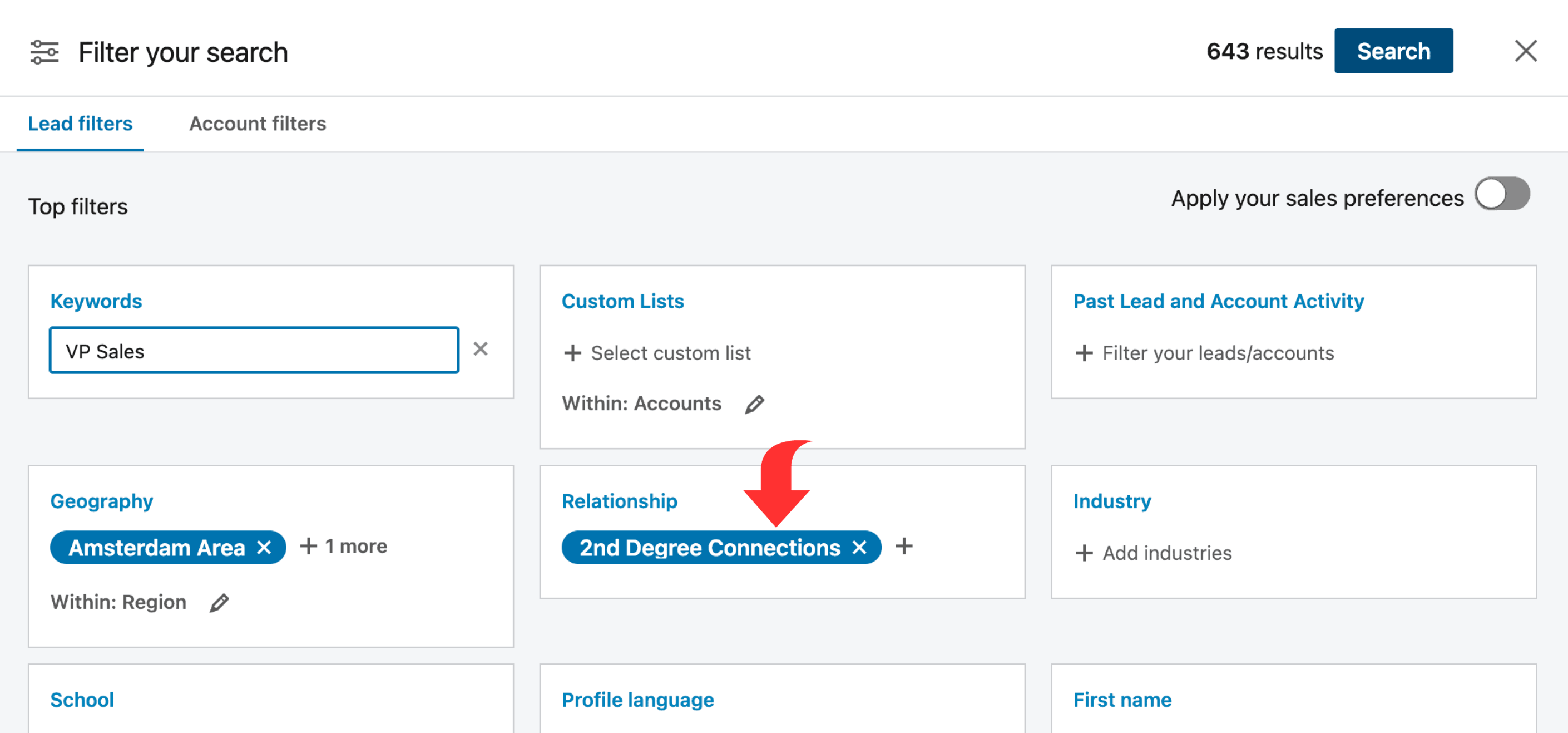
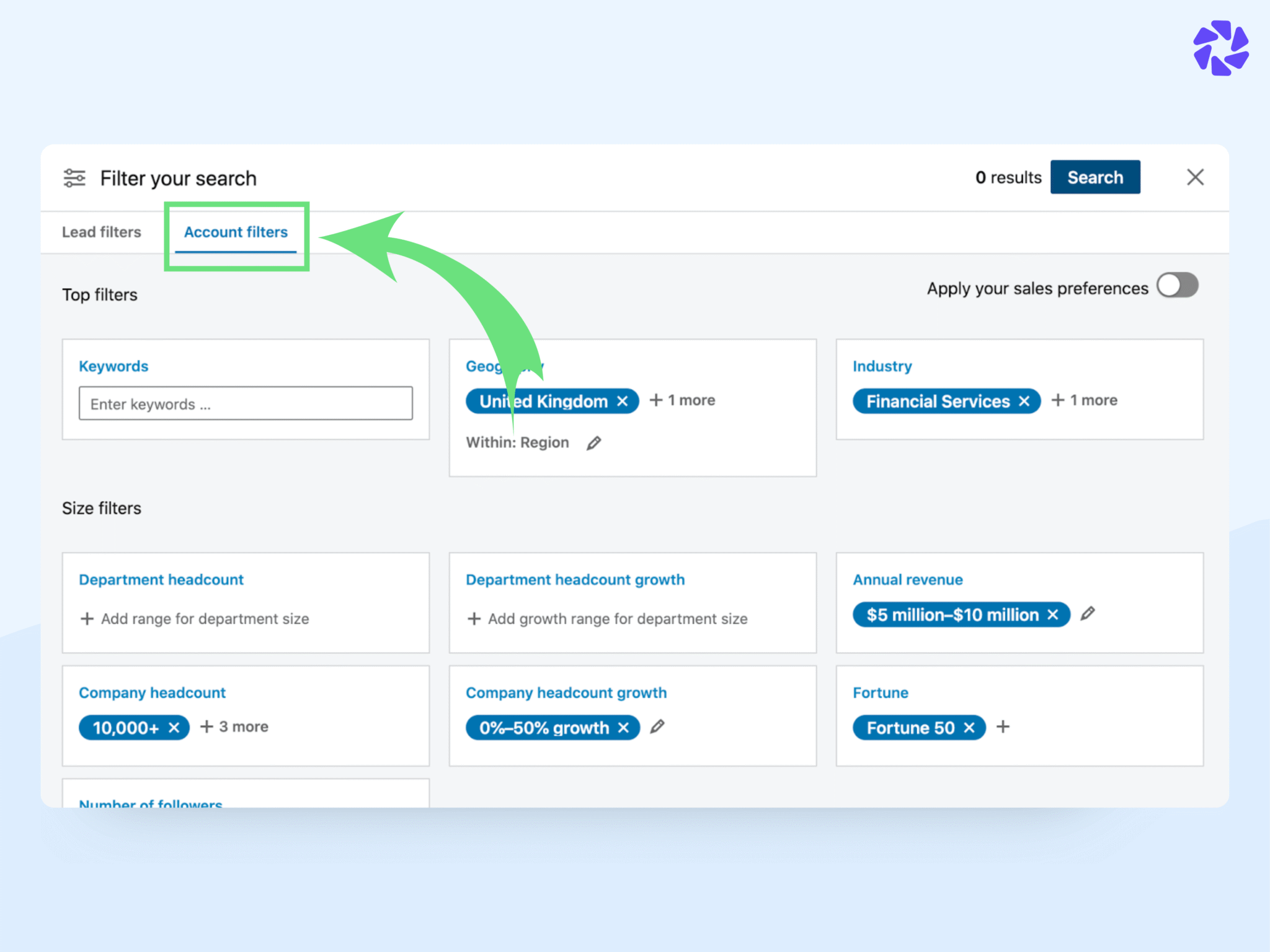
9. Use Sales Navigator’s Advanced Filters
If you have access to LinkedIn Sales Navigator, take full advantage of its advanced filters. These tools help you target the right people faster by refining your searches around:
- Job title
- Industry
- Location
- Company size
- Seniority level
Filtering this way makes it easier to find qualified leads that fit your ideal customer profile (ICP) and are active in the U.S. market.
Once your filtered list is ready, save your searches and review updates regularly. Look for job changes, shared content, or mutual connections; each of these signals can open the door to a new conversation.
10. Use Lead Recommendations
If you use LinkedIn Sales Navigator, take advantage of its lead recommendations feature. It automatically surfaces potential leads based on activity patterns and buyer intent signals, helping you find new opportunities faster.
There are several places you can find lead recommendations inside Sales Navigator:
Account details:
Go to the People tab under any account. Scroll down to the Relationship Map section to view lead recommendations for that company.
Lead profile pages:
When you select a lead, Sales Navigator shows a list of similar profiles from the same organisation on the right side of the page.
System-generated lead list:
You can even have Sales Navigator automatically generate a list of up to 100 prospects. These lists are created using your past activity, saved leads, and engagement patterns.
Lead recommendations are a simple but powerful way to discover new prospects who are already showing intent, saving time while improving lead quality.
Prospecting on LinkedIn (Step-by-Step)
Time to roll up your sleeves. Here is a simple, step-by-step guide to help you prospect on LinkedIn effectively. 🤙
Know How to Filter Your Lists
Start by filtering your ideal target audience. LinkedIn’s built-in search filters help you focus on prospects who truly fit your ideal customer profile (ICP).
Here are the key filters to use:
- Past company
- Current job title
- Seniority level
- Industry
- Mutual connections
If you are using a free LinkedIn account, keep in mind that you can only view up to 1,000 profiles per month, which is equivalent to 100 pages of 10 results each.
To access more profiles, you can upgrade to one of LinkedIn’s premium plans. However, even with a free account, careful use of filters ensures your results stay relevant and focused.
If you are using LinkedIn Sales Navigator, you get unlimited searches, plus the ability to save searches, store up to 10,000 leads, and send 50 InMail messages per month.
Here are three smart searches worth saving:
- People who have changed jobs in the last 90 days
- Contacts from a previous company name
- People who viewed your profile within the last 90 days
LinkedIn will notify you when new prospects appear in these saved searches, making it easier to stay on top of active leads and reach out at the right moment.
Key Signals to Look Out For
Still wondering what intent signals to pay attention to? 👀
Recognising buying intent is one of the most effective ways to guide your LinkedIn lead generation strategy. These signals help identify prospects who are showing early signs of interest or readiness to buy.
Here are the key ones to track:
Profile activity: Watch for recent updates like new skills, accomplishments, or experience changes. Active users are more likely to engage.
Starting a new role: This is one of the strongest buying signals. People in new positions are often eager to make an impact. Stay connected with past clients, too; they may bring you into new companies.
Viewing your profile or content: If someone checks out your profile or interacts with your posts, it means your content is resonating. That’s the perfect moment to reach out.
Previous company experience: Buyers often recommend tools or solutions they used in past roles.
Recent funding: When a company raises new capital, it often signals expansion and a higher openness to new partnerships or products.
Tracking these signals helps you stay organised and take a more informed approach to LinkedIn prospecting in the US.
Building LinkedIn into Your Cadence
Adding LinkedIn to your daily sales cadence can significantly increase your success rate. 📈
Start by sending a connection request before calling or emailing a prospect. If there’s no response, follow up on LinkedIn with a short voice note or video message. These small touches feel more personal and stand out in crowded inboxes.
This approach forms part of a multi-touch outreach strategy. By combining LinkedIn engagement with calls and emails, you can see which channel gets the best response while staying visible to your prospects throughout the process.
Consistent activity across multiple touchpoints builds familiarity and keeps you top of mind when buying decisions are made.
Closing Thoughts
LinkedIn is one of the most effective platforms for generating leads. It is also a key part of value-based selling, helping sales professionals build credibility and offer something prospects cannot find anywhere else.
Here are a few key takeaways for how to generate leads on LinkedIn in the U.S.:
- Use automation tools: They can help streamline your outreach and maintain consistency.
- Optimise your LinkedIn profile: A complete, professional profile builds trust and strengthens your social selling index score.
- Engage with your ICP: Keep interactions natural and personalised. Focus on starting genuine conversations.
- Create quality content: Share insights that address common challenges and highlight your expertise.
- Set KPIs and a daily plan: Consistency helps you measure what works and improve over time.
- Personalise every message: Avoid generic outreach. “Spray and pray” no longer works in modern sales.
When done right, LinkedIn lead generation goes beyond simple outreach. It becomes a system for building relationships, earning trust, and creating real business opportunities.
Start small, stay consistent, and treat every interaction as a chance to add value. Over time, that is what turns connections into clients.
Use Konsyg to Generate Leads on LinkedIn
Get verified contact details and connect with the right decision-makers faster. Konsyg’s LinkedIn lead generation services help sales teams continue outreach beyond the platform through qualified, compliant, and ready-to-convert leads.
With a proven process for identifying and engaging high-intent prospects, Konsyg supports businesses aiming to grow their B2B pipeline in the U.S. and beyond.
Start building relationships that lead to real opportunities and start selling with confidence. Book a call today 👇
Share This Post
Recent Posts
What We Offer
Get Your Quote