

Building a consistent outbound funnel has become significantly harder for UK SaaS companies over the last few years.
Buyers are receiving more outbound emails, LinkedIn messages, cold calls, and automated follow-ups than ever before. At the same time, many SaaS firms are still struggling to create predictable sales conversations.
The issue is usually not a lack of activity.
Many companies already have SDRs sending outbound campaigns, founders attending networking events, marketing teams producing content, and outbound tools running daily sequences.
Yet pipeline growth still feels inconsistent. Meetings stall after discovery calls. Reply rates decline over time. Opportunities lose momentum before commercial discussions even begin.
A large part of the problem comes from how outbound funnels are built.
Many SaaS companies optimise for visible activity instead of buyer progression. Outreach volume increases, but message quality declines.
More meetings get booked, but fewer conversations move toward real buying intent. Teams focus heavily on tools, automation, and campaign volume without fixing the operational gaps inside the funnel itself.
This becomes even more challenging in the UK SaaS market, where buying cycles are often slower, decision-making involves multiple stakeholders, and trust plays a larger role in outbound engagement. Generic outreach that may have worked a few years ago is now quickly ignored.
One of the biggest mistakes SaaS firms make is treating lead generation as a disconnected activity rather than a structured system. Outbound prospecting, qualification, follow-up, and pipeline nurturing are often handled separately, even though each stage directly affects conversion quality later in the funnel.
Many outbound funnels do not fail because outreach stops. They fail because prospects never gain enough confidence, urgency, or internal alignment to continue progressing toward a buying decision.
That is why strong SaaS pipeline generation depends less on sending more outbound and more on building a funnel that consistently moves prospects from awareness to meaningful commercial conversations.
In this article, we will break down a 4-stage B2B lead generation framework for UK SaaS companies, including:
- How to define the right ICP
- How to create outbound outreach that earns replies
- How to identify sales-ready conversations
- How to maintain pipeline momentum until conversion
More importantly, we will look at why many SaaS outbound funnels break before meetings even happen, and what experienced outbound teams do differently to avoid it.
Why Most B2B Lead Generation Funnels Break Before Meetings Happen
Many SaaS companies already have outbound activity running constantly. SDRs are sending sequences, founders are networking, LinkedIn outreach is active, and email campaigns are going out every day.
Yet conversations still fail to turn into a consistent pipeline.
The problem is often not effort. It is how the funnel is structured.
A lot of outbound systems create surface-level engagement without creating real buying momentum underneath. Teams focus heavily on generating activity because activity is easy to measure.
More emails sent, more meetings booked, more contacts added to sequences. But those numbers do not always translate into serious commercial conversations.
One of the biggest issues is broad targeting.
Many SaaS firms define their ideal customer profile too loosely. Entire industries are grouped together, even though buyer behaviour, urgency, and decision-making processes can vary significantly among companies of similar size. This creates outreach that feels technically relevant but commercially disconnected.
The UK market makes this even more noticeable. Buyers are generally more cautious, evaluation cycles are longer, and multiple stakeholders are often involved before decisions move forward.
Generic messaging gets ignored quickly because prospects have already seen similar outreach from dozens of vendors.
Messaging itself has also become a problem.
The issue is usually not a lack of outreach. It is a lack of progression between stages.
| Funnel Stage | What Most SaaS Companies Focus On | What Actually Drives Pipeline |
|---|---|---|
| Targeting | Broad industry lists | ICP precision and buying readiness |
| Outbound Outreach | Sending more emails | Messaging relevance and timing |
| Qualification | Booking more meetings | Identifying commercial intent |
| Pipeline Nurturing | Frequent follow-ups | Maintaining buying momentum |
The strongest outbound systems rarely rely on volume alone. They focus more on timing, relevance, quality of qualification, and on maintaining momentum throughout the buying process.
That difference becomes increasingly important as SaaS buyers become more selective about which conversations they continue.
The 4 Stage B2B Lead Generation Framework for UK SaaS Businesses
Strong outbound funnels rarely depend on one thing working perfectly. Most successful SaaS teams build consistency by improving multiple stages of the funnel simultaneously.
This is where many companies struggle.
Some focus heavily on prospecting but ignore the quality of qualification. Others generate strong initial conversations but fail to maintain momentum after discovery calls. In some cases, the targeting is accurate, but the messaging does not reflect how buyers actually evaluate solutions internally.
The result is usually the same. Activity continues, but progression slows down.
A more sustainable approach is to treat outbound as a connected system rather than a series of isolated tasks. Targeting affects messaging quality. Messaging affects reply quality. Qualification affects conversion momentum later in the cycle.
When one stage weakens, the rest of the funnel becomes harder to stabilise.
The framework below focuses on four areas that consistently shape outbound performance for UK SaaS companies:
- defining the right ICP and market segments
- building outreach that earns responses
- identifying conversations with real commercial intent
- maintaining momentum through longer buying cycles
None of these stages works independently. The strongest funnels usually come from alignment between all four.
There is a reason why SaaS businesses aren’t getting better leads, Bradford Gray, Client Relations Director at Konsyg, explains in this video. Watch it here.
Stage 1: Defining the Right ICP and Market Segments
Most outbound problems begin with weak targeting. Many SaaS firms target broad industries instead of identifying companies with actual buying intent or operational urgency.
The strongest outbound teams usually segment based on signals such as:
- recent funding
- hiring growth
- market expansion
- sales team scaling
- operational bottlenecks
This matters because UK buyers are typically more selective and stakeholder-driven during evaluation cycles.
According to HubSpot, 96% of buyers research companies before speaking to sales teams, which means outbound messaging must feel commercially relevant immediately.
Stage 2: Building Outreach That Creates Replies
Many outbound campaigns fail because the messaging sounds interchangeable. Prospects receive too many emails that follow the same structure, positioning, and personalisation patterns.
Strong outreach focuses less on sounding clever and more on sounding relevant.
Instead of leading with features or generic value propositions, effective messaging usually connects to operational pressure, timing, or growth challenges the prospect is already experiencing.
Cognism reports that personalised outbound campaigns can improve reply rates by over 40% compared to generic outreach.
The best outbound systems also avoid over-automation. Buyers can quickly recognise templated messaging, especially in crowded SaaS categories.
Stage 3: Qualifying Conversations Before The Funnel Slows Down
A booked meeting does not automatically mean a real pipeline exists.
Many SaaS teams optimise heavily for calendar activity without properly assessing urgency, buying readiness, or stakeholder involvement. This often results in discovery calls that fail to progress.
Strong qualifications focus on:
- operational urgency
- internal ownership
- timing
- commercial fit
- decision-making structure
According to Salesforce, 79% of marketing leads never convert into sales, largely because qualification and nurturing are misaligned.
The strongest outbound teams prioritise conversation quality over meeting volume.
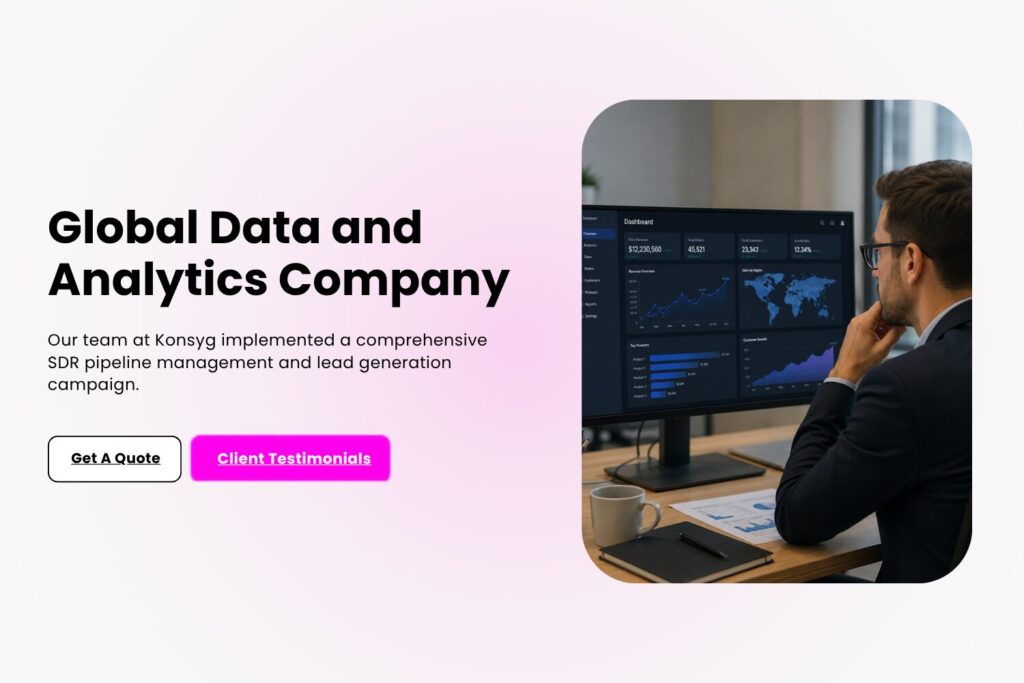
One global data and analytics company partnered with Konsyg after struggling with broad targeting and low-quality outbound engagement.
By refining ICP segmentation and repositioning outreach to focus on operational challenges rather than product features, the company generated stronger conversations with decision-makers across sectors such as aviation, maritime, and defence. Read the full case study here.
Stage 4: Maintaining Pipeline Momentum Until Conversion
A large number of SaaS opportunities slow down after the first meeting, not because interest disappears, but because momentum becomes inconsistent.
Follow-up timing, stakeholder alignment, and internal discussions often determine whether deals continue progressing.
Strong outbound funnels maintain momentum through:
- structured follow-ups
- educational touchpoints
- multi-stakeholder engagement
- consistent communication
According to Gartner, B2B buying groups spend only 17% of their time meeting with potential suppliers during the buying journey. That makes every interaction significantly more important.
The strongest SaaS funnels are usually not the most aggressive. They are the most consistent at maintaining relevance throughout the decision-making process.
Metrics That Actually Matter in B2B Lead Generation
Open rates and meeting counts often create a misleading picture of outbound performance.
A calendar filled with discovery calls may look productive, but weak qualification usually becomes apparent later when opportunities stall, follow-up conversations lose momentum, or decision-makers disappear from the process entirely.
That is why experienced outbound teams focus less on raw activity and more on the quality of progression. Reply quality, stakeholder engagement, sales-qualified conversations, and opportunity movement usually reveal far more about funnel health than outreach volume alone.
This becomes especially important in SaaS sales cycles where multiple stakeholders are involved and buying decisions take longer to develop. A smaller number of commercially relevant conversations often creates stronger pipeline outcomes than large volumes of low-intent outreach.
The goal is not simply to create more conversations. It is to create conversations that continue progressing toward real buying decisions.
What Most SaaS Companies Get Wrong About Lead Generation
A large amount of outbound underperforms long before messaging becomes the problem.
The real issue is often structural. Outreach gets scaled before positioning is properly tested, SDR activity increases before qualification standards are clear, and automation expands before the funnel itself is stable.
One common mistake is treating outbound like a volume game. More contacts are added to sequences, more emails are sent, and more meetings are booked, but conversation quality gradually declines. Activity increases while commercial progress slows.
Another issue arises when companies outsource outreach without sufficient internal clarity on positioning. If the value proposition remains vague internally, external campaigns usually amplify the confusion rather than resolve it.
Over-automation creates a separate problem. Buyers now recognise templated outreach quickly, especially in crowded SaaS categories where inboxes are already saturated with similar messaging. Outreach may technically be personalised, but it still feels generic once the conversation begins.
Weak SDR onboarding also affects performance more than many teams realise. Scripts and sequences alone rarely create strong outbound conversations. SDRs need sufficient context to understand buyer pressure, operational priorities, and the commercial reasons prospects may consider changing in the first place.
Some of the strongest outbound systems actually appear slower in the early stages because they spend more time refining targeting, positioning, and qualification before scaling activity aggressively.
That usually creates more stable pipeline growth later.
Frequently Asked Questions
What is a B2B lead generation funnel for SaaS companies?
A B2B lead generation funnel is the process that SaaS companies use to move prospects from initial awareness to qualified sales conversations and, eventually, conversion. A strong funnel usually includes targeting, outbound outreach, qualification, and pipeline nurturing rather than focusing only on lead volume.
Why do many SaaS outbound funnels fail?
Most outbound funnels fail because activity outpaces alignment. Broad targeting, generic messaging, weak qualification, and inconsistent follow-up often result in extensive outreach without meaningful commercial progress.
How long does it take to build a SaaS lead generation funnel?
The timeline depends on the market, sales cycle, and the company’s outbound maturity. In most cases, outbound funnels require several months of refinement before their targeting, messaging, and qualification processes begin producing predictable results.
What metrics matter most in SaaS lead generation?
Reply quality, sales-qualified conversations, stakeholder engagement, opportunity progression, and conversion velocity usually provide a more accurate view of funnel performance than email volume or open rates alone.
Why is the ICP definition important in outbound sales?
A poorly defined ICP usually leads to weak conversations and lower conversion quality. Strong targeting improves outbound relevance by focusing outreach on companies with clearer operational urgency, buying readiness, and commercial fit.
How can SaaS companies improve outbound reply rates?
Reply rates often improve when outreach feels commercially relevant instead of heavily templated. Strong outbound messaging usually focuses on operational challenges, timing, and business context rather than generic product positioning.
What is the difference between lead generation and pipeline generation?
Lead generation focuses on creating initial interest, while pipeline generation focuses on moving qualified opportunities through commercial stages toward revenue. A large number of leads does not automatically create predictable pipeline growth.
Building a Funnel That Creates Conversations Instead of Just Leads
Consistent outbound performance rarely comes from sending more outreach alone. The stronger SaaS funnels are usually the ones built around timing, relevance, qualification, and progression at every stage of the buying process.
That is especially important in the UK market, where buyers tend to evaluate solutions more carefully and involve multiple stakeholders before decisions move forward commercially.
A large volume of outbound activity can still yield weak results if the underlying funnel is misaligned. Broad targeting, generic positioning, poor qualification, and inconsistent follow-up often create the appearance of momentum without generating real buying intent.
The opposite is also true. Smaller, more focused outbound systems often create stronger commercial conversations because targeting is sharper, messaging feels more relevant, and the qualification process filters out genuine urgency earlier.
That is why sustainable pipeline growth depends less on volume and more on consistency between each stage of the funnel.
The companies that perform well in the long term are usually not the ones sending the highest number of outbound messages. They are the ones building systems that continuously move conversations closer toward real buying decisions.
If your SaaS team is looking to improve outbound performance, strengthen qualification quality, or build a more predictable pipeline process, Konsyg works with growth-focused companies to create outbound systems designed around commercial progression rather than activity alone.
Share This Post
Recent Posts
What We Offer
Get Your Quote