

B2B Lead Generation for Cybersecurity Companies in the U.S.: The Complete Guide for 2026
For a long time, many cybersecurity companies believed outbound sales was mostly a numbers game.
For a long time, many cybersecurity companies believed outbound sales was mostly a numbers game.
More SDRs meant more activity. More emails meant more pipeline. Larger prospect databases meant more opportunities.
That approach is breaking down across the U.S. cybersecurity market.
Security buyers are receiving constant outreach from vendors promising better visibility, stronger protection, lower risk, faster compliance, or improved infrastructure resilience. Much of it sounds interchangeable.
Many CISOs, security leaders, and technical decision-makers now ignore outbound messaging almost instinctively unless something immediately feels relevant, credible, or unusually well researched.
At the same time, cybersecurity sales cycles are becoming more complex. Security reviews are taking longer. Procurement teams are getting involved earlier. Technical validation expectations are higher. Even companies with strong products are struggling to consistently generate meaningful outbound conversations.
A lot of outbound teams are responding the wrong way.
Instead of improving targeting, research, or messaging quality, they increase volume. More automation. More sequences. More AI-generated personalisation. More outbound activity.
In many cases, that is making response rates worse.
Over the past year, especially, many cybersecurity buyers have become extremely good at recognising templated outreach.
Some can identify AI-assisted messaging within the opening sentence. Others immediately disengage when outbound messaging feels overly polished, overly automated, or disconnected from the operational realities they deal with every day.
This is one of the biggest changes happening in cybersecurity outbound sales right now.
Trust is starting to matter more than scale.
The cybersecurity companies consistently generating qualified conversations in 2026 are usually not the ones sending the highest volume of outreach. They are often the teams investing more heavily in targeting precision, outbound research, market understanding, and SDR quality.
Modern cybersecurity prospecting now depends far more on relevance, timing, industry context, and credibility than raw outbound activity.
This guide explores what B2B lead generation actually looks like for cybersecurity companies in the U.S. today, why many outbound campaigns struggle to convert, and what high-performing teams are doing differently to create a pipeline in increasingly crowded security markets.
If your cybersecurity company is trying to build a more qualified pipeline in the U.S. market, Konsyg can help structure SDR outreach, appointment setting, and outbound sales execution around the way security buyers actually evaluate vendors.
Why Cybersecurity Companies Are Struggling to Generate Pipeline in 2026
A surprising number of cybersecurity outbound campaigns fail before the first email is sent.
The issue is usually not effort or outbound activity. Most cybersecurity companies are already investing heavily in SDR teams, prospecting platforms, and outbound tools.
The real problem is that many campaigns are still built around outdated assumptions about how security buyers behave.
Broad Targeting Creates Generic Outreach
Many outbound teams still build prospect lists using surface-level filters like industry, company size, or revenue.
That may help build volume, but it rarely creates relevance.
Two companies can appear identical in a database while facing completely different internal security pressures. One may be preparing for an audit while another is struggling with cloud visibility or internal staffing shortages.
When outreach ignores those realities, the messaging immediately feels generic.
Security Buyers Respond Differently From SaaS Buyers
A lot of cybersecurity prospecting still sounds like general SaaS outreach.
The problem is that security buyers usually operate under very different pressure. Procurement scrutiny, compliance requirements, operational risk, vendor fatigue, and internal security concerns shape how they evaluate conversations.
Generic messaging collapses quickly in that environment.
AI-Generated Outreach Has Reduced Trust
Over the past year, many cybersecurity buyers have become extremely good at recognising automated outreach.
Artificial personalisation, repetitive curiosity hooks, and overly polished messaging now feel familiar to many decision-makers.
In some cases, automation is actively reducing credibility instead of improving efficiency.
Many SDR Teams Lack Security Context
A security leader can usually tell very quickly whether an SDR understands the environment they are prospecting into.
When outreach lacks operational awareness, conversations rarely progress beyond surface-level interest.
This is one reason heavily scripted outbound campaigns often struggle in cybersecurity markets.
More Volume Is Not Solving the Problem
Many companies are responding to lower reply rates by increasing outbound activity.
More emails. More sequences. More automation.
But cybersecurity buyers are not short on vendor outreach. They are short on outreach that feels informed, relevant, and credible.
Many cybersecurity companies are not struggling because outbound sales have stopped working. They are struggling because the market now punishes generic execution much faster than before.
That shift is forcing outbound teams to rethink how SDRs are trained, how targeting decisions are made, and how credibility is built during prospecting.
William Gilchrist, Founder of Konsyg, breaks this down further in his video on the five rules that consistently help sales teams perform in highly competitive outbound environments.
What B2B Lead Generation Actually Looks Like in Cybersecurity Today
The strongest cybersecurity outbound teams in 2026 are operating very differently from traditional high-volume SDR models.
Many campaigns now begin with much narrower account selection. Instead of building massive prospect lists across broad industries, outbound teams are spending more time identifying where actual security pressure exists before outreach even starts.
In some cases, that means targeting companies preparing for compliance expansion. In others, it means focusing on organisations facing cloud migration, infrastructure consolidation, staffing pressure, or recent security challenges.
That research process has become much more important than many companies realise.
Strong outbound campaigns are also becoming far more collaborative internally. SDR teams are increasingly working alongside account executives, founders, security advisors, or technical stakeholders to shape messaging before campaigns launch.
That usually leads to better conversations because the outreach feels closer to a real operational discussion than to a generic prospecting sequence.
Another noticeable shift is in how outbound messaging is written.
Many cybersecurity SDR teams are moving away from long automated sequences filled with heavy personalisation. Shorter, more direct outreach often performs better, especially when the message clearly understands the buyer environment without trying too hard to sound customised.
Many high-performing outbound campaigns are also becoming more account-based in structure.
This is especially important in cybersecurity because purchasing decisions often involve multiple stakeholders across technical, operational, and procurement functions.
The strongest SDR teams also tend to sound less scripted than before.
Many outbound conversations now perform better when reps are trained to ask thoughtful questions, understand the business context, and adapt naturally rather than follow rigid prospecting frameworks.
That shift is becoming increasingly important as cybersecurity buyers become more selective about who they engage with.
The Biggest Outbound Mistakes Cybersecurity Companies Make
A lot of cybersecurity outbound campaigns do not fail because the market is impossible.
They fail because the execution process breaks down in small ways that compound over time.
Launching Campaigns Before Messaging Is Tested
One of the most common mistakes is scaling outbound activity before validating whether the messaging actually creates conversations.
A lot of companies build large prospect lists, launch multi-step sequences, and increase SDR activity without spending enough time testing positioning, buyer reactions, or the quality of early conversations first.
That usually creates volume without traction.
The strongest outbound teams tend to test messaging in smaller, controlled campaigns before scaling activity aggressively.
Expecting SDRs to Prospect Across Too Many Security Categories
Some cybersecurity companies expect SDR teams to prospect across completely different security environments simultaneously.
An SDR may be asked to handle outreach for:
- cloud security
- compliance services
- infrastructure monitoring
- managed IT
- endpoint protection
The problem is that the buyer conversations inside those markets are often very different.
Strong cybersecurity SDR teams usually perform better when prospecting environments are narrower, and messaging becomes more specialised.
Relying Too Heavily on Sequence Automation
Many outbound teams now rely heavily on sequence automation to meet activity targets.
The issue is that cybersecurity buyers are often more responsive to timing and context than perfectly structured cadence logic.
Some of the strongest outbound conversations happen because:
- The SDR noticed a security event
- The company expanded its infrastructure
- Compliance pressure increased
- Leadership hiring changed
- Funding created urgency
Rigid automation often misses those moments entirely.
Treating Appointment Setting Like a Short-Term Numbers Game
Cybersecurity buying cycles rarely move in perfectly linear ways.
Some companies approach appointment setting as purely a weekly volume target instead of a long-term relationship-building process. That often creates pressure for quick meetings rather than stronger buyer engagement.
In cybersecurity markets, familiarity and timing usually matter far more than aggressive outbound pressure.
Separating SDR Teams Too Far From Operational Understanding
Many outbound campaigns falter because SDR teams operate too far from the actual security conversations happening within the business.
When prospecting becomes disconnected from real customer concerns, outreach quickly starts sounding generic, regardless of how advanced the tooling becomes.
This is one reason many high-performing cybersecurity outbound teams now involve founders, account executives, technical advisors, or customer insights much earlier in the campaign-building process.
A More Focused Outbound Approach
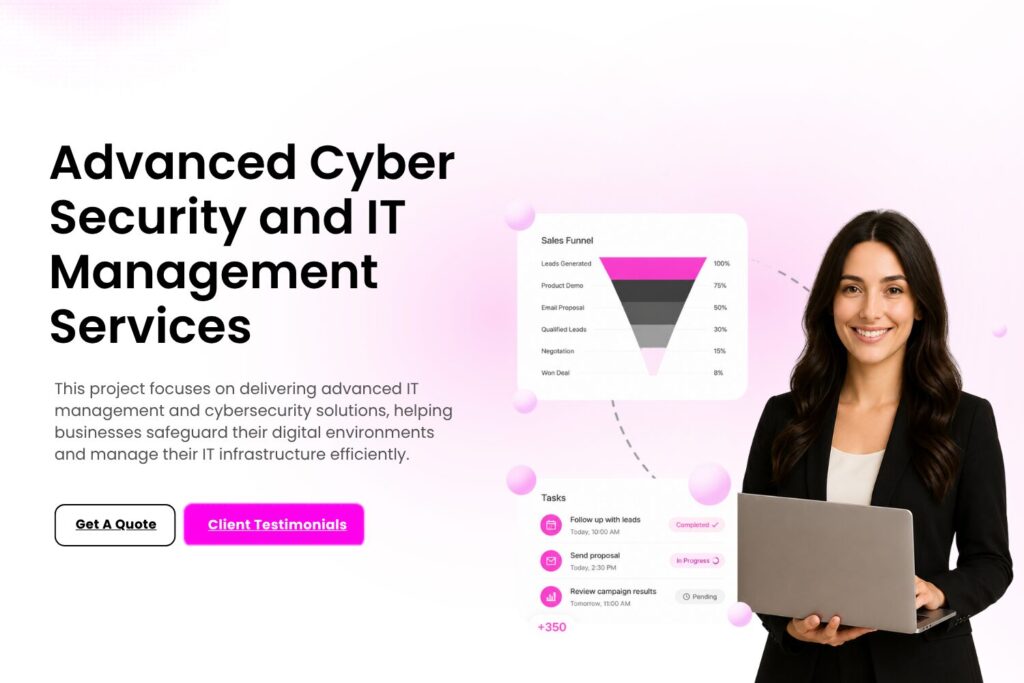
One cybersecurity and IT management campaign handled by Konsyg approached this differently by narrowing its targeting, focusing outreach on operational security challenges, and building more relevant outbound conversations about infrastructure management realities rather than generic platform messaging.
The result was a much more focused outbound process aligned to the buyer environment itself.
Read the case study here.
How High-Growth Cybersecurity Companies Build a Pipeline in 2026
The strongest cybersecurity outbound teams in 2026 are usually operating with a much narrower focus.
Instead of building massive prospect lists across broad industries, many are concentrating heavily on specific security environments, buyer pressures, and operational triggers before outreach even begins.
That shift is significantly improving conversation quality.
Many high-performing campaigns now combine outbound email, LinkedIn engagement, strategic calling, founder outreach, and smaller account-based workflows rather than relying solely on high-volume sequences.
Another noticeable change is how SDR teams are being trained.
The strongest reps tend to sound less scripted and more operationally aware. They are expected to understand the buyer environment well enough to hold credible early-stage conversations rather than simply push discovery calls.
Timing is also becoming far more important than activity volume.
The outbound teams consistently generating a qualified pipeline are usually the ones identifying those moments earlier and building outreach around them instead of relying on generic prospecting at scale.
This is one of the biggest differences separating high-performing cybersecurity outbound teams from the rest of the market right now.
How to Choose the Right Outbound Sales Partner for a Cybersecurity Company
Many cybersecurity companies choose outbound partners based on surface-level metrics.
Meeting volume, SDR headcount, pricing, or outreach scale often become the main decision factors. The problem is that cybersecurity outbound usually depends much more heavily on execution quality than raw activity.
An outbound team may generate meetings, but that does not automatically mean the conversations are qualified, relevant, or aligned with the actual buyer environment.
One of the biggest things cybersecurity companies should evaluate is whether the outbound team understands how security buyers think. Outreach inside cybersecurity markets usually requires much stronger operational awareness than general SaaS prospecting.
Another important factor is SDR specialisation.
Teams prospecting across too many industries or cybersecurity categories at the same time often struggle to build enough context within conversations. The strongest outbound programs are usually much narrower in positioning, targeting, and messaging structure.
It is also important to understand how the outbound partner approaches research and segmentation before campaigns launch.
Many providers still rely heavily on broad targeting and high-volume sequences. Others spend much more time identifying specific operational pressure points, buyer timing, and account relevance before outreach begins.
That difference tends to significantly shape conversation quality.
Cybersecurity companies should also pay close attention to how outbound performance is measured.
That distinction becomes increasingly important in cybersecurity markets where trust and credibility shape buying decisions much earlier in the sales cycle.
| Factor | Why It Matters |
|---|---|
| Cybersecurity market understanding | Security buyers respond differently from broader SaaS markets |
| SDR training quality | Early conversations depend heavily on credibility and buyer awareness |
| Research depth | Generic targeting usually weakens outbound performance quickly |
| U.S. market experience | Buyer expectations and outreach behaviour vary heavily by region |
| Segmentation process | Broad targeting often creates poor-fit conversations |
| Messaging adaptability | Cybersecurity outreach needs constant adjustment as buyer pressure changes |
| Conversation quality focus | High activity metrics do not always translate into a qualified pipeline |
| Long-term outbound consistency | Security buying cycles are often slower and relationship-driven |
What We Have Learned Running Outbound Campaigns for B2B Companies
One of the clearest patterns across outbound campaigns is that most pipeline problems arise well before SDR outreach begins.
A lot of companies assume weak performance comes from poor prospecting execution, low activity, or ineffective tooling. In reality, many campaigns struggle because the targeting, positioning, and buyer understanding were never strong enough in the first place.
This becomes especially visible in cybersecurity markets where buyers evaluate credibility extremely early.
Messaging Quality Usually Matters More Than Outreach Volume
Many outbound teams still try to address declining reply rates by increasing activity.
More emails. More sequences. More automation.
That approach often has the opposite effect in cybersecurity environments, where buyers already receive constant vendor outreach.
Some of the strongest campaigns we have seen have used smaller prospect lists, simpler messaging, and tighter segmentation, generating stronger conversations than much larger outbound programs.
Most Outbound Fails Before the First Email
A lot of outbound teams spend enormous time optimising sequences while spending far less time validating:
- account selection
- buyer timing
- operational pressure
- internal security priorities
- messaging relevance
That usually weakens the campaign before outreach even begins.
The strongest outbound programs are often built on a much deeper understanding of accounts, long before SDR activity begins.
Cybersecurity Buyers Respond to Operational Awareness
One thing that consistently shapes outbound performance is whether the outreach reflects a real understanding of the buyer environment.
Security leaders usually respond better to messaging connected to operational pressure, infrastructure realities, compliance exposure, staffing strain, or business continuity concerns than broad product-led positioning.
That difference often determines whether outreach feels credible or forgettable.
SDR Consistency Usually Outperforms Aggressive Scaling
Another noticeable pattern is that consistency tends to outperform rapid outbound expansion over time.
Smaller SDR teams with stronger research habits, tighter targeting, and better buyer awareness often generate a stronger pipeline than larger teams operating around pure activity metrics.
This is one reason many cybersecurity outbound teams are becoming more selective about how campaigns are structured and scaled.
Bradford Gray, Director of Client Relations at Konsyg, discusses many of these outbound realities through campaign breakdowns, SDR execution discussions, and cybersecurity prospecting insights for modern pipeline development. Watch the video here.
The Future of Cybersecurity B2B Lead Generation
Outbound cybersecurity sales is becoming much more selective.
Over the past few years, buyers have become significantly better at filtering generic outreach, recognising automated messaging patterns, and ignoring prospecting that lacks operational relevance.
That shift is changing how outbound campaigns are being built.
One of the biggest trends shaping cybersecurity lead generation in 2026 is growing fatigue around AI-generated outreach. Buyers are increasingly exposed to messaging that sounds polished but lacks depth, context, or a real understanding of their environment.
As a result, trust is becoming harder to earn.
This is one reason many outbound teams are moving toward:
- smaller SDR teams
- deeper research
- tighter segmentation
- account-based outreach
- founder involvement
- stronger operational messaging
Instead of pure outbound scale.
Another noticeable change is that buyers now expect expertise much earlier in the conversation.
In many cybersecurity markets, generic prospecting no longer creates enough credibility to sustain engagement.
Outreach increasingly needs to reflect awareness of infrastructure pressure, compliance realities, staffing limitations, cloud environments, procurement complexity, or security operations challenges almost immediately.
Research-first outbound is becoming much more important because of this.
The cybersecurity companies generating a stronger pipeline in the coming years will likely be the ones building more informed, more adaptive, and more relationship-driven outbound systems rather than simply increasing automation volume.
Frequently Asked Questions
What is B2B lead generation for cybersecurity companies?
B2B lead generation for cybersecurity companies involves creating qualified sales conversations with businesses that may need cybersecurity products or services. This usually includes outbound prospecting, SDR outreach, appointment setting, account-based campaigns, and pipeline development.
Why is cybersecurity outbound sales difficult?
Cybersecurity buyers are often highly selective because they receive constant vendor outreach. Security conversations also involve trust, compliance concerns, procurement pressure, technical validation, and longer buying cycles, which makes generic outbound messaging less effective.
Does cold outreach still work in cybersecurity?
Yes, but the approach has changed significantly. Generic high-volume prospecting tends to perform poorly, while research-driven outreach connected to specific buyer environments and operational concerns usually performs much better.
What makes cybersecurity SDR outreach different?
Cybersecurity SDR campaigns usually require stronger buyer understanding, tighter segmentation, and more operational awareness than broader SaaS prospecting. Buyers often expect credibility very early in the conversation.
How long are cybersecurity sales cycles?
Cybersecurity sales cycles vary depending on the product category, company size, compliance environment, and procurement process. Enterprise cybersecurity buying cycles are often longer because multiple stakeholders are usually involved.
Should cybersecurity startups outsource SDRs?
Some cybersecurity startups outsource SDR functions to improve outbound consistency, accelerate prospecting, or access specialised outbound expertise without immediately building large internal teams.
What channels work best for cybersecurity prospecting?
Strong cybersecurity outbound campaigns combine multiple channels, including email, LinkedIn outreach, strategic calling, founder-led engagement, referrals, and event follow-ups rather than relying on a single outbound method.
How important is personalisation in cybersecurity sales?
Personalisation matters heavily in cybersecurity outreach, but relevance matters even more. Buyers respond more positively when outreach reflects genuine operational understanding rather than artificial or heavily automated personalisation tactics.
What should cybersecurity companies look for in an outbound sales agency?
Cybersecurity companies should evaluate whether an outbound partner understands security buyer behaviour, SDR execution quality, targeting precision, messaging adaptability, research depth, and long-term pipeline development rather than focusing only on outreach volume.
Final Thoughts
Cybersecurity outbound sales has become significantly more complex than many companies expected.
Buyers are harder to reach, outbound competition is heavier, and generic prospecting approaches are becoming easier to ignore. A lot of campaigns still fail because they rely too heavily on automation, broad messaging, or sheer activity volume without first building enough relevance and credibility.
The companies consistently generating a qualified pipeline in 2026 are usually operating differently.
They are investing more heavily in segmentation quality, outbound research, SDR training, buyer understanding, and operationally relevant conversations, rather than relying solely on outbound scale.
That shift is becoming increasingly important across U.S. cybersecurity markets where trust, timing, and buyer context now shape outbound performance much earlier in the sales cycle.
Konsyg works with B2B companies on outbound sales execution, SDR campaigns, appointment setting, and pipeline development across competitive outbound environments where buyer trust and conversation quality matter heavily.
Share This Post
Recent Posts
What We Offer
Get Your Quote