

The B2B Lead Generation Gap: Why More Leads Are Not Converting Into Pipeline
Lead generation is not the problem.
Across B2B teams, lead volume has increased. More tools, more data, and more automation have made it easier than ever to fill the top of the funnel.
But the pipeline is not growing at the same pace.
The gap is not in outreach. It appears after the first conversation.
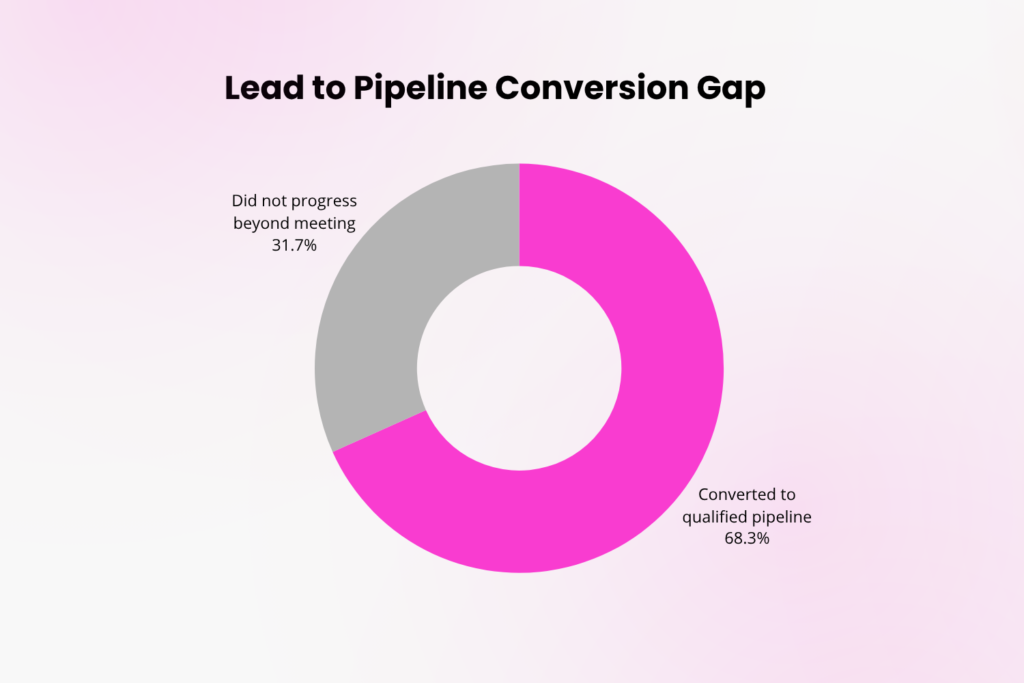
Konsyg’s analysis across outbound programmes in the US, UK, Europe, APAC, and ANZ shows a consistent pattern. Teams are generating more leads and booking more meetings, but a smaller proportion of those interactions are converting into a qualified pipeline.
This report breaks down where that drop-off happens and what is actually driving revenue in outbound today. It focuses on the space between activity and outcome, where most of the pipeline is lost.
What the data says
Lead generation is scaling, and pipeline performance depends on how it is managed: Across outbound campaigns, teams generating higher-quality leads saw up to 2x stronger pipeline conversion, proving that precision targeting drives revenue, not just volume.
High-performing campaigns turn meetings into real opportunities: An average of 20–30 meetings per campaign, top-performing teams consistently convert 30–40% into a qualified pipeline, with clear progression into revenue stages.
Strong discovery directly improves pipeline outcomes: Campaigns focused on structured conversations and clear problem alignment delivered significantly higher pipeline per meeting than volume-led outreach.
Multi-channel, phone-first outreach drives consistent results: Calls remain the primary driver of conversations, with LinkedIn and email supporting engagement, visibility, and conversion momentum.
Data methodology
This report draws on outbound sales activity managed across Konsyg programmes during 2025.
The analysis focuses on how outreach translates into pipeline, using data captured across multiple regions, including the US, UK, Europe, APAC, and ANZ. It combines activity and conversion data from calls, emails, meetings, and outbound workflows to understand what consistently drives results.
The purpose of this analysis is to move beyond activity metrics and identify the patterns that lead to repeatable pipeline creation.
Data sources
Insights in this report are based on aggregated campaign and execution data from:
Call data: Outbound calling activity, connection rates, and how conversations progress after initial contact.
Email performance: Delivery rates, engagement levels, and response patterns across outbound sequences.
Cadence performance: How structured outreach across calls, LinkedIn, and email contributes to engagement and conversion.
Meeting outcomes: Booked meetings, attendance rates, and movement into the qualified pipeline.
Execution data: How outbound activity is distributed across channels and how that impacts consistency and results.
Dataset composition
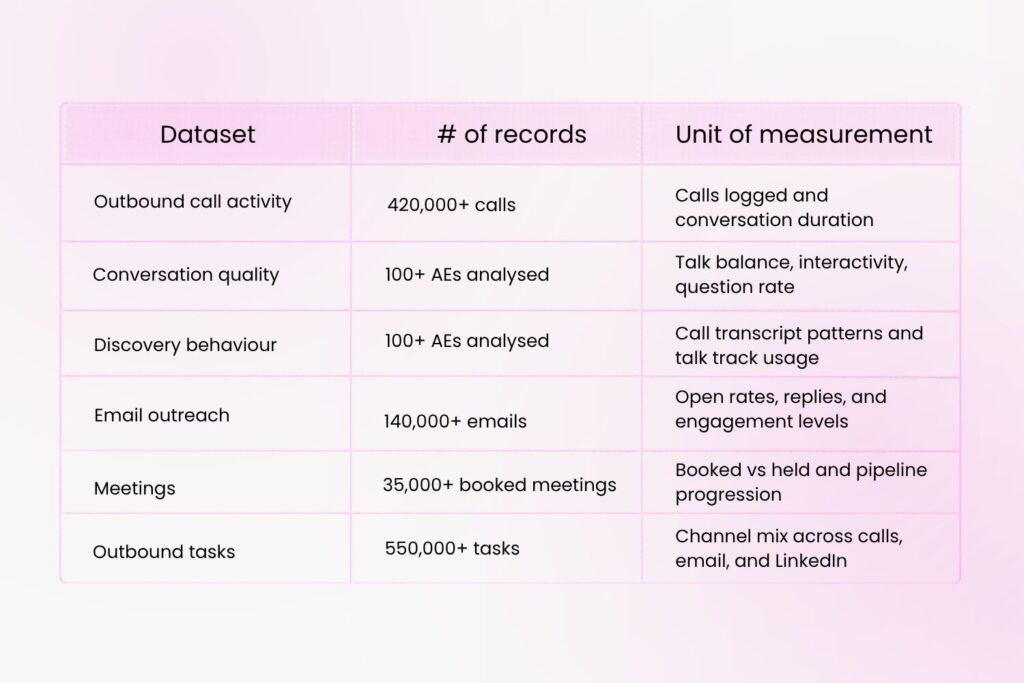
Key metrics analysed
For each dataset, a consistent set of performance metrics was defined and standardised to enable accurate comparison across campaigns.
Call data:
Call volume: Total outreach and weekly averages across campaigns.
Connection rate: Percentage of prospects who engaged with outbound calls.
Average call duration: Length of conversations in minutes.
Talk share: Balance between AE and buyer participation.
Interactivity score: Frequency of back-and-forth dialogue, indicating engagement levels during calls.
Questions per hour and use of silence during conversations.
Email data:
Deliverability: Successfully delivered vs bounced emails.
Open, click, reply, and opt-out rates across campaigns.
Sequence performance:
Engagement score: Combined measure of opens, clicks, and replies.
Conversion rate: Meetings booked per prospect enrolled.
Meetings data:
Conversion rate: Meetings booked per prospect contacted.
Meetings held rate: Meetings completed vs meetings scheduled.
Channel attribution: Contribution of calls, email, LinkedIn, and sequences.
Task data:
Channel distribution: Share of outbound activity across each channel.
Overdue rate: Delayed tasks vs total activity.
Balance score: Consistency of activity across channels.
Analytical approach
All data was standardised to ensure consistency across campaigns and regions. Outliers, including incomplete or duplicate activity, were excluded to maintain accuracy.
Percentage-based metrics were normalised to allow reliable comparison across datasets.
Limitations
The analysis reflects outbound programmes managed by Konsyg and may vary across industries or internal team structures.
The dataset focuses on outbound activity and excludes inbound, partner-led, and marketing-generated opportunities.
How to interpret this report
This report is directional, not diagnostic.
Each section focuses on one stage of the outbound process, from first touch to qualified pipeline, to identify the patterns that consistently drive engagement and conversion across global markets.
The aim is to help teams benchmark outbound performance, optimise conversion efficiency, and build a more predictable pipeline in 2026 and beyond.
Cold outreach performs closer to warm conversations than expected
In 2025, outbound campaigns showed that “cold” outreach is not as cold as it appears.
Across Konsyg programmes, connection rates ranged between 12–15%, closely aligning with conversations already in active sales cycles. This indicates that teams are increasingly reaching the right prospects at the right time.
The reason? Accurate data and prioritisation
High-performing campaigns are not driven by volume alone.
They are built on:
- verified contact data
- clear account prioritisation
- intent-led outreach
This reduces wasted outreach and increases the likelihood of meaningful conversations.
Insight continuation
Across regions, the pattern is consistent.
In the US, higher outreach volume drives more connections, but precision determines quality.
In the UK and Europe, targeted outreach leads to fewer but stronger conversations.
In APAC and ANZ, responsiveness is higher, but timing plays a critical role in conversion.
What the data says
Outbound activity has increased across campaigns, but conversion into pipeline depends on how effectively that activity is managed.
Our analysis shows that while higher activity leads to more meetings, pipeline outcomes are driven by conversion efficiency, not by volume alone.
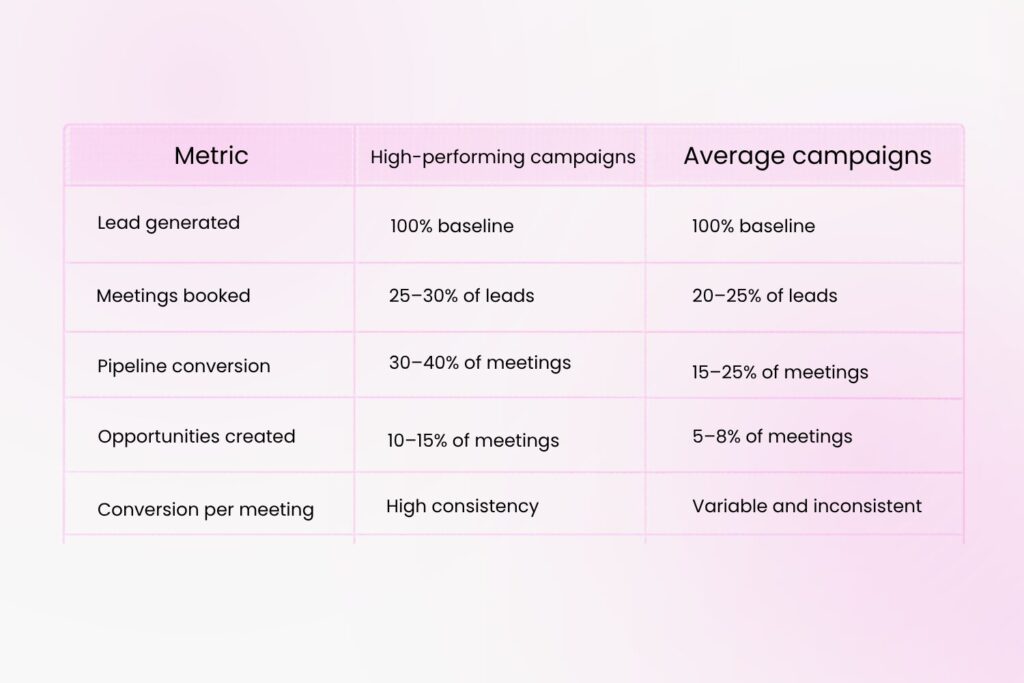
Summary of the key findings
Conversion beats volume
Across outbound campaigns, increasing lead volume does not automatically translate into stronger pipeline outcomes. In many cases, teams that generate similar numbers of meetings see very different results depending on how those meetings convert.
This shows that conversion efficiency, not activity volume, determines pipeline performance.
Targeting determines pipeline quality
Campaigns built on clear account selection and relevance consistently convert a higher share of meetings into a qualified pipeline.
Teams that focus on who to contact and why now see stronger progress beyond the first conversation than broad, volume-led outreach.
Structure supports execution, but conversations drive outcomes
Multi-channel cadences improve consistency and coverage across campaigns. However, pipeline creation depends on what happens within the conversation.
Over-reliance on automation can reduce quality, while strong discovery and relevance increase conversion into the pipeline.
Your 2026 outbound action plan
- Make conversion your competitive edge
Strong outbound performance is driven by how effectively conversations turn into pipeline.
High-performing teams focus on:
- Converting meetings into qualified opportunities, not just increasing activity
- Engaging the right stakeholders early in the process
- Driving conversations towards clear qualification and next steps
Keep your outbound approach focused on conversion, not just volume, to ensure consistent pipeline growth.
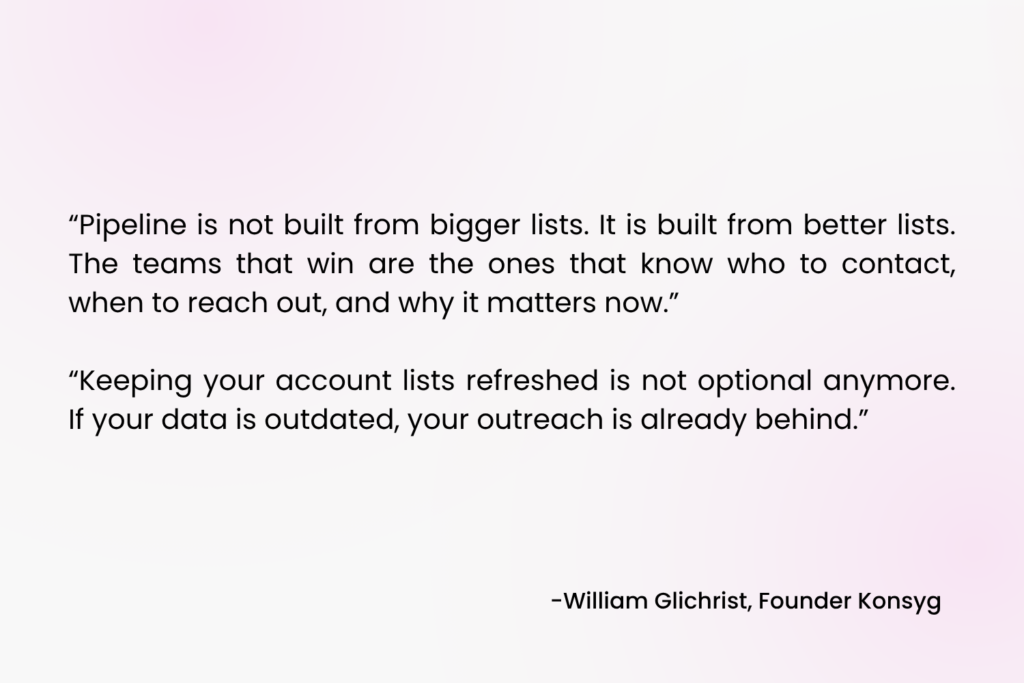
- Keep your lists refreshed and use intent
Outbound performance starts with who you target.
Across campaigns, teams that prioritise intent signals and updated account lists see pipeline conversion rates up to 35–50% higher than with static targeting.
Being early matters. Campaign data shows that engaging accounts at the right time significantly improves the likelihood of conversion, especially when multiple stakeholders are involved.
William Gilchrist, Founder at Konsyg, says:
- Personalise within the sequence using company research
Sequences create structure, but personalisation determines whether a conversation progresses.
Across outbound programmes, campaigns that combine structured cadences with company-level research and contextual messaging achieve significantly higher engagement and conversion rates.
High-performing teams do not rely on generic messaging. They align outreach with:
- business context
- role-specific challenges
- timing and intent
This is where outbound shifts from activity to relevance.
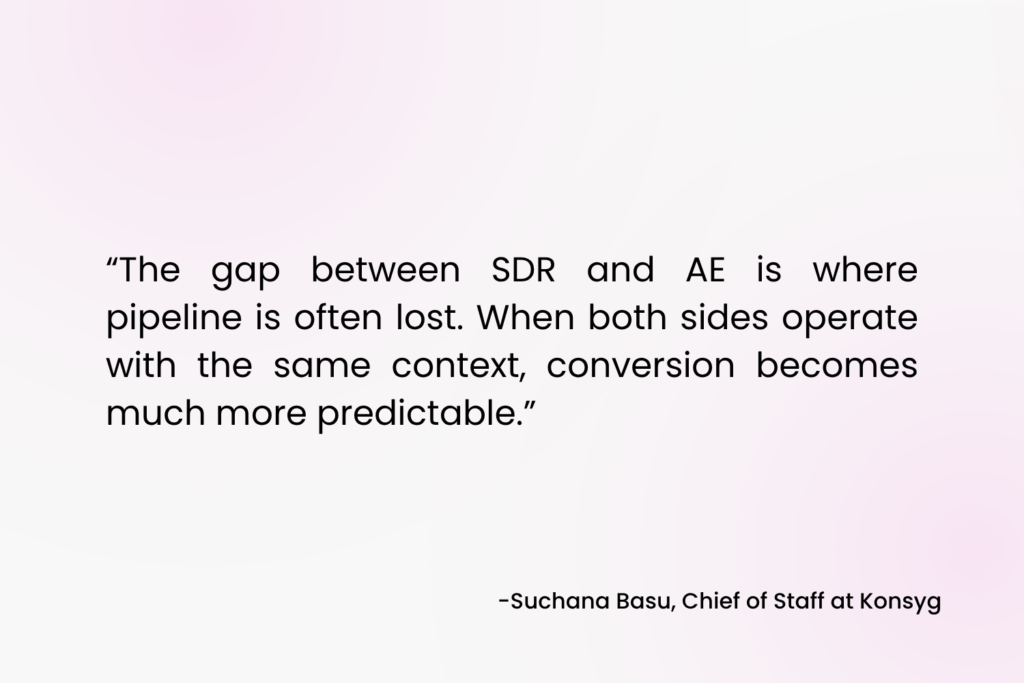
- Align SDR and AE feedback loops
Outbound does not end at the meeting.
Across campaigns, teams that maintain strong alignment between SDRs and AEs convert opportunities faster and more consistently.
When insights from early conversations are carried forward, follow-ups become more relevant, and qualification improves.
Suchana Basu, Chief of Staff at Konsyg, says:
Consistent feedback loops ensure that:
- Conversations build on each other
- insights are not lost between stages
- opportunities progress with clarity
Better conversations convert more leads into the pipeline
In 2025, the campaigns that generated the strongest pipeline did not rely on stronger pitching. They relied on better discovery.
Across outbound programmes, teams that converted more leads into pipeline focused on how conversations were handled after the first touch.
Campaign data shows that conversation quality is a key driver of pipeline conversion. The highest-performing teams run discovery as a structured exchange, combining clarity, questioning, and active listening.
It is no longer about delivering a perfect pitch. It is about creating a conversation where the buyer feels understood, informed, and ready to move forward.
Summary of the key findings
Balanced conversations improve pipeline conversion
The campaigns that converted more leads into pipeline were driven by two-way conversations. Calls with a balanced talk share (45–55%) consistently led to stronger engagement and better progression beyond the meeting stage.
When conversations are balanced, buyers participate more, and qualification becomes clearer.
Asking better questions drives stronger outcomes
There is a clear link between questioning and conversion. Campaigns where AEs asked 35–45 relevant questions per hour saw higher engagement and more consistent movement into the pipeline.
Stronger questions lead to better understanding, which directly improves qualification.
Silence creates space for real insight
Short pauses in conversations often lead to deeper responses.
High-performing teams use silence intentionally to allow buyers to expand on challenges, uncover concerns, and provide more context, rather than rushing to respond.
Long monologues reduce conversion
When conversations become one-sided, engagement drops quickly.
Campaign data shows that when an AE speaks for extended periods without interaction, the likelihood of progressing into the pipeline decreases.
The most effective conversations maintain momentum by keeping the exchange active and collaborative.
Your 2026 conversation quality action plan
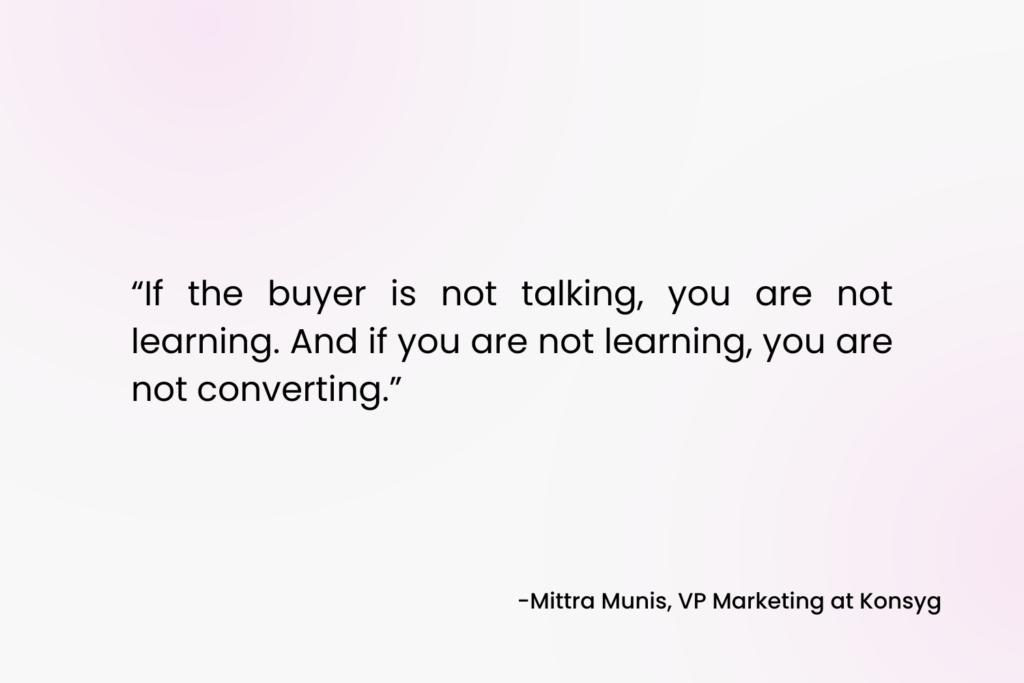
- Focus on balanced conversations to improve conversion
Across outbound campaigns, meetings that convert into pipeline consistently show a balanced talk ratio (45–55%).
When buyers speak more, qualification improves, and conversations move forward with clearer intent.
Mittra Munis, VP Marketing at Konsyg, says:
- Build discovery capability through repetition
Campaign data shows that teams with stronger discovery skills achieve up to 2x higher conversion from meeting to pipeline.
This is not accidental. It comes from consistent practice and refinement of how conversations are handled.
- Use structure to guide conversations, not control them
High-performing campaigns use clear frameworks to guide conversations while allowing flexibility based on the buyer.
This helps teams:
- stay focused on the qualification
- adapt to different buyer contexts
- move conversations towards clear outcomes
Rigid scripts limit engagement. Structured conversations improve it.
- Use silence to deepen qualification
Short pauses create space for buyers to expand on their responses.
Across campaigns, allowing even brief silence often leads to:
- more detailed answers
- clearer problem definition
- stronger qualification signals
This improves the likelihood of progressing into the pipeline.
- Reduce one-sided conversations to improve outcomes
When conversations become one-sided, conversation drops.
Campaign data show that shorter, interactive exchanges lead to stronger engagement than long explanations.
The most effective teams:
- keep conversations dynamic
- return the conversation to the buyer
- focus on understanding before explaining
Structured conversations turn meetings into a pipeline
The campaigns that convert the highest share of leads into pipeline do not rely on chance. They rely on structure.
Across outbound programmes in the US, UK, Europe, APAC, and ANZ, teams that apply consistent conversation frameworks see stronger progression from meeting to qualified pipeline. Conversations stay focused, qualification happens earlier, and next steps are clearly defined.
The pattern is consistent across markets: structured conversations create more predictable pipeline outcomes.
What the data shows
Across regions, campaigns with a consistent discovery structure achieve:
- higher conversion from meeting to pipeline
- clearer qualification earlier in the conversation
- more consistent opportunity progression
In the US, structure improves control in high-volume environments.
In the UK and Europe, it strengthens qualification depth and decision clarity.
In APAC and ANZ, it helps maintain consistency across varying buyer responses and timelines.
How we measured it
For each campaign, we analysed how consistently key discovery elements were used within conversations across regions.
Only campaigns with sufficient conversation volume were included to ensure the insights reflect repeatable, global patterns.
Most-used conversation patterns
Next steps and alignment
High-performing teams consistently close conversations with clear next steps, ensuring momentum continues beyond the meeting.
Customer challenges and business context
Problem-first conversations drive stronger engagement and improve pipeline conversion across markets.
Current approach and alternatives
Understanding how buyers currently operate helps position relevance and differentiate more effectively.
Decision process and stakeholders
Early visibility into decision-making improves progression and reduces delays across regions.
Value and commercial impact
Linking conversations to measurable outcomes strengthens qualification and opportunity quality.
Summary of the key findings
Structured conversations drive consistent pipeline outcomes
Across outbound programmes in the US, UK, Europe, APAC, and ANZ, teams that apply consistent discovery frameworks convert a higher share of meetings into pipeline.
Structure ensures conversations remain focused, aligned, and easier to progress across regions.
Value-led messaging improves conversion quality
Campaigns that incorporate clear ROI and business impact into early conversations see stronger progression into a qualified pipeline.
Across markets, linking conversations to measurable outcomes builds confidence and accelerates decision-making.
Strong discovery remains the foundation of pipeline creation
Across all regions, high-performing teams consistently anchor conversations around customer challenges and goals.
This approach improves qualification depth and increases the likelihood of converting conversations into a pipeline.
What high-performing teams are doing differently in 2026
- Consistency in conversations improves pipeline outcomes
Across outbound programmes, campaigns that follow a clear conversation structure see more predictable pipeline creation.
Consistency ensures that every interaction moves towards qualification and next steps, rather than staying at surface-level engagement.
- Early focus on business impact strengthens conversion
Campaigns that introduce ROI and measurable outcomes early see stronger progression from meeting to pipeline.
Across markets, conversations tied to business impact move faster than feature-led discussions.
- Strong discovery increases qualification depth
High-performing teams prioritise understanding the problem before presenting a solution.
Across campaigns, conversations driven by clear questioning and problem alignment consistently convert more leads into the pipeline.
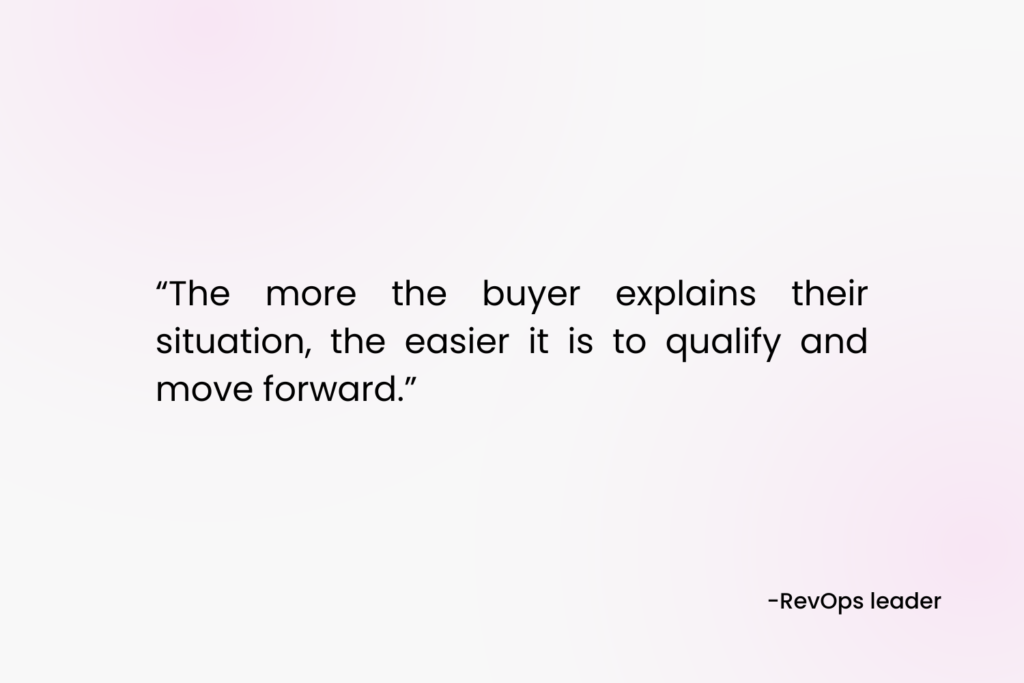
A RevOps leader shared:
- A clear problem definition creates urgency
Campaigns that translate challenges into measurable impact generate a stronger pipeline.
When teams connect problems to time, cost, or missed opportunity, conversations progress faster and with more clarity.
A Growth Lead at a SaaS company said:
“Once the cost of the problem is clear, the deal starts moving.”
- Precision matters more as outbound scales
As activity increases, maintaining clarity in messaging and targeting becomes critical.
Across global campaigns, teams that stay focused on specific use cases and relevant accounts achieve more consistent pipeline outcomes.
Conversations that convert start with the right channel mix
Outbound meetings are not created randomly. They follow a clear pattern.
Across campaigns in the US, UK, Europe, APAC, and ANZ, the most consistent results come from phone-led outreach supported by email and LinkedIn. Teams that combine these channels effectively move prospects from first touch to meeting faster and with more consistency.
The strongest campaigns do not rely on one channel. They use calls to start conversations and other channels to reinforce them.
Summary of the key findings
Phone-led outreach drives initial conversion
Across outbound campaigns in the US, UK, Europe, APAC, and ANZ, phone outreach remains the strongest driver of live conversations.
Campaigns where calls account for the majority of activity consistently generate more meetings and move prospects faster through the funnel.
LinkedIn strengthens early-stage engagement
Social outreach accounts for a significant share of activity across campaigns, supporting credibility and improving response rates.
Across markets, LinkedIn is increasingly where initial interest is built before conversations move to calls.
Email supports progression, not initiation
Email plays a complementary role in outbound execution.
Campaigns that use targeted, context-driven emails alongside calls achieve better engagement than those that rely solely on volume-based sequences.
Operational focus improves efficiency
High-performing campaigns maintain a strong focus on revenue-generating activity.
Minimal time spent on non-core tasks allows teams to prioritise conversations, qualification, and pipeline
Conclusion
In 2025, outbound performance showed a clear shift.
Lead generation has scaled across markets. But pipeline growth is being driven by precision, qualification, and conversation quality, not volume alone.
Across campaigns in the US, UK, Europe, APAC, and ANZ, teams that focus on targeting, structured conversations, and conversion discipline consistently outperform those relying on activity alone.
The gap between leads and pipeline is not a volume problem. It is a conversion problem.
Key takeaways for sales teams
Focus on conversion, not just lead generation:
Generating more leads does not guarantee a pipeline. High-performing teams track pipeline per meeting and optimise for conversion at every stage.
Prioritise targeting and timing:
Accurate data, clear account selection, and intent signals determine whether outreach leads to meaningful conversations.
Use calls to create conversations, not just activity:
Phone-led outreach remains the most effective way to engage prospects, with LinkedIn and email used to reinforce relevance.
Coach for conversation quality:
Balanced conversations, strong questioning, and clear discovery improve qualification and increase the likelihood of progressing into the pipeline.
Maintain structured execution as you scale:
Consistent outreach frameworks and channel balance create predictability across regions and teams.
Align teams around pipeline outcomes:
When insights from early conversations are carried forward, follow-ups become more relevant, and opportunities progress faster.
Share This Post