

Outsourced SDR Benchmarks 2026: Data from 50+ Campaigns
Outsourced SDR performance in 2026 looks very different from what most companies are still measuring.
A few years ago, outbound success was tied to activity. More emails sent. More calls made. More touches per prospect. That approach is now outdated. Buyers have adapted faster than most sales teams.
Today, decision-makers are harder to reach, more selective, and far less responsive to generic outreach. According to HubSpot, 60% of buyers prefer not to engage with a sales rep as their primary source of information, which means outbound needs to earn attention rather than assume it.
At the same time, competition has increased. More companies are investing in outbound, but very few are doing it well. The result is crowded inboxes, lower reply rates, and declining performance for teams still relying on volume-driven strategies.
This is where benchmarking becomes critical.
In 2026, companies are no longer asking, “How many emails did we send?”
They are asking, “How much pipeline did we generate?”
The shift is towards efficiency and conversion.
- How many conversations turn into meetings
- How many meetings turn into qualified opportunities
- How consistently is the pipeline generated over time
Multi-channel outreach has also become the baseline, not an advantage. Companies combining email, cold calling, and LinkedIn are seeing significantly better engagement. Research shows that multi-channel outreach can increase response rates by up to 287%, highlighting how single-channel strategies are no longer competitive.
Alongside this, AI has raised the standard of execution.
Personalisation is no longer optional. It is expected. SDR teams now have access to tools that analyse intent signals, firmographic data, and engagement behaviour. This has shifted outbound from broad targeting to precision-based outreach, where relevance determines results.
Because of this, benchmarks have changed.
- A “good” reply rate five years ago is average today
- High activity without conversion is no longer acceptable
- Pipeline quality matters more than top-of-funnel volume
Yet most companies are still using outdated benchmarks.
They optimise for open rates instead of replies.
They track replies instead of meetings.
They celebrate meetings without measuring pipeline impact.
This creates a gap between perceived performance and actual results.
This article closes that gap.
Built around insights from 50+ outbound SDR campaigns, it breaks down what real performance looks like in 2026. Not inflated numbers. Not generic industry averages. But practical benchmarks across channels, stages, and outcomes.
By the end of this playbook, you will understand:
- What outsourced SDR benchmarks actually mean in 2026
- What realistic performance looks like across email, calls, and LinkedIn
- How high-performing campaigns consistently generate pipeline
- Where most teams misinterpret their data
The objective is not more activity.
What Are Outsourced SDR Benchmarks in 2026
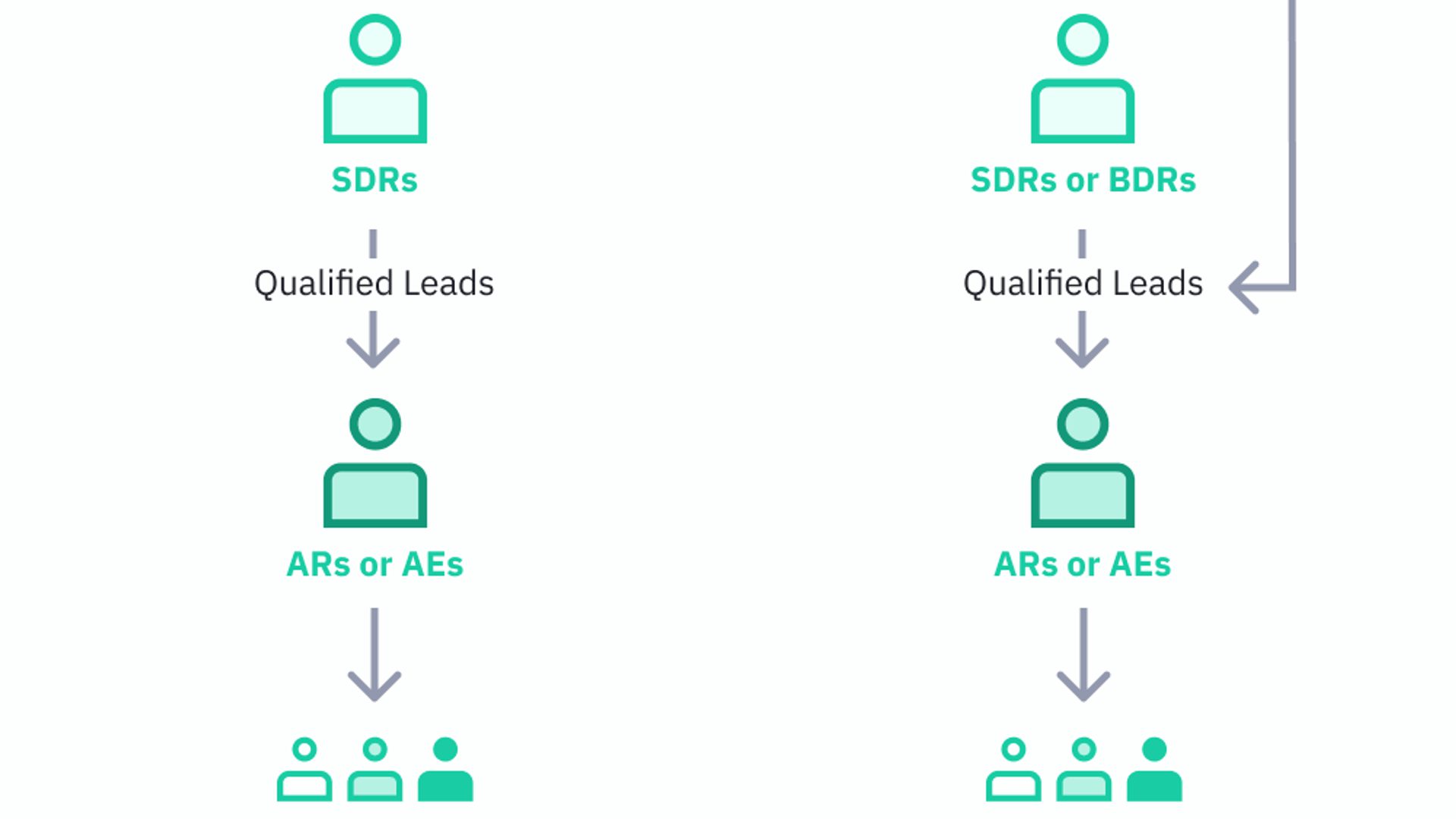
Outsourced SDR benchmarks in 2026 refer to the measurable standards used to evaluate how effectively an external sales development team generates a qualified pipeline through outbound and multi-channel outreach.
These benchmarks are no longer limited to activity metrics. They are used to assess how efficiently outreach turns into conversations, meetings, and ultimately revenue-generating opportunities.
A Clear Definition of SDR Benchmarks
Outsourced SDR benchmarks are the performance indicators used to measure how well an external SDR team converts outbound efforts into a qualified pipeline.
This includes tracking performance across outreach, engagement, meeting generation, and conversion into sales opportunities. The emphasis is not on how much activity is completed, but on how consistently that activity produces meaningful outcomes.
Why Traditional Metrics Are No Longer Enough
Most companies still rely on outdated indicators such as open rates or total replies. These metrics can be misleading.
Open rates are often inflated due to tracking limitations. Reply rates, while useful, do not distinguish between positive responses and rejections. As a result, teams may believe campaigns are performing well when they are not generating an actual pipeline.
Industry data supports this shift. For example, average cold email reply rates typically range between 1% and 5%, but this number alone does not indicate success unless those replies convert into meaningful conversations.
The Metrics That Actually Define Performance
In 2026, SDR benchmarks are evaluated across the full funnel rather than a single stage.
At the engagement level, teams assess whether outreach is generating responses from relevant prospects. At the next stage, they measure how many of those conversations turn into booked meetings.
According to The Bridge Group, top-performing SDRs generate 10 to 20 meetings per month, though this varies by deal size and target market.
Beyond meetings, the focus shifts to conversion. Not all meetings are equal. The ability to qualify prospects correctly determines whether a pipeline is created. Research shows that only 40% to 60% of meetings convert into qualified opportunities, highlighting the importance of targeting and message alignment.
At the final stage, benchmarks are tied directly to pipeline contribution. This is where outbound performance is evaluated in commercial terms. Metrics such as pipeline generated per SDR or per campaign become the most relevant indicators of success.
How Benchmarks Have Shifted in 2026
The biggest change in SDR benchmarking is the move from volume to quality.
Previously, teams focused on:
- Number of emails sent
- Total replies
- Activity volume
In 2026, the focus has shifted towards:
- Quality of conversations
- Conversion into meetings
- Pipeline generated
This change is driven by evolving buyer behaviour. B2B purchasing has become more complex and selective. Gartner reports that 77% of B2B buyers describe their buying process as very complex or difficult, which means outbound needs to be more targeted and relevant to be effective.
What This Means for Outsourced SDR Performance
For companies working with outsourced SDR teams, benchmarks are now the primary way to evaluate performance.
It is no longer enough to report activity levels. What matters is whether those activities consistently lead to a qualified pipeline. This requires clear visibility across each stage of the funnel, from outreach to opportunity creation.
Outsourced SDR benchmarks in 2026 are therefore not just performance indicators. They are a way to measure whether outbound contributes to revenue in a predictable, scalable way.

The Modern SDR Pipeline (With Benchmarks)
The modern SDR pipeline in 2026 is no longer a linear sequence of outreach steps. It is a structured system designed to move prospects from initial contact to qualified pipeline with as little friction as possible.
What defines high performance today is not how many prospects enter the pipeline, but how efficiently they move through it. This is where SDR pipeline benchmarks become critical. They provide visibility into where conversion is happening and where it is breaking down.
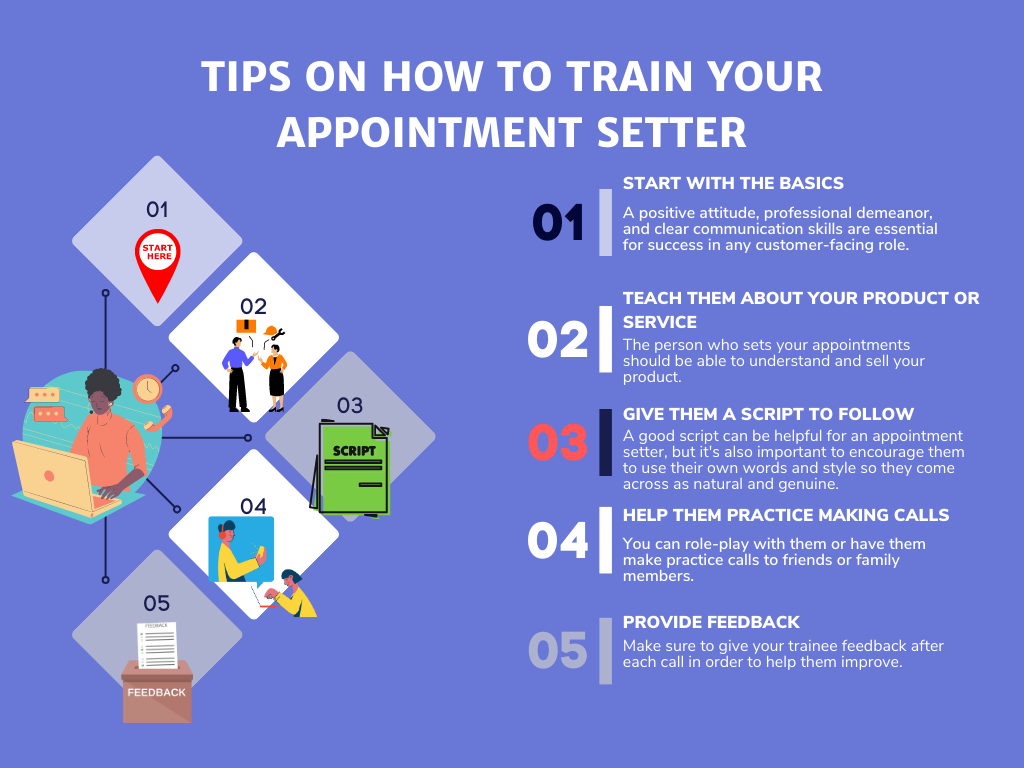
A well-functioning SDR pipeline can be broken down into five core stages: prospecting, outreach, engagement, qualification, and appointment setting. Each stage has its own benchmarks, and each one directly impacts pipeline outcomes.
Prospecting: The Foundation of SDR Performance
Every strong pipeline starts with targeting.
In 2026, prospecting is no longer about building large lists. It is about identifying accounts with a higher probability of engagement based on firmographics, intent signals, and relevance.
Poor targeting is one of the main reasons campaigns underperform. Even strong messaging cannot compensate for low-fit audiences.
Data supports this. According to Salesforce, 79% of B2B buyers expect interactions with sales reps to be tailored to their specific needs. This expectation begins before the first message is even sent.
This is why SDR performance benchmarks now implicitly include targeting quality. While it is not always measured as a standalone metric, it directly influences every downstream conversion rate.
Outreach: Where First Impressions Are Made
Once targeting is defined, outreach determines whether prospects engage.
Modern outbound is multi-channel by default. High-performing campaigns combine email, cold calling, and LinkedIn to increase visibility and response rates.
However, performance varies significantly depending on execution.
Cold email remains a primary channel, but benchmarks are tighter than most teams assume. Research shows that average cold email open rates range from 20% to 40%, while reply rates typically range from 1% to 5%, depending on relevance.
Cold calling, often underestimated, continues to play a critical role. Studies indicate that cold calling success rates can range between 2% and 5% for booking meetings, especially when combined with prior touchpoints.
The key shift here is consistency. High-performing B2B sales outsourcing teams do not rely on a single channel. They build structured sequences that reinforce messaging across multiple touchpoints.
Engagement: Separating Noise from Intent
Engagement is where many teams misread performance.
Replies are often treated as success, but not all replies indicate interest. A campaign may generate responses but still fail to produce meaningful conversations.
This is why SDR pipeline benchmarks now distinguish between total replies and positive engagement.
A strong campaign does not just generate replies. It generates responses from the right personas, in the right accounts, with a clear indication of interest.
This distinction is critical because engagement quality directly affects meeting conversion.
Qualification: The Most Underrated Stage
Qualification is where outbound either creates a pipeline or wastes it.
Many teams focus heavily on top-of-funnel metrics but fail to maintain the same standards during qualification. This results in meetings that do not convert.
Strong SDR performance benchmarks include qualification accuracy. This means assessing whether the prospect:
- Fits the ideal customer profile
- Has a relevant need or problem
- Has the authority or influence to move forward
Without this, even high meeting volumes do not translate into a pipeline.
This is reflected in conversion data. According to Salesloft, only around 40% to 60% of sales meetings convert into qualified opportunities. The gap is often caused by poor qualifications rather than a lack of interest.
Appointment Setting: Turning Conversations into Pipeline
Appointment setting is where outbound becomes tangible.
This is the stage where appointment-setting benchmarks are most relevant. It measures how effectively conversations turn into scheduled meetings and how reliably those meetings actually happen.
Top-performing SDR teams typically book between 10 and 20 meetings per month, according to The Bridge Group. However, volume alone is not enough.
Show rates and meeting quality matter just as much.
A campaign that books a high number of meetings but suffers from low attendance or poor-fit prospects will underperform at the pipeline level.
This is why modern SDR pipeline performance is evaluated across:
- Meetings booked
- Meetings attended
- Meetings converted into opportunities
Each step introduces potential drop-off, and each one needs to be measured.
How the Modern SDR Pipeline Connects to Benchmarks
The key difference in 2026 is that each stage of the pipeline is no longer viewed in isolation.
Benchmarks are interconnected.
A drop in reply rates affects meeting volume.
Weak qualifications reduce conversion to the pipeline.
Low show rates weaken overall performance.
High-performing outsourced SDR benchmarks are therefore built on consistency across all stages, not just strength in one area.
This is also why pipeline is the ultimate metric.
If prospecting, outreach, engagement, qualification, and appointment setting are aligned, the result is a predictable pipeline. If any stage breaks, the entire system underperforms.
The modern SDR pipeline is not about doing more.
It is about doing each stage better, with measurable impact at every step.
Key Benchmark Metrics from 50+ Campaigns
Understanding outsourced SDR benchmarks in 2026 requires looking at performance across channels and conversion points, not in isolation. What matters is not just how each channel performs individually, but how consistently they contribute to the pipeline.
Across 50+ outbound campaigns, a few patterns remain consistent. Strong performance is rarely driven by a single channel. It is driven by how well each channel supports the others and how efficiently prospects move through the funnel.
Cold Email Benchmarks
Cold email remains one of the most scalable outbound channels, but performance expectations have tightened.
Open rates are still commonly tracked, but they are no longer a reliable indicator of success due to limitations in tracking. Instead, the focus has shifted towards reply rates and positive engagement.
Industry benchmarks show that average cold email open rates range between 20% and 40%, while reply rates typically fall between 1% and 5%. However, high-performing campaigns consistently exceed this by focusing on targeting and relevance rather than volume.
In strong SDR pipeline benchmarks, a reply rate above 5% is usually a sign of well-aligned messaging. More importantly, positive reply rates, not total replies, determine performance.
Campaigns that generate replies but fail to convert them into conversations tend to underperform at later stages.
Cold Calling Benchmarks
Cold calling remains one of the most misunderstood channels in outbound.
Despite assumptions that it is declining, data show it remains highly effective when used alongside other channels. According to Cognism, cold calling success rates for booking meetings typically range between 2% and 5%.
What separates high-performing teams is not just call volume, but timing and context.
Calling prospects who have already been exposed to email or LinkedIn outreach significantly improves connection quality. This is why B2B sales outsourcing teams increasingly use cold calling as a reinforcement channel rather than a standalone tactic.
LinkedIn Outreach Benchmarks
LinkedIn has become a core part of modern outbound, especially for reaching senior decision-makers.
Acceptance rates and response rates vary widely depending on targeting and message quality. However, well-executed campaigns tend to achieve acceptance rates between 20% and 40%, with response rates significantly lower but more intent-driven.
LinkedIn works best when it supports email and calling efforts rather than replacing them. It builds familiarity, which increases the effectiveness of other touchpoints.
In terms of SDR performance benchmarks, LinkedIn is less about volume and more about influence. It improves overall conversion across the pipeline rather than acting as the primary driver of meetings.
Meeting Booking Benchmarks
Meeting generation is where outbound starts producing measurable outcomes.
Across most industries, high-performing SDRs consistently book between 10 and 20 meetings per month, according to The Bridge Group.
However, this number varies based on:
- Deal size
- Sales cycle length
- Target market complexity
More importantly, meeting booking rates must be viewed alongside outreach volume. A high number of meetings due to excessive outreach is inefficient. Strong appointment-setting benchmarks reflect both volume and efficiency.
Meeting Show Rates
Booking meetings is only part of the equation. Show rates determine whether those meetings translate into real opportunities.
Typical show rates range from 60% to 80%, depending on the industry and the quality of qualifications. Campaigns with weak targeting or unclear value propositions tend to see higher no-show rates.
This is where follow-ups, reminders, and pre-meeting engagement play a critical role.
High-performing SDR pipelines focus not just on booking meetings but also on ensuring those meetings actually happen.
SQL Conversion Benchmarks
The transition from meeting to qualified opportunity is one of the most important benchmarks in outbound.
It reflects how well SDR teams qualify prospects and align them with the sales team’s expectations.
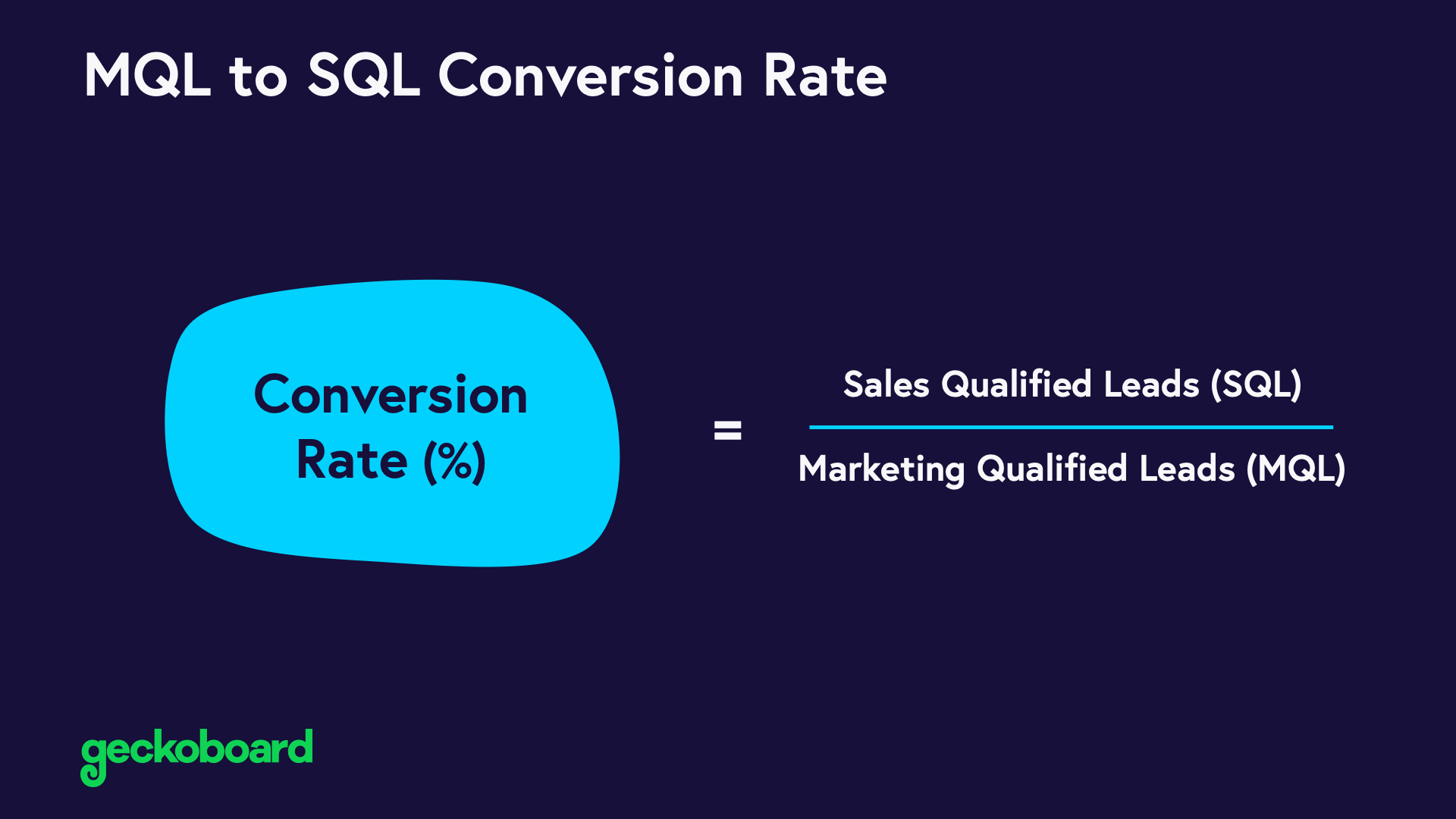
Data shows that only around 40% to 60% of meetings convert into qualified opportunities. This range is considered healthy for well-structured outbound programmes.
Anything significantly below this often indicates poor qualification or misalignment between SDR and sales teams.
What These Benchmarks Reveal
When these metrics are viewed together, a clear pattern emerges.
High-performing campaigns do not rely on exceptional performance in one area. They achieve consistent, above-average performance across all stages.
- Strong targeting improves reply rates
- Better engagement increases meeting conversion
- Accurate qualification improves pipeline outcomes
This is why outsourced SDR benchmarks must always be evaluated as a system rather than as individual metrics.
A campaign with average reply rates but strong conversion into pipeline can outperform one with high engagement but poor qualification.
The Real Benchmark That Matters
All of these metrics ultimately lead to one outcome.
Pipeline.
Every stage of outbound contributes to it, but none of them matters in isolation. The goal is not to optimise individual numbers. The goal is to build a system where each metric supports the next.
This is what defines modern SDR pipeline benchmarks.
Not active. Not surface-level engagement.
But consistent, measurable pipeline generation.
Channel Performance Comparison
Looking at individual metrics in isolation can be misleading. A channel may appear strong at the top of the funnel, but create weak downstream results. That is why outsourced SDR benchmarks need to compare channels based on their influence on replies, meetings, and pipeline, rather than on surface-level activity alone.
Cold Email vs Cold Calling
Cold email still offers scale. It is faster to deploy, easier to personalise at volume, and simpler to test. Recent benchmark summaries show that average cold email reply rates sit around 3% to 5%, with stronger campaigns pushing beyond that when targeting and messaging are tightly aligned.
Cold calling, however, continues to outperform expectations when measured by direct conversations. Research shows that cold calling success rates for booking meetings can reach 2% to 5%, with higher performance when combined with prior touchpoints.
The difference is not just in numbers, but in function.
Email creates reach. Calling creates clarity.
In most SDR pipeline benchmarks, email generates initial engagement while calling accelerates conversion. Campaigns that rely only on email tend to produce passive responses. Campaigns that integrate calling tend to convert faster.
LinkedIn vs Email
LinkedIn has become more important as inbox competition increases. Data from outreach platforms shows that LinkedIn reply rates can reach 10.3%, compared to lower average reply rates for email in similar campaigns.
In addition, connection acceptance rates can be significantly higher. Some datasets show acceptance rates around 45%, which creates a stronger entry point for conversations.
However, LinkedIn does not replace email.
Email is still stronger for structured follow-ups and detailed messaging. LinkedIn builds familiarity. It increases the likelihood that prospects recognise your name before they receive an email or call.
This is why SDR performance benchmarks improve when LinkedIn is used alongside email rather than as a substitute.
Single-Channel vs Multi-Channel Outreach
Single-channel outreach is easier to execute but harder to sustain.
Multi-channel outreach improves consistency by reinforcing the message across different touchpoints. Prospects are more likely to engage when they encounter the same message in different formats.
Research shows that multi-channel outreach can increase response rates by up to 287%, compared to single-channel approaches.
This is where B2B sales outsourcing teams gain an advantage. Structured sequences across email, calls, and LinkedIn create repeated exposure without relying solely on volume.

Which Channel Performs Best
There is no single best channel.
Email delivers scale.
Calling delivers direct engagement.
LinkedIn improves familiarity and response quality.
The strongest outsourced SDR benchmarks come from combining all three.
A campaign with moderate email performance but strong call conversion and high meeting quality will outperform one that relies on a single channel, even if it has higher top-of-funnel metrics.
What This Means for 2026 Benchmarks
In 2026, channels are no longer evaluated independently.
They are evaluated based on their contribution to the pipeline.
A strong outbound system does not optimise for one metric. It aligns channels so that each step builds on the last. This is how SDR pipeline performance becomes consistent rather than unpredictable.
The goal is not to choose the best channel.
The goal is to build a system where every channel works together to generate a qualified pipeline.
AI in SDR Performance
AI has changed how outbound is executed, but more importantly, it has changed what good performance looks like.
In earlier models, SDR performance depended heavily on manual effort. Researching accounts, writing messages, and prioritising outreach were all time-intensive tasks. In 2026, much of this has been augmented by AI. As a result, SDR performance benchmarks have shifted upwards.
The expectation is no longer basic personalisation. It is relevant at scale.
Personalisation Has Moved from Effort to Expectation
AI has made it possible to personalise outreach across thousands of prospects without sacrificing speed.
Instead of generic messaging, SDR teams now use data signals such as hiring trends, funding activity, technology usage, and recent company developments to tailor outreach. This has raised the baseline for what prospects expect.
Research supports this shift. Salesforce reports that 73% of customers expect companies to understand their unique needs and expectations. This expectation applies directly to outbound communication.
As a result, campaigns that rely on templated messaging without context see significantly lower engagement.
In terms of outsourced SDR benchmarks, this means reply rates are increasingly tied to how well personalisation reflects real business context rather than surface-level customisation.
Predictive Targeting Is Replacing Static Lists
Traditional prospecting relied on static lists built from firmographic filters. AI has changed this by introducing predictive targeting.
SDR teams now prioritise accounts based on likelihood to engage. This includes analysing intent data, behavioural signals, and historical conversion patterns.
This shift improves efficiency across the pipeline. Instead of increasing outreach volume, teams improve outcomes by focusing on higher-probability prospects.
According to McKinsey, companies using AI in sales see lead generation increases of 50% or more, highlighting how targeting precision directly impacts pipeline creation.
For SDR pipeline benchmarks, this translates into higher reply quality, better meeting conversion, and stronger pipeline contribution without proportional increases in activity.
Automation Has Increased Speed but Not Replaced Strategy
AI has significantly improved execution speed.
Tasks such as sequencing, follow-ups, and data enrichment can now be automated. This allows SDR teams to operate at scale without increasing headcount.
However, automation alone does not improve performance.
Campaigns that rely purely on automation often see declining results because they lack relevance. This is where many teams misunderstand AI.
Automation increases output. Strategy determines outcome.
This is reflected in performance data. HubSpot reports that only 24% of sales emails are opened, which shows that increased volume does not guarantee engagement.
High-performing B2B sales outsourcing teams use automation to support structured outreach, not replace it.
AI Has Redefined SDR Efficiency
One of the biggest impacts of AI is on efficiency.
Previously, scaling outbound meant increasing team size. In 2026, scaling is achieved by improving each SDR’s performance.
AI allows SDRs to:
- Spend less time on manual research
- Prioritise higher-intent accounts
- Execute multi-channel sequences more consistently
This results in stronger appointment-setting benchmarks and better pipeline outcomes per SDR.
The focus shifts from output per day to pipeline generated per SDR, which is a far more meaningful performance indicator.

What This Means for SDR Benchmarks in 2026
AI has not replaced SDRs. It has raised the standard for what they are expected to deliver.
- Personalisation is now expected, not optional
- Targeting is data-driven, not static
- Automation supports execution, but does not define success
This directly impacts outsourced SDR benchmarks.
Campaigns that use AI effectively tend to show:
- Higher-quality replies
- Better meeting conversion rates
- Stronger pipeline contribution
Those that do not adapt continue to rely on volume and see diminishing returns.
The key takeaway is simple.
AI does not improve outbound by itself.
It improves the quality of outbound execution.
And in 2026, execution will define SDR pipeline performance.
How High-Performing SDR Campaigns Operate
High-performing outbound campaigns in 2026 do not rely on isolated tactics. They operate as structured systems where each stage of the SDR pipeline is intentionally designed to support the next.
What separates average performance from strong outsourced SDR benchmarks is not effort. It is how consistently that effort translates into a qualified pipeline.
Across high-performing campaigns, a few patterns remain consistent.
Targeting Comes Before Messaging
Most underperforming campaigns focus too early on messaging.
High-performing campaigns start with targeting.
Instead of building large lists, they prioritise relevance. This includes narrowing down accounts based on industry, size, buying signals, and timing. The goal is to ensure outreach is directed to prospects more likely to engage.
This approach is supported by broader sales trends. HubSpot reports that 42% of salespeople say prospecting is the most challenging part of the sales process, which highlights how critical targeting is to overall performance.
When targeting is correct, messaging does not need to compensate. It only needs to connect.
Messaging Is Built Around Context, Not Templates
High-performing campaigns avoid generic outreach.
Instead of relying on standard templates, they build messaging around context. This includes referencing specific business triggers, problems, or changes relevant to the prospect.
This is where many campaigns fail. They personalise superficially but do not demonstrate relevance.
Buyers recognise this quickly. According to Salesforce, 66% of customers expect companies to understand their unique needs, a point that applies directly to outbound communication.
In strong SDR performance benchmarks, messaging is not judged by creativity. It is judged by whether it leads to meaningful engagement.
Multi-Channel Sequences Are Structured, Not Random
High-performing campaigns do not send isolated messages. They build structured sequences across channels.
This typically includes a combination of email, cold calling, and LinkedIn, executed in a coordinated way rather than as separate efforts.
The reason is simple.
Repetition creates familiarity. Familiarity increases response.
Research shows that 80% of sales require at least five follow-ups after the initial contact, yet many teams stop too early or fail to maintain consistency across channels.
Strong B2B sales outsourcing teams design sequences that reinforce the same message across multiple touchpoints, increasing the likelihood of engagement without increasing noise.
Follow-Up Discipline Drives Conversion
Follow-up is one of the most overlooked parts of outbound.
Many campaigns generate initial interest but fail to convert because follow-ups are inconsistent or poorly timed.
High-performing campaigns treat follow-up as a structured process rather than an afterthought. Each follow-up builds on the previous interaction, adding context rather than repeating the same message.
This directly impacts appointment-setting benchmarks.
Campaigns with strong follow-up discipline consistently achieve higher meeting conversion rates because prospects are given multiple opportunities to engage.
Qualification Determines Pipeline Quality
Qualification is where most campaigns either create value or lose it.
High-performing SDR teams do not aim to book as many meetings as possible. They aim to book the right meetings.
This means assessing fit, relevance, and intent before scheduling conversations. Without this, meeting volume increases, but pipeline quality declines.
This is reflected in broader data. As seen earlier, only 40% to 60% of meetings convert into qualified opportunities, which shows how critical qualification is to overall performance.
Strong SDR pipeline benchmarks are always tied to conversion, not just meeting volume.
Performance Is Measured End-to-End
The final difference is how performance is evaluated.
Average campaigns measure isolated metrics. High-performing campaigns measure the full funnel.
They track:
- How outreach converts into replies
- How replies convert into meetings
- How meetings convert into pipeline
This creates visibility into where performance is improving and where it is breaking down.
It also ensures that optimisation focuses on outcomes rather than activities.

What This Means in Practice
High-performing campaigns are not built on one advantage.
They are built on alignment across:
- Targeting
- Messaging
- Channel execution
- Follow-up
- Qualification
When these elements work together, outsourced SDR benchmarks improve across every stage of the funnel.
Reply rates become more meaningful.
Meetings become more relevant.
Pipeline becomes more predictable.
The difference is not complexity.
It is structure.
And in 2026, structure is what defines consistent SDR pipeline performance.
Common Mistakes Companies Make
Most companies do not fail at outbound because they lack effort. They fail because they measure the wrong things and optimise for the wrong outcomes.
This is where the gap between perceived performance and actual SDR pipeline performance becomes clear.
Across campaigns, the same mistakes appear repeatedly.
Chasing Volume Instead of Relevance
One of the most common issues is the assumption that more activity leads to better results.
Teams increase email volume, expand prospect lists, and push for higher outreach numbers. In the short term, this can create more replies. But those replies are often low quality.
This approach ignores how buyers behave today.
According to HubSpot, 40% of salespeople say prospecting is the most difficult part of the sales process, which often reflects poor targeting rather than a lack of effort.
In modern outsourced SDR benchmarks, relevance consistently outperforms volume. Smaller, well-targeted campaigns often generate a stronger pipeline than large-scale generic outreach.
Misinterpreting Reply Rates
Reply rates are one of the most misunderstood metrics in outbound.
Many teams treat all replies as positive signals. In reality, replies include objections, rejections, and unsubscribes. Without separating these, performance appears stronger than it actually is.
For example, a 6% reply rate may look strong. But if most of those responses are negative, the campaign is not performing.
This is why strong SDR performance benchmarks focus on positive reply rates and conversation quality rather than total responses.
Optimising for Meetings Instead of Pipeline
Another common mistake is treating meetings as the end goal.
Teams celebrate high meeting volume without examining whether those meetings convert into opportunities. This creates a disconnect between SDR activity and revenue outcomes.
As seen earlier, only 40% to 60% of meetings convert into qualified opportunities. When this conversion is low, increasing meeting volume does not improve the pipeline.
High-performing campaigns prioritise meeting quality over quantity. They focus on whether meetings progress, not just whether they are booked.
Relying on Single-Channel Outreach
Many companies still rely heavily on one channel, usually email.
This limits reach and reduces engagement over time. Buyers are exposed to too many similar messages, making it easier to ignore single-channel outreach.
Multi-channel execution has already proven more effective. As noted earlier, multi-channel outreach can increase response rates by up to 287%.
Strong B2B sales outsourcing strategies integrate email, calls, and LinkedIn to create consistent visibility and engagement.
Generic Messaging That Lacks Context
Generic outreach is one of the fastest ways to reduce performance.
Many campaigns rely on templates that are only lightly personalised. This creates the appearance of relevance without actually addressing the prospect’s situation.
Buyers recognise this immediately.
Salesforce reports that 73% of customers expect companies to understand their unique needs. When outreach fails to meet this expectation, engagement drops.
In strong outsourced SDR benchmarks, messaging is built around context, not just personalisation tokens.
Weak Follow-Up Discipline
Follow-ups are often inconsistent or poorly structured.
Some campaigns stop after one or two attempts. Others repeat the same message without adding new context. Both approaches reduce conversion.
Research shows that 80% of sales require at least five follow-ups after initial contact, yet many teams do not reach this threshold.
High-performing campaigns treat follow-ups as part of the core system, not an afterthought.
Misalignment Between SDR and Sales Teams
Even when outbound performs well at the top of the funnel, misalignment with sales teams can reduce results.
If SDRs are not aligned on qualification criteria, meetings may not convert into opportunities. This creates friction and reduces overall pipeline efficiency.
Strong SDR pipeline benchmarks depend on clear alignment between SDRs and account executives. Both teams need to agree on what defines a qualified opportunity.
Konsyg’s Approach
Most outbound programmes fail not because of effort, but because they lack structure.
What defines strong outsourced SDR benchmarks is not just execution quality at one stage, but alignment across the entire system. This is where Konsyg’s approach differs. It is built around structured outbound, signal-based targeting, and coordinated multi-channel execution designed to produce a consistent pipeline rather than isolated results.
Structured Outbound, Not Isolated Activity
Konsyg’s approach treats outbound as a system rather than a set of tasks.
Each stage of the SDR pipeline is designed to support the next. Targeting informs messaging. Messaging drives engagement. Engagement is filtered through qualification. Qualification determines pipeline quality.
This structure ensures that performance is not dependent on one strong metric. Instead, it creates consistency across:
- Reply quality
- Meeting conversion
- Opportunity creation
The focus is not on increasing activity. It is on improving how each step contributes to the pipeline.
Signal-Based Targeting Instead of Static Lists
Traditional outbound relies on static prospect lists. This often leads to low engagement because timing is ignored.
Konsyg’s model prioritises signal-based targeting.
This includes identifying accounts based on:
- Hiring activity
- Funding events
- Expansion signals
- Technology adoption
These signals indicate a greater likelihood of need or change, increasing the probability of engagement.
This directly impacts SDR performance benchmarks. Campaigns that use signal-based targeting typically see stronger reply quality and better conversion into meetings because outreach is aligned with timing, not just fit.
Multi-Channel Orchestration, Not Channel Dependence
Konsyg does not rely on a single outreach channel.
Instead, campaigns are designed as coordinated sequences across email, cold calling, and LinkedIn. Each channel plays a specific role.
- Email creates initial reach
- LinkedIn builds familiarity
- Calling accelerates response
This approach improves visibility and reduces reliance on any one channel’s performance.
It also aligns with modern SDR pipeline benchmarks, where multi-channel execution consistently outperforms single-channel strategies in both engagement and conversion.
Qualification as a Core Performance Driver
One of the biggest differences in Konsyg’s approach lies in how qualification is handled.
Rather than focusing on meeting volume, the emphasis is on booking meetings with a higher likelihood of converting into opportunities.
This means:
- Aligning closely with client-defined qualification criteria
- Filtering out low-fit prospects early
- Ensuring conversations are relevant before scheduling
This directly improves appointment setting benchmarks and downstream conversion rates.
The result is fewer wasted meetings and stronger pipeline outcomes.
Continuous Optimisation Based on Data
Konsyg’s approach is not static.
Campaigns are continuously refined based on performance data across each stage of the funnel. This includes analysing:
- Which segments respond best
- Which messages generate conversations
- Where conversion drop-offs occur
This allows for ongoing improvement rather than fixed execution.
Over time, this leads to more predictable SDR pipeline performance, as campaigns become more aligned with market response.
Focus on Pipeline, Not Vanity Metrics
The final difference is how success is measured.
Konsyg does not optimise for open rates, total replies, or activity volume. These metrics are monitored, but they are not the objective.
The objective is the pipeline.
Every part of the outbound process is evaluated based on whether it contributes to:
- Qualified meetings
- Sales opportunities
- Revenue pipeline
This is what defines modern B2B sales outsourcing performance.

What This Approach Delivers
When structure, targeting, messaging, and qualification are aligned, the outcome is consistency.
- Outreach becomes more relevant
- Engagement becomes more meaningful
- Meetings become more qualified
- Pipeline becomes more predictable
This is what strong outsourced SDR benchmarks look like in practice.
Not isolated spikes in performance.
But a system that delivers repeatable, measurable pipeline generation.
Case Study: Building a Pipeline for an Industrial IoT and Satellite Connectivity Platform
To understand how outsourced SDR benchmarks translate into real outcomes, this case study examines how structured outbound performs in a complex B2B environment.
This case study focuses on an industrial IoT and satellite connectivity platform targeting enterprise accounts across sectors such as mining, logistics, maritime, and energy.
The Challenge: Complex Buyers and Technical Sales Cycles
The client operated in a highly specialised market where outbound is inherently difficult.
The target audience included operations leaders, CIOs, CTOs, and digital transformation executives. These stakeholders are not only difficult to reach but also require highly relevant, technically accurate conversations.
In addition, buying decisions involved multiple stakeholders across large organisations. This created longer sales cycles and higher expectations for qualification.
This type of environment quickly exposes weak outbound.
Generic messaging does not work.
Single-channel outreach gets ignored.
Poor qualifications lead to wasted meetings.
To perform well here, SDR pipeline benchmarks need to be stronger across every stage.
The Approach: Structured Multi-Channel Outbound
The campaign was built around a structured B2B sales outsourcing model designed to support complex enterprise engagement.
Instead of relying on one channel, outreach was coordinated across:
- Email for initial contact and messaging depth
- LinkedIn for visibility and familiarity
- Cold calling for direct engagement and faster conversion
This multi-channel approach ensured repeated exposure without relying on volume alone.
Targeting was aligned with specific roles responsible for industrial connectivity and remote infrastructure. Messaging was tailored to operational challenges such as remote asset monitoring, fleet visibility, and system reliability.
This is where strong SDR performance benchmarks begin.
Relevance was prioritised from the start.
Execution: Consistency Across the Pipeline
The campaign focused on maintaining consistency across each stage of the SDR pipeline.
Prospects were engaged through structured sequences rather than isolated touchpoints. Follow-ups were persistent but contextual, ensuring that each interaction added value rather than repeating the same message.
Qualification played a central role.
Instead of maximising meeting volume, the focus was on booking conversations that could realistically progress into opportunities. This aligned directly with modern appointment setting benchmarks, where quality matters more than quantity.
This approach also helped navigate complex buying committees by engaging multiple stakeholders within the same account over time.
The Outcome: Pipeline Creation and Market Validation
The campaign delivered qualified discovery calls and early-stage pipeline opportunities across multiple regions, including Australia, Indonesia, the Philippines, Singapore, and Malaysia.
More importantly, it validated demand across these markets through consistent outbound engagement.
This is a key indicator of strong outsourced SDR benchmarks.
The results were not limited to surface-level engagement. They included:
- Enterprise-level conversations with relevant stakeholders
- Technical discussions around real operational challenges
- Early-stage pipeline aligned with high-value opportunities
In addition, the campaign enabled higher-quality sales conversations by focusing on use cases rather than generic positioning. This improved both engagement and qualification outcomes.
What This Case Reveals About SDR Benchmarks
This case highlights a core principle.
Strong outbound performance is not defined by activity. It is defined by how well each stage of the pipeline is aligned.
- Targeting ensures relevance
- Multi-channel outreach improves engagement
- Qualification determines pipeline quality
In complex industries, this alignment becomes even more important.
Without it, outreach does not convert.
With it, outbound becomes a reliable way to generate an enterprise pipeline, even in markets where inbound demand is limited.
FAQ
What are outsourced SDR benchmarks?
Outsourced SDR benchmarks are the key performance metrics used to evaluate how effectively an external sales development team generates a qualified pipeline through outbound and multi-channel outreach.
These benchmarks typically include reply rates, meeting booking rates, show rates, conversion to opportunities, and pipeline generated.
What is a good reply rate in 2026?
A good reply rate in 2026 depends on targeting and relevance, but most campaigns fall within a benchmark range of 1% to 5%.
High-performing campaigns often exceed this range by focusing on strong targeting and personalised messaging rather than increasing volume.
How many meetings should an SDR book per month?
Top-performing SDRs typically book 10 to 20 meetings per month, depending on deal size, industry, and sales cycle complexity.
However, meeting quality is more important than volume. Strong appointment-setting benchmarks focus on conversion to pipeline, not just total bookings.
What is a good SDR conversion rate?
A strong SDR conversion rate is the percentage of meetings that turn into qualified opportunities.
Industry data shows that 40% to 60% of meetings convert into sales-qualified opportunities in well-structured outbound programmes.
What is SDR pipeline performance?
SDR pipeline performance measures how effectively outbound activity translates into the revenue pipeline.
It includes metrics such as:
- Meetings booked
- Opportunities created
- Pipeline value generated
This is the most important benchmark for evaluating outbound success.
What is B2B sales outsourcing?
B2B sales outsourcing involves hiring an external team to handle outbound sales development activities such as prospecting, outreach, and appointment setting.
The goal is to generate a qualified pipeline without building an in-house SDR team.
How do outsourced SDR teams generate leads?
Outsourced SDR teams generate leads through structured outbound strategies that include:
- Targeted prospecting
- Multi-channel outreach (email, calls, LinkedIn)
- Personalised messaging
- Consistent follow-ups
The effectiveness of this process is measured through outsourced SDR benchmarks.
What is a good meeting show rate?
A good meeting show rate typically falls between 60% and 80%, depending on the industry and the quality of qualifications.
Higher show rates are usually achieved through better targeting, clearer messaging, and structured follow-ups before the meeting.
Why is multi-channel outreach important?
Multi-channel outreach improves engagement by increasing visibility across different touchpoints.
Research shows that multi-channel outreach can increase response rates by up to 287% compared to single-channel strategies.
This is why it is a core part of modern SDR pipeline benchmarks.
What is the biggest mistake in SDR performance?
One of the biggest mistakes is focusing on activity instead of outcomes.
Many teams track emails sent or calls made, but do not measure how those activities convert into the pipeline. This leads to high effort with low impact.
How does AI improve SDR performance?
AI improves SDR performance by enabling:
- Better targeting through intent signals
- Personalisation at scale
- Faster execution of outreach sequences
According to McKinsey, companies using AI in sales can increase lead generation by 50% or more.
What defines a high-performing SDR campaign?
A high-performing campaign is defined by:
- Strong targeting
- Relevant messaging
- Consistent multi-channel execution
- High conversion into the pipeline
The key indicator is not activity, but predictable pipeline generation.
How can companies improve SDR benchmarks?
Companies can improve SDR performance benchmarks by:
- Refining targeting
- Improving message relevance
- Using multi-channel outreach
- Strengthening qualification criteria
- Measuring performance across the full funnel
If your outbound efforts are generating activity but not pipeline, the issue is not effort. It is structure.
Most companies already have the tools and channels in place. What they lack is alignment across targeting, messaging, and execution.
That is where strong outsourced SDR benchmarks make the difference.
At Konsyg, outbound is built as a system that generates a consistent, qualified pipeline across complex B2B markets.
If you want to understand how your current performance compares and where it can improve, the next step is simple.
Share This Post
Table of Contents
Recent Reports
Learn More