

Inbound vs Outbound Sales: How to Choose (2024)
Choosing between inbound and outbound sales is not a mere method selection
When it comes to propelling your business forward, the choice between inbound and outbound sales is pivotal. This decision can be the catalyst for effectively reaching your target audience and converting leads into loyal customers, making it a crucial aspect of your business strategy.
Imagine you’re at a crossroads, deciding whether to invest your resources in inbound or outbound sales. It’s a big decision, and getting it right is crucial. Inbound sales focus on drawing customers to your business through engaging content and SEO, making it easier for potential clients to find you. On the other hand, outbound sales involve actively reaching out to prospects through cold calls, emails, and direct mail, putting your business directly in front of potential customers.
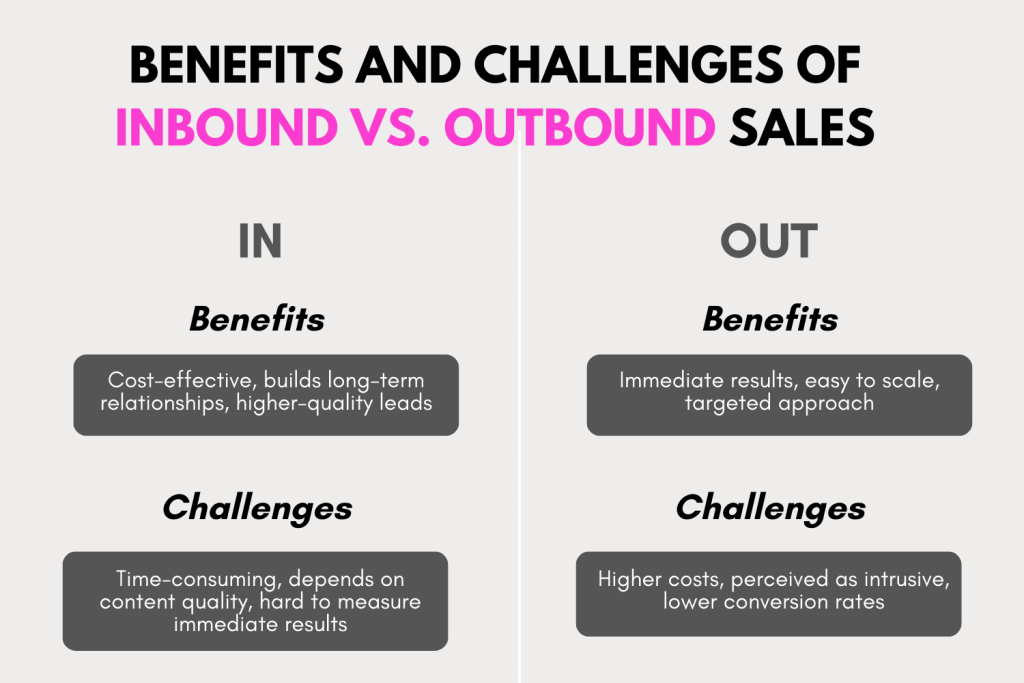
Choosing between inbound and outbound sales is not a mere method selection; it’s about comprehending what suits your business best. A well-informed decision aligns with your company’s goals, budget, and target market. Inbound sales might be more cost-effective and build long-term relationships, while outbound sales can deliver quicker results and allow for a more targeted approach.
As a sales outsourcing company, we know the importance of selecting the right strategy to maximize your efforts. The right choice can significantly impact your bottom line, making evaluating the benefits and challenges of both inbound and outbound sales essential.
This blog post is designed to guide you in making this crucial decision, ensuring you choose the best approach for your business needs. Whether you’re a startup looking for quick growth or an established company aiming to deepen customer relationships, understanding the differences and advantages of inbound vs. outbound sales is critical to your success.

Understanding Inbound Sales
Inbound sales is a strategy where potential customers come to you rather than you reaching out to them. This approach attracts and engages prospects through valuable content and SEO techniques. In the debate of inbound vs. outbound sales, inbound sales focuses on creating a magnetic pull that draws customers in, making it an essential strategy for many businesses today.
Imagine a customer searching online for a solution that your business offers. Through inbound sales, your high-quality blog posts, videos, and social media content guide them to your website. This method builds trust and establishes your business as an authority in your industry. Instead of interrupting their day with unsolicited calls or emails, inbound sales lets customers discover your products or services naturally, which often leads to a more positive relationship.
Content marketing plays a crucial role in inbound sales. Creating and sharing informative and engaging content provides value to your potential customers. This content answers their questions, solves their problems, and educates them about your offerings. For example, a well-written blog post on “inbound vs outbound sales” can attract business owners looking for the best sales strategy. Over time, this builds a connection and encourages prospects to reach out when they’re ready to buy.
SEO, or search engine optimization, is another crucial component. It ensures your content is easily found by those searching for relevant topics. By optimizing your website and content with keywords like “inbound vs outbound sales,” you increase your chances of appearing at the top of search engine results. This visibility is crucial because most people don’t look beyond the first page of search results. Effective SEO strategies help potential customers find you before they find your competitors.
HubSpot, a pioneer in inbound marketing, uses a comprehensive approach that includes video tutorials, blog content, free trials, email marketing, and events. Their strategy has helped them secure over 86,000 satisfied customers globally, from large multinational corporations to small and medium-sized enterprises.
This approach builds trust and credibility and aligns perfectly with how modern consumers prefer to engage with brands. For a sales outsourcing company like ours, understanding and leveraging the power of inbound sales can drive significant growth and inspire success.
Benefits of Inbound Sales
Inbound sales offer several key benefits that make them an attractive choice for many businesses, especially when considering the debate of inbound vs outbound sales. Here are some reasons why inbound sales can be advantageous:
- Cost-effectiveness and ROI: Inbound sales are often more cost-effective than traditional outbound methods. Creating valuable content and optimizing for search engines typically require less financial investment than extensive cold-calling campaigns or direct mail. The return on investment (ROI) is usually higher because inbound leads are more likely to convert into customers since they actively seek out your business.
- Building long-term customer relationships: Inbound sales focus on providing value and building trust with potential customers. By engaging with them through informative content and helpful resources, you create a foundation for long-lasting relationships. Customers feel more connected to your brand, leading to repeat business and loyalty. This relationship-building aspect of inbound sales is crucial for maintaining customer satisfaction and fostering brand advocates who will recommend your services to others.
- Higher-quality leads: One of the standout benefits of inbound sales is the generation of higher-quality leads. Since these leads find your business through their research and interest, they are typically more qualified and ready to engage. This means your sales team can spend more time nurturing and closing deals with prospects genuinely interested in what you offer rather than chasing uninterested leads.
Focusing on these benefits can drive sustainable growth and success for your business. For a sales outsourcing company like ours, leveraging the power of inbound sales can significantly enhance our ability to meet client needs and achieve our business goals, providing a sense of security and trust in the strategy.
Challenges of Inbound Sales
Inbound sales, while powerful, present several challenges that must be addressed. Here are the key challenges:
- Time-consuming process: Inbound sales require a significant investment of time. Creating high-quality content, optimizing it for search engines, and nurturing leads through the sales funnel can be lengthy. Unlike outbound sales, which can yield immediate results, inbound sales often take weeks or months to show significant impact.
- Dependence on content quality: The success of inbound sales heavily relies on the quality of content produced. The content must be valuable, relevant, and well-crafted to attract and engage potential customers. Poorly executed content won’t capture the interest of your target audience, which can undermine your entire inbound strategy. Consistently producing top-notch content demands creativity, expertise, and ongoing effort.
- Difficulty measuring immediate results: Inbound sales focus on long-term relationships and providing value, making it hard to measure immediate success. Metrics like website traffic, engagement, and lead generation are essential but only sometimes translate directly into quick sales. This lack of immediate feedback can be frustrating, especially for businesses seeking rapid growth.
These challenges highlight the complexities of inbound sales. While effective in the long run, the time investment, reliance on high-quality content, and difficulty measuring short-term results require careful planning and execution. Balancing these aspects is crucial for a successful inbound sales strategy. In the context of inbound vs outbound sales, understanding these challenges can help businesses decide which approach best suits their needs.

Understanding Outbound Sales
Outbound sales is a sales strategy in which businesses actively reach out to potential customers rather than waiting for them to make the first move. This approach is often seen as the opposite of inbound sales, which relies on attracting customers through content and SEO. In the discussion of inbound vs. outbound sales, outbound sales is all about taking the initiative.
Proactive outreach is the hallmark of outbound sales. Sales teams do not wait for leads; instead, they find them. This involves identifying potential customers and engaging them directly. The aim is to create opportunities by reaching out to people who might still need to know about your product or service. This allows businesses to build their sales pipeline and generate immediate interest quickly.
Cold calls are a common tactic in outbound sales. They involve calling potential customers who have yet to express interest in your products or services. The goal is to introduce them to your offerings and spark interest. While cold calling can be challenging due to its interruptive nature, it can be highly effective when done correctly.
Emails are another crucial tool in outbound sales. Sales teams send personalized emails to prospects, highlighting how their products or services can solve specific problems. These emails are crafted to capture attention and encourage recipients to take action, such as scheduling a meeting or learning more about the offerings.
Direct mail is a more traditional outbound sales method, but it is still relevant today. Sending physical mail to potential customers can create a tangible connection and stand out in an era dominated by digital communication. Direct mail can effectively capture attention and drive responses, whether it’s a brochure, a special offer, or a personalized letter.
These techniques allow businesses to actively engage potential customers, create immediate interest, and build a robust sales pipeline. Understanding the dynamics of outbound sales is crucial in helping companies choose the most suitable strategy for their needs.
Benefits of Outbound Sales
Outbound sales offer several notable benefits, especially when considering the inbound vs outbound sales debate. Here are some key advantages:
- Immediate results: Outbound sales strategies often deliver quick outcomes. Sales teams can generate leads and close deals faster than in inbound methods by directly reaching out to potential customers through cold calls, emails, and direct mail. This immediacy can be crucial for businesses needing rapid growth or quick sales boosts.
- Easier to scale: Scaling outbound sales efforts is straightforward. Businesses can increase the number of calls, emails, or mail pieces sent out to reach a larger audience. This scalability makes expanding sales operations and entering new markets easier without waiting for organic lead generation.
- Targeted approach for specific markets: Outbound sales allow for precise targeting. Sales teams can identify and focus on particular market segments, industries, or demographics most likely to benefit from their products or services. This targeted approach ensures that resources are spent efficiently, engaging prospects with a higher chance of converting into customers.
These benefits highlight why outbound sales remain a valuable strategy for many businesses. Leveraging these advantages can drive significant growth and success for any business.
Challenges of Outbound Sales
Outbound sales come with several challenges that businesses must navigate, especially when comparing inbound vs outbound sales. Here are the key challenges:
- Higher costs: Outbound sales strategies can be more expensive. The costs associated with cold calling, direct mail, and email campaigns add up quickly. Hiring and training sales staff, purchasing lists of potential leads, and using advanced sales tools contribute to these higher expenses.
- Risk of being seen as intrusive: Outbound sales methods can sometimes be perceived as intrusive. Unsolicited calls, emails, and direct mail annoy potential customers, leading to negative perceptions of your brand. This intrusiveness can result in prospects ignoring your efforts or developing a negative attitude toward your company.
- Lower conversion rates than inbound sales: Outbound sales often have lower conversion rates. Because the approach involves reaching out to people who may have yet to express interest in your product or service, the likelihood of converting these prospects into customers is generally lower than with inbound leads who are already interested.
While outbound sales can offer immediate results and scalability, the higher costs, potential intrusiveness, and lower conversion rates must be carefully managed. For a sales outsourcing company like ours, recognizing these obstacles helps design effective outbound sales campaigns that mitigate these issues while maximizing benefits.
Critical Differences Between Inbound and Outbound Sales
Understanding the critical differences between inbound and outbound sales is essential for choosing the right strategy. Here’s how they’re different:
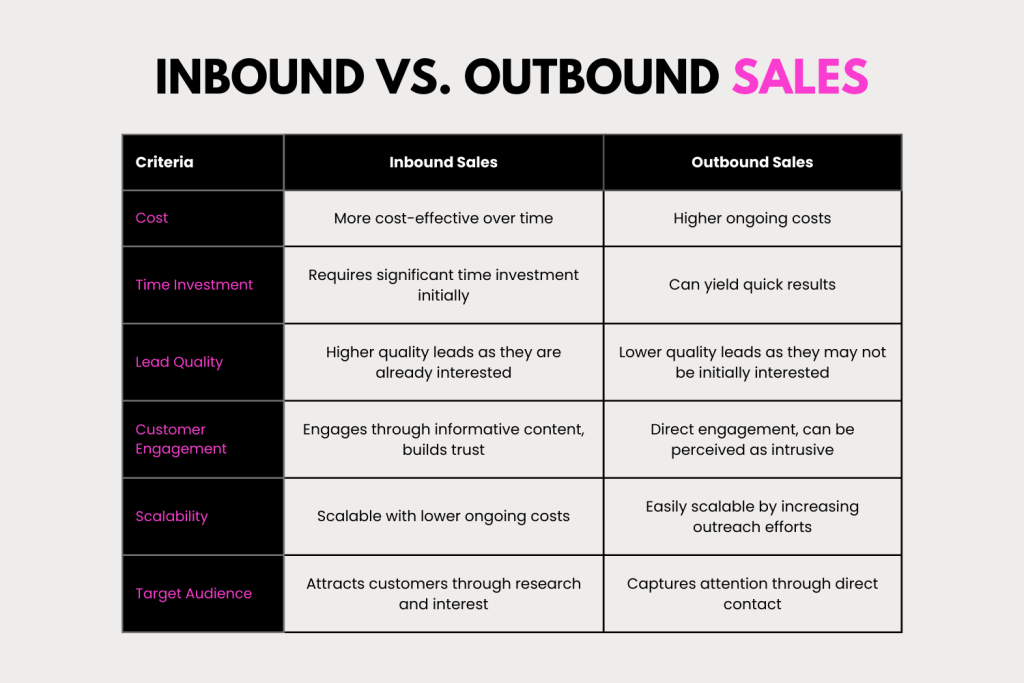
- Approach and methodology: Inbound sales focus on attracting customers to your business through content and SEO, creating a pull effect. On the other hand, outbound sales involve proactively reaching out to potential customers through cold calls, emails, and direct mail, making a push effect. The former is more about building relationships and trust, while the latter is about direct and immediate engagement.
- Cost implications: Inbound sales tend to be more cost-effective over time. Initial content creation and SEO investment can yield long-term benefits with lower ongoing costs. Outbound sales, however, often involve higher ongoing expenses, such as costs for cold calling, email campaigns, and direct mail. The need for constant outreach means continuous spending.
- Lead generation process: Inbound sales generate leads by providing valuable content that naturally attracts potential customers. These leads are typically more interested and engaged, having found your business through their own search. Outbound sales generate leads by directly contacting prospects who may not have shown prior interest. This can result in a larger volume of leads but often with lower quality and interest levels.
- Customer engagement tactics: Inbound sales engage customers through educational and informative content, fostering a sense of trust and credibility. This method encourages customers to reach out when they are ready. Outbound sales engage customers through direct and often unsolicited contact, aiming to capture attention and generate immediate responses quickly. This method can be effective for quick results but may need more depth of relationship-building in inbound tactics.
These differences highlight the unique aspects of inbound vs outbound sales. Each approach has its strengths and weaknesses, making it important for businesses to carefully consider which strategy best aligns with their goals and resources.
Factors to Consider When Choosing Between Inbound vs Outbound Sales
Choosing between inbound and outbound sales depends on several factors. Here’s what to consider:
- Company size and resources: Smaller companies with limited resources benefit more from inbound sales due to their cost-effectiveness over time. Creating content and optimizing for SEO can be less expensive than maintaining a large sales team for outbound efforts. Larger companies with more resources can afford the higher costs associated with outbound sales, allowing them to scale their efforts quickly and reach a broader audience.
- Target audience and market: Understanding your target audience is crucial. Inbound sales might be more effective if your audience prefers researching and finding solutions. This approach attracts customers who are already interested in your products or services. Conversely, suppose your market includes busy professionals who may not have time to seek solutions. In that case, outbound sales can put your offerings directly in front of them, capturing their attention through direct engagement.
- Sales goals and objectives: Your goals are significant in this decision. If your objective is rapid growth and immediate results, outbound sales can deliver quick wins by directly contacting potential customers. However, inbound sales might be the better choice if you aim to build long-term relationships and establish your brand as a trusted authority. This approach focuses on nurturing leads over time, leading to higher quality and more loyal customers.
- Available budget for marketing and sales efforts: Budget constraints can significantly impact your choice. Inbound sales require an upfront investment in content creation and SEO but can be more sustainable in the long run with lower ongoing costs. While potentially yielding faster results, outbound sales involve higher continuous expenses for cold calling, direct mail, and email campaigns. Assessing your budget will help determine which approach aligns with your financial capabilities.
By considering these factors, businesses can make a well-informed decision between inbound vs outbound sales. Each strategy has advantages and challenges; the right choice depends on your specific circumstances and goals.
Combining Inbound and Outbound Sales Strategies
Combining inbound and outbound sales strategies can offer numerous advantages, creating a powerful hybrid approach. This combination leverages the strengths of both methods, enhancing overall effectiveness and reach.
One of the primary benefits of a hybrid approach is its ability to generate immediate results while building long-term relationships. Outbound sales efforts, such as cold calling and email campaigns, can quickly bring in leads and drive sales. Meanwhile, inbound sales strategies, like content marketing and SEO, attract and nurture prospects over time, fostering trust and loyalty. By integrating both, businesses can enjoy the best of both worlds.
Successful examples of hybrid strategies can be seen in companies that use outbound methods to complement their inbound efforts. For instance, a business might use outbound sales to target specific high-value prospects while continuing to produce valuable content that attracts a broader audience. This dual approach ensures a steady flow of leads from both proactive outreach and organic search.
Balancing both strategies effectively requires careful planning and coordination. Here are some tips:
- Align your messaging: Ensure that your outbound and inbound efforts convey consistent messages. This reinforces your brand and allows for clarity among prospects.
- Leverage data: Use data from your inbound efforts to inform your outbound strategies. Insights from website analytics and content performance can help identify which prospects to target with outbound methods.
- Coordinate teams: Encourage collaboration between your inbound and outbound sales teams. Regular communication helps align goals and share valuable insights, improving overall strategy execution.
- Monitor and adjust: Continuously track the performance of both inbound and outbound efforts. Use this data to refine your approach, ensuring you maximize the benefits of each strategy.
By combining inbound and outbound sales, businesses can achieve a more comprehensive and effective sales strategy. This hybrid approach allows immediate lead generation while building lasting relationships, ultimately driving sustainable growth.
Wrapping Up
Choosing the right strategy can significantly impact your business’s growth and success. Assessing your unique needs and resources is essential to determining whether an inbound, outbound, or hybrid approach best suits your objectives. By carefully considering these factors, you can implement a sales strategy that aligns with your goals and drives sustainable results.
For those looking for expert guidance, we invite you to contact our sales outsourcing company. We offer a free consultation or assessment to help you determine your business’s most effective sales strategy. Reach out to us today to learn how we can assist you in achieving your sales goals.
Let us help you navigate the complexities of sales strategies and drive your business to new heights.
Share This Post
Recent Posts
What We Offer
Get Your Quote